
12-08-2026 (Important News Clippings)
To Download Click Here.

Facing Mecca, Acting In Every Direction
ET Editorial
Much is being made of the ‘Mecca Pact’ between Türkiye, Saudi Arabia and Pakistan. In converting the region into a single ‘Sunni security’ arc, it has the potential to redefine the Indo-Pacific. Implications for India are sensitive, and New Delhi must not treat this development lightly. But at the same time, making too much of it is also an error.
Türkiye’s military weight, deftech capacity and Nato link, Saudi Arabia’s deep petro pockets and geostrategic calibrations, and Pakistan’s operational military capacity and nuclear status can form a whole that can be larger than the sum of its parts. Despite ostensibly being about reducing dependence on Washington, the entity’s US ties give it defence interoperability. But, then, Pakistan’s ‘all-weather strategic cooperative partnership’ with China forms an internal circuit-breaker of sorts.
It’s too early to see how the troika will hold in its current labelling as an ‘anti-Shia’ (read: Iran) bulwark. The proof may well be in pudding of its ‘attack against one is attack against all’ clause. Meanwhile, New Delhi’s relationship with Riyadh will not be altered significantly, as evident from the latter’s mutual defence pact with Islamabad last year. But India must be vigilant and restrained, track China’s increased involvement in the region, and diplomatic cover given to Pakistan. New Delhi needs to rework its calculus in the western Indian Ocean and the Gulf. More widely, it must rethink its approach to global engagement by going beyond the transactional bilateral that seems all the rage, to create networks leveraging both traditional and unconventional pathways for partnerships. In other words, give ‘strategic autonomy’ the depth that comes with multilateral spaces like Quad and BRICS+.

In the way
The government should not be able to remove tribunal members at will
Editorial
Tribunals have a raison d’être in the justice system: they allow specialists to settle technical disputes faster than the judiciary could. In S.P. Sampath Kumar (1987) and L. Chandra Kumar (1997), the Supreme Court said that tribunals’ decisions remain subject to review by High Courts because judicial review is part of the basic structure. Sensible though they were, the orders left a structural flaw standing. Tribunals have historically been administered by the same Ministries whose decisions the tribunal might have to review. In Rojer Mathew (2019), the Court recommended an independent, statutory National Tribunals Commission (NTC) to oversee the selection and administration of tribunals. However, Parliament used the Finance Act 2017 to give the executive more control over appointments and the Tribunals Reforms Ordinance 2021 to reinstate conditions the Court had rejected. The final straw was the Court’s judgment in Madras Bar Association (2025), where it struck down the objectionable provisions Parliament had re-enacted, restored the previous framework, and gave the government four months to establish the NTC. That is the Tribunal Reforms Bill 2026, which the Lok Sabha passed on August 10 with no discussion, and the Rajya Sabha on August 11. To its credit, inter alia, the Bill restores the five-year terms for tribunal members, introduces uniform service conditions, includes provisions for a National Tribunals Data Grid, and does not maroon already pending appointments.
However, the Bill still does not give the NTC enough institutional autonomy. For one, Section 14 leaves the qualifications, manner of selection, salaries, allowances, and other conditions of service of tribunal members to future executive rules. But in Rojer Mathew, Justice Deepak Gupta had held that defining who is qualified to exercise judicial power is an essential legislative function that cannot be delegated to rulemaking. Yet, the Bill claims consonance with the 2025 judgment while making room for the sort of delegation the judge’s line of reasoning had resisted. Experts have also flagged similarly vague language in Section 3. Further, under Section 16, a Ministry will first screen a complaint before it passes to the NTC for inquiry. So, while the process is more elaborate than it was in 2021, the Centre still appoints the NTC’s members, only consulting the CJI for the chairperson and judicial members, and retains substantial influence over its finances and administration. That is essentially a continuing failure: a commission designed to insulate tribunals from executive control cannot be thus subject to the terms of the executive. The government must make the NTC fully independent by forsaking its power to appoint or remove its members at will.
Date: 12-08-26
The Mecca Pact and the rise of strategic headging
The agreement between Saudi Arabia, Türkiye and Pakistan could end decades of externally guaranteed West Asian security arrangements
Mohammed Ayoob, [ University Distinguished Professor Emeritus of International Relations, Michigan State University, and the author most recently of ‘From Regional Security to Global IR’ (2024) ]
The mutual defence agreement signed by Saudi Arabia, Türkiye and Pakistan in Mecca on August 7 could mark an important turning point in the geopolitics of West Asia. Its significance lies not merely in its provision that an attack upon one member will be considered an attack upon all three, but in what it reveals about the changing calculations of three of the most important states in the Muslim world. For decades, West Asian, especially the Gulf, security has depended overwhelmingly upon the United States. The new pact does not terminate that dependence. Saudi Arabia remains closely tied to Washington militarily, Türkiye is a member of the North Atlantic Treaty Organization (NATO), and Pakistan retains an important, if complicated, relationship with the U.S. which has been recently strengthened because of the personal chemistry between U.S. President Donald Trump and Field Marshal Asim Munir. What the agreement suggests instead is a growing determination among regional powers to supplement external security guarantees with arrangements of their own.
The partners, complementary strengths
The three partners bring remarkably complementary capabilities. Saudi Arabia provides enormous financial resources, energy power and political influence throughout the Arab and Islamic worlds. Türkiye contributes the strongest conventional military establishment among the Muslim countries of West Asia and a rapidly expanding indigenous defence industry. Pakistan contributes a large professional military and decades of military cooperation with Saudi Arabia. But its most important strategic attribute is its nuclear weapons. Although Pakistan has not formally extended a nuclear guarantee to its partners, an adversary contemplating an attack upon one member must now take Pakistan’s nuclear capabilities into account.
Each participant has distinctive reasons for joining. For Saudi Arabia, the agreement provides strategic insurance. The attacks on Saudi oil installations in 2019, subsequent regional crises and the current confrontation with Iran have demonstrated the risks of excessive dependence upon a single external guarantor.
Türkiye sees the arrangement through the prism of strategic autonomy. President Recep Tayyip Erdoğan has sought to transform Türkiye from NATO’s southeastern flank into an independent centre of power. The pact expands Ankara’s influence into the Gulf and South Asia while creating opportunities for its growing defence industry.
For Pakistan, the agreement widens the country’s strategic horizons beyond its traditional rivalry with India. It institutionalises Islamabad’s close relations with Saudi Arabia and Türkiye and converts Pakistan’s considerable military capabilities into greater geopolitical influence.
The pact through India’s eyes
This inevitably raises questions for India. New Delhi has cultivated exceptionally close relations with Saudi Arabia during the past two decades. Therefore, India must not interpret the pact automatically as an anti-Indian development. Riyadh has enormous economic and strategic interests in maintaining good relations with India and would have little incentive to allow the agreement to become an instrument in Pakistan’s disputes with New Delhi.
Türkiye presents a more complicated problem because Ankara has repeatedly supported Pakistan’s position on Kashmir and supplied weapons that Pakistan has used against India. New Delhi should seek explicit reassurance from Riyadh that the pact has no application to an India-Pakistan confrontation but it should resist viewing the emerging alignment exclusively through the prism of Pakistan.
The pact’s implications for Iran are very complicated. Given the Saudi-Iranian rivalry and recent Iranian attacks on Saudi Arabia, and vice-versa, it is tempting to interpret it as an anti-Iranian coalition. However, Türkiye and Pakistan share borders with Iran with complementary interests in keeping their restive minorities inhabiting the border regions in check. They thus have strong reasons to avoid confrontation with Tehran. Israel is likely to view the development with greater concern. One of its enduring strategic advantages has been the political and military fragmentation of the Muslim world. The Mecca agreement does not explicitly create an anti-Israeli alliance.
Nevertheless, an institutionalised relationship combining Saudi financial power, Turkish conventional strength and Pakistani nuclear capability inevitably alters strategic calculations.
For Washington, the pact presents a paradox. The U.S. has long demanded that regional partners assume greater responsibility for their own defence. But greater responsibility can also produce greater strategic autonomy and consequently diminish American leverage.
Put together by regional powers
It would be premature to describe the agreement as an anti-American realignment. Saudi Arabia continues to depend heavily upon American military technology and security guarantees; Türkiye remains in NATO; and Pakistan has no interest in unnecessary confrontation with Washington in the midst of their current love fest. The more appropriate description is strategic hedging. But when several major states begin hedging simultaneously, their cumulative actions can transform the regional order.
For most of the modern era, West Asian security arrangements have been created or guaranteed by outside powers. The Mecca pact raises the possibility of something different: a more autonomous security architecture constructed by regional powers themselves. India, with enormous economic, energy and strategic stakes in West Asia, cannot remain a spectator to that transformation but, at the same time, should not react to it with undue alarm.

कम से कम गरीब राज्य तो रेवड़ी संस्कृति से दूर ही रहें
संपादकीय
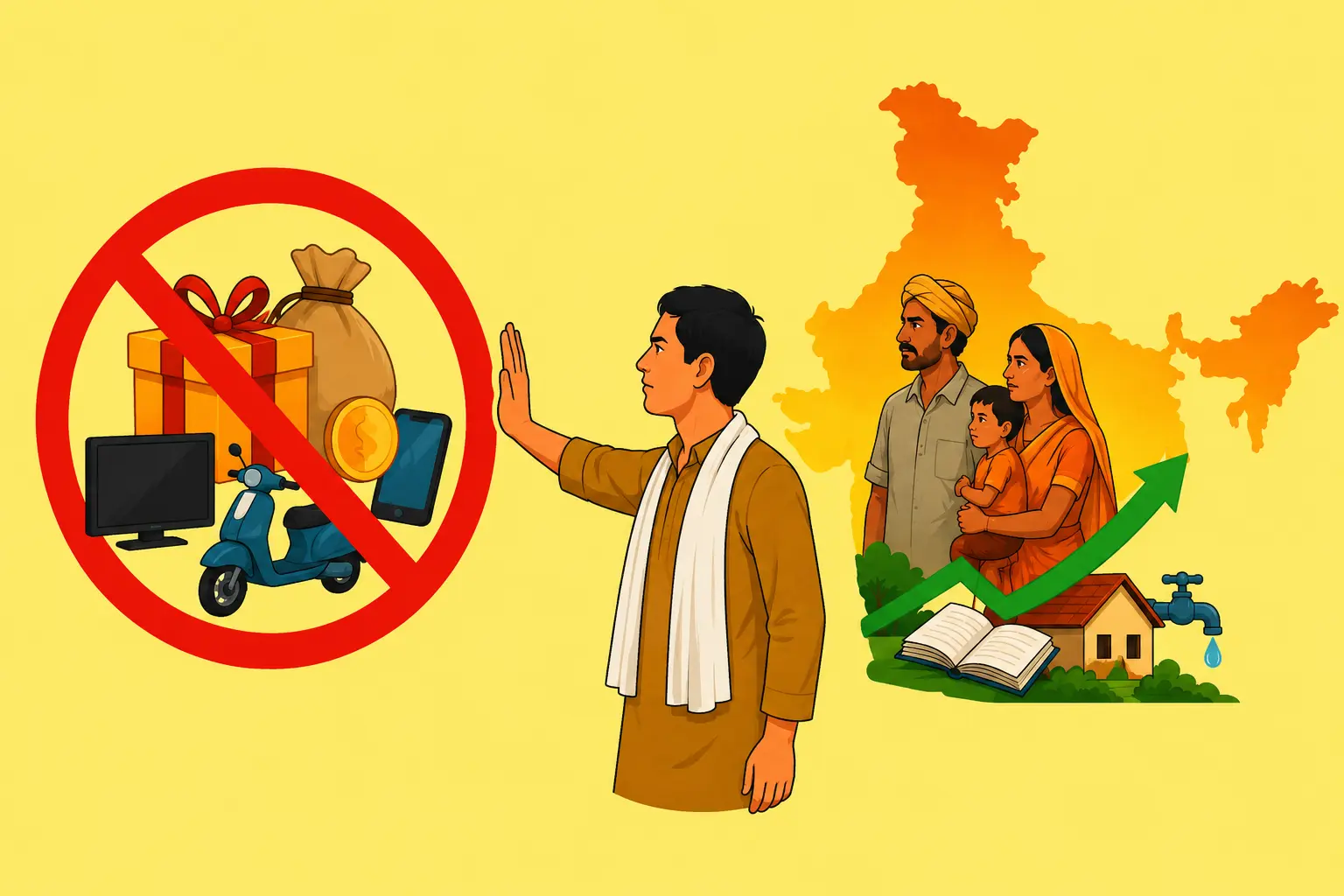
तमिलनाडु सरकार ने 4.67 लाख करोड़ रु. के ताजा बजट के साथ हर नए जोड़े को 8 ग्राम सोने का सिक्का और सिल्क की साड़ी, हर नवजात को एक ग्राम सोने की अंगूठी और लैपटॉप की योजना को जारी रखने की घोषणा की है। इस पर करीब 1500 करोड़ रु. खर्च होंगे। देश के प्रमुख औद्योगिक राज्यों महाराष्ट्र, कर्नाटक और गुजरात के साथ तमिलनाडु भी प्रतिव्यक्ति आय या विकास के अन्य पैमाने पर देश के औसत से काफी आगे है। लेकिन रेवड़ियां बांटने के दौर में कर्ज-जीएसडीपी अनुपात में भी अन्य तीन राज्यों से यह राज्य आगे है। वहां कर्ज पर ब्याज के रूप में राजस्व प्राप्ति का 22.8 फीसदी जाता है। इसके उलट महाराष्ट्र का इस मद में मात्र 10.3% जाता है, लिहाजा उसे पूंजी निवेश और विकास के लिए काफी आसानी हो जाती है। गुजरात ने अपने जीएसडीपी के अनुपात के रूप में सबसे कम 17.6% कर्ज लिया है। समस्या यह है कि तमिलनाडु में रेवड़ियों के रूप में सोना देने की खबर के बाद हर दल चुनाव के दौरान ऐसे ही वादे करने लगता है, बगैर यह सोचे कि राज्य की आर्थिक स्थिति पर इसका क्या दुष्प्रभाव होगा। उत्तर-पूर्व के राज्यों में राजस्व के स्रोत सीमित हैं, लेकिन जब पंजाब, हिमाचल, बंगाल और बिहार का अनुपात क्रमशः 47, 45.2, 40 और 37 पहुंचता है तो चिंता यह होनी चाहिए कि कहीं रेवड़ियां इन राज्यों की गरीबी तो नहीं बढ़ा रही हैं? तमिलनाडु की प्रति व्यक्ति आय बिहार के मुकाबले छह गुना है, लिहाजा बिहार, एमपी, यूपी, राजस्थान को तो इससे बचना ही होगा।
Date: 12-08-26
चुनाव लड़ना ज्यादा जरूरी है या देश में कोई बदलाव लाना?
प्रियदर्शन, ( लेखक और पत्रकार )
क्या सीजेपी को अब एक राजनीतिक दल बन जाना चाहिए? इसके पक्ष में कई तर्क दिए जा रहे हैं। उसके साथ युवाओं का व्यापक समर्थन और लगाव दिख रहा है। वह प्रतिरोध की नई भाषा के लिए जानी जा रही है। यही नहीं, मौजूदा पीढ़ी का जिस व्यवस्था से मोहभंग है, उसके दायरे में पुराने दल भी शामिल हैं। फिर लोकतंत्र में किसी जन-संगठन को वास्तविक और वैध राजनीति से क्यों परहेज होना चाहिए? अंततः सारे बदलाव राजनीति से ही संचालित होते हैं।
सतह पर ये तर्क सही दिखते हैं। लेकिन इनके प्रतितर्क भी हैं। अण्णा आंदोलन के बाद आम आदमी पार्टी लगभग इन्हीं तर्कों के साथ गठित की गई थी। जल्द ही वह अपनी क्रांतिकारी ऊर्जा गंवाकर राजनीति की यथास्थितिवादी धारा में शामिल हो गई।
यानी जैसे ही आप राजनीति में उतरते हैं, आपको कई मजबूरियां घेर लेती हैं। चुनाव लड़ने के लिए धन चाहिए- तो आप पूंजीपतियों के प्रति नरम हो उठते हैं। वोट पाने के लिए लोकप्रिय नारे गढ़ने होते हैं तो अप्रचलित विचारों या क्रांतिकारी धारणाओं से आप परहेज करने लगते हैं। धीरे-धीरे आप समझौतापरस्त हो उठते हैं और आपकी सारी लड़ाई चुनाव जीतने और सरकार बनाने तक सीमित रह जाती है। आप कहीं जातिवाद का संरक्षण करते हैं तो कहीं सांप्रदायिकता को बढ़ावा देते हैं।
लेकिन अण्णा आंदोलन से निकली आप हो या जंतर-मंतर से निकली सीजेपी- वह अगर चुनाव नहीं लड़ेगी तो क्या होगा? अण्णा आंदोलन से आक्रोश की जो ऊर्जा फूटी, उसने राष्ट्रीय स्तर पर बीजेपी को प्रक्षेपित कर दिया। अगर आप गठित न हुई होती तो दिल्ली भी शायद उन्हीं दिनों बीजेपी की हो चुकी होती। मगर फिर वही प्रश्न है- सरकार बनाना महत्वपूर्ण है या बदलाव की बयार बनाना?
लोकतंत्र को सिर्फ राजनीतिक दलों ही नहीं, ऐसे सामाजिक संगठनों, ऐसे दबाव-समूहों की जरूरत भी पड़ती है, जो राजनीति की धारा मोड़ सकें, राजनीतिक दलों को मजबूर कर सकें कि वे उसके सुझाए मुद्दों की बात करें। यह जंतर-मंतर और झारखंड के मूलतः गैर-राजनीतिक आंदोलनों का ही असर है कि शिक्षा, प्रतियोगी परीक्षा और नियुक्तियों का जो भ्रष्टाचार दशकों से चला आ रहा था, वह अचानक एक ज्वलंत मुद्दा बन गया। इसी तरह अचानक सभी राजनीतिक दलों को एहसास हुआ कि जेन-जी और जेन-अल्फा से जुड़ना, उनसे संवाद करना जरूरी है।
देश को वैकल्पिक राजनीति की जरूरत है। लेकिन इस वैकल्पिक राजनीति के नाम पर जो दल बने, वे खुद लोकतंत्र पर बोझ ही बने। इन दिनों चिंताजनक बात यह भी है कि लोकतंत्र बिल्कुल चुनावी जीत का, संसदीय बहुमत का पर्याय बना दिया गया है, जबकि किसी भी आदर्श और स्वस्थ लोकतंत्र में बहुत सारी संवैधानिक और सामाजिक संस्थाओं की जरूरत पड़ती है। हमारे यहां भी ऐसी संस्थाएं हैं, लेकिन जैसे वे अपनी तेजस्विता, अपनी धार और संसदीय राजनीति के आगे अपनी प्रतिरोध-क्षमता खो रही हैं।
बाकी सामाजिक-सांस्कृतिक संगठन बिल्कुल अप्रासंगिक बन गए हैं। न लेखकों की आवाज बची है न दूसरे अनुशासनों से जुड़े बुद्धिजीवियों की। इनकी भरपाई किसी अहम मुद्दे पर फिल्मी सितारों या क्रिकेटरों की राय लेकर कर ली जाती है। तो एक बहुत बड़ा बौद्धिक शून्य है, जिसे भरे जाने के लिए राजनीतिक कम, गैर-राजनीतिक प्रयत्न ज्यादा जरूरी हैं।
अच्छी बात यह है कि अभिजीत दिपके ने कहा है कि वे सीजेपी को दबाव-समूह ही बनाए रखना चाहते हैं- लेकिन इसे फिर अपना सामाजिक-बौद्धिक विस्तार भी करना होगा, तभी वह सार्थक और वास्तविक विकल्प की राह बना पाएगा- राजनीतिक दलों को मजबूर कर सकेगा कि वे जरूरी मुद्दे उठाएं और सही दिशा में बढ़ें।
लोकतंत्र को सिर्फ राजनीतिक दलों ही नहीं, ऐसे सामाजिक संगठनों, ऐसे प्रेशर-ग्रुप्स की जरूरत भी पड़ती है, जो राजनीति की धारा मोड़ सकें और राजनीतिक दलों को मजबूर कर सकें कि वे उसके सुझाए मुद्दों पर बात करें।
 Date: 12-08-26
पंचाटों में सुधार
संपादकीय

पंचाट (ट्राइब्यूनल) सुधार विधेयक, 2026 मंगलवार को संसद द्वारा पारित कर दिया गया। लागू हो जाने पर इस विधेयक के प्रावधान पंचाट यानी न्यायाधिकरणों के सदस्यों की नियुक्ति और उससे आगे तक दूरगामी प्रभाव डाल सकते हैं। न्यायपालिका पर मुकदमों का बोझ कम करने और खास तरह के मामलों की सुनवाई ब उन पर फैसला करने के लिए कई पंचाट बनाए गए हैं। उदाहरण के लिए प्रतिभूति अपील पंचाट, बाजार नियामक भारतीय प्रतिभूति और विनिमय बोर्ड (सेबी) द्वारा पारित आदेशों के खिलाफ अपील सुनता है।
एक सुचारू रूप से काम करने वाली बाजार अर्थव्यवस्था में यह अत्यंत महत्त्वपूर्ण है कि ऐसी अपीलों का शीघ्र निपटारा हो। यह सही है कि यदि पंचाट भी व्यापक न्यायपालिका की तरह मानव संसाधनों की कमी से जूझते हैं या उनके पास सही प्रकार के संसाधन नहीं रहते हैं तो उनका उद्देश्य ही कमजोर पड़ जाता है। यह विधेयक इसी कमी को दूर करने के इरादे से पेश और पारित किया गया है।
इसमें एक स्वतंत्र राष्ट्रीय पंचाट आयोग (एनटीसी) की स्थापना की परिकल्पना की गई है। अदालतों ने यह तय किया है कि जो पंचाट उच्च न्यायालयों के अधिकार क्षेत्र का काम संभालते हैं, वे उन्हीं की तरह स्वतंत्रता और क्षमता भी रखते हो इसलिए पंचाटों में नियुक्तियों के लिए बनी संस्था का प्रभुत्व न्यायपालिका के पास होना चाहिए। चूंकि कार्यपालिका सबसे बड़ा बादी है इसलिए वह ऐसी नियुक्तियां करने के लिए उपयुक्त नहीं है। इसी कारण विधेयक एक स्वतंत्र राष्ट्रीय पंचाट आयोग (एनटीसी) का प्रावधान करता है।
इसे संसद के इस अधिनियम के माध्यम से बनाया जाएगा और यह कानून से बंधा होगा। एनटीसी में एक अध्यक्ष होगा जो सर्वोच्च न्यायालय का सेवानिवृत्त न्यायाधीश या किसी उच्च न्यायालय का मुख्य न्यायाधीश होगा। इसके अलावा इसमें दो सदस्य होंगे जो उच्च न्यायालयों के सेवानिवृत्त न्यायाधीश होंगे। इसके साथ ही दो तकनीकी सदस्य होंगे जिनके पास प्रासंगिक अनुभव होगा। इस प्रकार इसमें बहुमत न्यायपालिका से होगा। आयोग के सदस्यों की नियुक्ति भारत सरकार द्वारा भारत के मुख्य न्यायाधीश से परामर्श कर की जाएगी।
विधेयक में एनटीसी की स्वतंत्रता और उसके निर्णय लेने की प्रक्रिया की रक्षा के लिए विस्तृत प्रावधान किए गए हैं। पंचाटों के लिए चयन प्रक्रिया में न्यायपालिका की प्रधानता होगी। उल्लेखनीय है कि चवन समिति प्रत्येक रिक्ति के लिए केवल एक नाम की सिफारिश करेगी और साथ ही एक प्रतीक्षा सूची भी तैयार करेगी इसका तर्क यह है कि किसी रिक्ति के लिए नामों का पैनल अंतिम चवन को कार्यपालिका के हाथों में छोड़ देता है और इस प्रकार प्रक्रिया को कमजोर करता है। सिफारिश और सरकार द्वारा अनुमोदन के लिए सख्त समयसीमा भी होगी नियुक्ति प्रक्रिया में सरकार का विवेक स्पष्ट रूप से सीमित होना। वह अपेक्षित है कि विभिन्न पंचाट में नियुक्तियां समय पर की जाएंगी जिससे दक्षता बढ़ेगी। वह भी सुनिश्चित किया जाना चाहिए कि पंचाट के पास सदस्यों के अलावा पर्याप्त सहयोगी कर्मचारी हों।
आयोग को एक सचिवालय का सहयोग मिलेगा जो प्रशासनिक भाग संभालेगा। उदाहरण के लिए यह विभिन्न पंचाट में रिक्तियों को संकलित करेगा और उन्हें विनियम के अनुसार विज्ञापित करेगा। यह आवेदन की प्रक्रिया को आगे बढ़ाएगा और प्रशासनिक मंत्रालयों की इसमें कोई भूमिका नहीं होगी। सचिवालय चयन के लिए विशेषज्ञों का पैनल भी बना सकता है।
इस व्यापक ढांचे को देखते हुए यह अपेक्षित है कि नियुक्तियाँ की गति और गुणवत्ता में सुधार होगा। यह भी कहा जा रहा है कि इस ढांचे को उच्च न्यायपालिका में न्यायाधीशों की नियुक्ति तक विस्तारित किया जा सकता है। यह कहना उचित है कि वर्तमान कोलेजियम प्रणाली अपारदर्शी है और हितधारकों द्वारा इसकी आलोचना की गई है। एनटीसी जैसा ढांचा न्यायपालिका का प्रभुत्व बनाए रखेगा और एक स्थायी सचिवालय का समर्थन प्राप्त करेगा जो संस्थागत स्मृति बनाने में मदद करेगा। किसी पद के लिए केवल एक नाम की सिफारिश करना भी प्रक्रिया को बेहतर बनाएगा। सरकार को सिफारिश को अस्वीकार करने के लिए ठोस कारण देने होंगे। इस ढांचे को परिष्कृत करने की आवश्यकता हो सकती है लेकिन यह निश्चित रूप से चर्चा के योग्य है।

दोहरा संकट
संपादकीय
पश्चिम एशिया में जारी संघर्ष का असर अब केवल तेल, गैस और अन्य वस्तुओं की आपूर्ति प्रभावित होने तक सीमित नहीं रह गया है, बल्कि इससे समुद्र की पारिस्थितिकी पर भी खतरा मंडराने लगा है। होर्मुज जलमार्ग की नाकेबंदी से दुनिया पर आर्थिक असर को लेकर तो आकलन लगातार किया जा रहा है, लेकिन इस क्षेत्र में लंबे समय तक जहाजों की आवाजाही बंद रहने से पैदा होने वाले संभावित पारिस्थितिकी | नुकसान पर अब तक कम ही ध्यान दिया गया है। हाल में | किए गए एक अध्ययन के मुताबिक, बीती फरवरी से फारस की खाड़ी में खड़े डेढ़ हजार से अधिक वाणिज्यिक जहाज गंभीर पर्यावरणीय खतरा पैदा कर सकते हैं। इन जहाजों के | स्थिर रहने से इनके बाहरी हिस्सों पर समुद्री जीवों और वनस्पतियों की परत जमा हो सकती है जब ये जहाज अलग-अलग बंदरगाहों की ओर रवाना होंगे, तो इनके साथ समुद्री जीव नए क्षेत्रों में पहुंच सकते हैं, जिससे जैव-सुरक्षा | के लिहाज से नया खतरा पैदा होने की आशंका है। यह अफसोसनाक है कि इस दोहरे खतरे से बेफिक्र होकर अमेरिका और ईरान अपनी-अपनी जिद पर अड़े हैं।
गौरतलब है कि अमेरिका और ईरान के बीच युद्ध समाप्त करने को लेकर अंतरिम समझौता होने के बावजूद शांति वार्ता आगे नहीं बढ़ पा रही है। एक बार संघर्ष | विराम पर सहमति बनने के बाद भी दोनों देशों की ओर से | वार-पलटवार का सिलसिला जारी है। इसी का नतीजा है कि ईरान ने होर्मुज जलमार्ग को फिर से बंद कर दिया है और इसके जवाब में अमेरिका ने दोबारा पूरे क्षेत्र की नाकेबंदी कर दी है। ईरान ने बीते सोमवार को दो टूक कहा कि जब तक अमेरिका उनकी शर्तों को स्वीकार नहीं करेगा, तब तक वह होर्मुज जलमार्ग को फिर से नहीं खोलेगा। दरअसल, ईरान चाहता है कि अमेरिका नाकेबंदी हटाए, युद्ध से हुए नुकसान के लिए मुआवजा दे, आर्थिक प्रतिबंध खत्म करे और उसकी जब्त संपत्तियों को मुक्त | करे ईरान की इन शर्तों को लेकर अमेरिका कितना गंभीर है, इसका अंदाजा राष्ट्रपति डोनाल्ड ट्रंप के उस बयान से लगाया जा सकता है, जिसमें उन्होंने कहा कि तेहरान के | वार्ताकारों ने अब तक ऐसी कोई मांग नहीं उठाई है।
इसे विडंबना ही कहा जाएगा कि दोनों देशों के बीच तनाव और संघर्ष का सबसे ज्यादा असर भारत समेत उन देशों को | झेलना पड़ रहा है, जिनका सीधे तौर पर इससे कोई संबंध नहीं है। हालांकि पश्चिम एशिया में फिर से शांति कायम करने की जिम्मेदारी दोनों देशों की है, लेकिन युद्ध की शुरुआत चूंकि अमेरिका और इजराइल ने मिलकर की थी, इसलिए | समाधान के रास्ते तलाशने का दायित्व भी उन पर ज्यादा है। सवाल अब वैश्विक आपूर्ति श्रृंखला के बाधित होने से उपजे संकट का ही नहीं है, बल्कि समुद्र के पर्यावरण का भी है। लंबे समय तक जहाजों के एक ही स्थान पर स्थिर रहने और | उसके बाद विभिन्न बंदरगाहों की ओर रवाना होने से उनके साथ समुद्री जीव, पौधे, परजीवी और अन्य रोगजनक सूक्ष्म जीव भी नए क्षेत्रों में पहुंच जाएंगे, जिससे स्थानीय पारिस्थितिकी तंत्र, मत्स्य संसाधन, जलीय कृषि और तटीय उद्योग को भी नुकसान हो सकता है। यही नहीं, अगर तेल से भरे जहाजों पर बड़े हमले होते हैं, तो समुद्र में तेल फैलने से बड़े पैमाने पर जलीय जीवों को नुकसान होगा। ऐसे में जरूरी है कि अमेरिका और ईरान मानवीय तथा पर्यावरणीय संकट की गंभीरता को ध्यान में रखकर शांति वार्ता को सफल बनाने की दिशा में सकारात्मक सोच के साथ कदम आगे बढ़ाएं।