
27-11-2025 (Important News Clippings)
To Download Click Here.
 Date: 27-11-25
Labour’s Still Not Decoded
Two reasons new GOI rules for factory hiring won’t produce full impact: retrenchment is still constrained by firm size & too much bureaucracy will be involved in deciding multiple minimum wages
Neeraj Kaushal, [ The writer teaches at Columbia University ]
Pundits have pronounced the four new labour codes, notified by Centre last week, ‘revolutionary’. Several trade unions have instinctively marked them anti-labour and vowed to carry out nationwide protests in response.
Both are over-reacting. Surely, notifying labour codes five or six years after enactment cannot be greeted as revolutionary. Surely, if 19 state govts have already increased the threshold of retrenching workers without central govt permission to firms with less than 300 workers from the earlier threshold of firms with less than 100 workers, notifying the same provision under the Industrial Relations Code cannot be revolutionary. ‘Finally!’ sounds like a more appropriate reaction.
Trade union leaders: note that the sky has not fallen with implementation of Industrial Relations Code in 19 states. Save your rancour and aggression for more important causes, otherwise, the public will start calling trade unions anti-jobs and anti-labour.
Basing the Industrial Relations Code on retrenchment on firm size creates massive distortions. First, it incentivises companies not to hire. They instead prefer to remain ‘dwarf’. In India, according to the Annual Survey of Industries data, 81% of all factories hire less than 100 workers and almost 90% hire fewer than 200 workers. Second, threshold-linked restrictions discriminate against companies that hire more workers.
Under the old rules, employers hiring fewer than 100 workers could sack all their 99 workers, but employers who hired more than 100 workers had to seek permission to sack a single employee – and you can forget that this permission would ever be granted easily. Yet, even the new ‘revolutionary’ limit of 300 workers is too low. Even if it encourages firms that chose to remain below the old threshold to increase their hiring up to the new threshold, they would remain ‘dwarf’ compared to their competitors in other countries.
This begs the question: why should retrenchment policies – or other policies for protecting workers – be based on firm size? Firing a single worker in large companies is not a managerial choice, but an issue of public interest where govt permission is mandatory. No wonder more industries want to either hire contract workers or set up multiple entities, each below the permitted threshold size.
One positive aspect of the new code is that it allows state govts to raise the firm size threshold above the national threshold. It offers states an opportunity to become really revolutionary if they want to attract investment. So, for now, let’s reserve the ‘revolutionary’ tag for state govts that have the courage to increase, or even eliminate, the threshold.
There are aspects of the new labour code that are poor economics and retrograde policy practice. Take the Code on Wages, 2019. The PIB release says: “Appropriate govts will determine minimum wages considering workers’ skill levels (unskilled, skilled, semi-skilled, and high-skilled), geographic areas, and job conditions such as temperature, humidity, or hazardous environments.”
Seriously? How many minimum wages will each state or city have? Four skill categories with six types of job conditions – high temperature versus low temperature, high humidity versus low humidity; and hazardous versus non-hazardous conditions.
That adds up to 24 minimum wages in every city or state. Since the new code will cover the entire labour force, someone will have to categorise occupations into skill categories. Who will determine ‘hazardous conditions’ across sectors, occupations, industries and geographies? And who will monitor the multiple minimum wages that ‘appropriate govts’ are going to set up at the factory level?
Far from improving ease of doing business, if the wage code is actually implemented, it will add multiple layers of govt interventions. But most importantly, the question we should be asking is, is it Centre’s job to set wages across skill categories and industries? Will the Code on Wages, 2019 create a new Inspector Raj?
Multiple minimum wages defy the purpose of a minimum wage, which should be easy to implement and it should ensure that no one is hired at exploitatively low wages. It is clearly a subjective choice, but generally societies should choose a minimum wage that is close to the entry wage for unskilled workers who have no experience. If properly implemented, it will ensure that the minimum wage will not act as a disincentive to hire. Let the market determine wages across-skills and labour markets.
The key issue in judging the new labour codes is will they nurture an environment conducive to the growth of labour-intensive industries in the formal sector? Many have commented that the Employees’ Provident Fund provisions of the new codes will raise the operational costs of hiring workers. That may likely have a dampening effect on creating new jobs. True, flexibility of retrenchment, simplification of the codes, and reduction in returns and licences will lower the cost of new hires, and in turn increase hiring. Yet, the overall impact is more likely to be negative than positive. Hold your cheers.

Fighting the fire
COP30 sought to change the narrative by stressing on ‘implementation’
Editorial
The 30th edition of the Conference of Parties (COP) concluded in Belem, Brazil, a city chosen for its proximity to the Amazon rainforest. The symbolism was high this year. It is 10 years since the Paris Agreement was signed by 195 countries — a pact to ensure that the globe did not heat up beyond 2°C of pre-industrial times and, as far as possible, contain it to 1.5°C. That was a goal easier stated than done; 2024 ended up being the first time that temperatures breached the 1.5°C territory though it will require several more such transgressions for 1.5°C to be the ‘new normal’. In all the years since, COPs have been about systematically getting all countries to move on the path of restructuring their economies away from their fossil-fuel hardwiring; apportioning responsibility — and finance — in ways to actualise these goals, and finally work towards addressing the damage that climate change had already done to societies, livelihoods and ecologies. While there has been success, in that most countries — even the United States — recognise that renewables are the future of energy, it has been challenging for countries to execute the transformation while also growing their economies and keeping their competitive edges sharp. This has led to the formation of the two broad blocs — one led by developed countries and affiliated allies that has pushed for hard targets and road maps to phase out fossil fuels, and the other by developing countries or petro states who reject such prescription and demand more money and action from the developed countries.
The Brazil COP sought to bring a change in the narrative by stressing ‘implementation’, and reminding the world that multilateralism and ‘mutirão’ (coming together) were indispensable to the Paris Agreement. While the absence of the U.S. weakened the developed country blocs, this year saw greater thrust on topics such as ‘adaptation’ and ‘just transition’ — concepts that acknowledge the everyday effects of climate change and stress practical preparatory steps and finance pledges to help countries burnish climate defences. India, which has been one of the prominent voices for developing country coalitions, was welcoming of the Brazil Presidency’s acknowledgement of concerns but did not declare its updated Nationally Determined Contributions (actions on adopting clean energy). The COP’s negotiation process often leaves one wondering about the net gains made, given that pollution, deforestation and climate denialism seem more voluble and visible but, as it is often said, this is humanity’s only opportunity to mitigate a cataclysm of its making.
Date: 27-11-25
Presidential opinion versus the federal structure
The 16th Presidential reference could endanger the will of the people
Randeep Singh Surjewala, [ is Member of Parliament (Indian National Congress), Rajya Sabha and an Advocate of the Supreme Court of India. ]
In the journey of every nation, there comes a moment where institutions must stand up as solid guardrails to defend what is intrinsic to the foundational values of the nation-state. Because, if the foundational principles are allowed to crumble, the remaining structure will wither away. Further, the institutions which sanction such an obliteration of core ideas, almost always meet the same end. Once the tree falls, the branches cannot survive.
The Supreme Court of India has done just that, while answering the 16th Presidential reference on the powers of Governors and the President of India. The core philosophy of federalism, ingrained in India’s Constitution, lies eroded and buried. The States will gradually become shadow Union Territories with Legislatures but dependent on the dictates of those in power in the central government. Federalism is a vital safeguard in addition to being part of the basic structure of the Constitution. Sounding the death knell for federalism would precipitate the absolute dominion of the Government of India over the remaining institutions that seek to control, regulate and quash arbitrariness and the autocracy of those in power at the Centre.
Equal partners
Under the constitutional scheme, the Union and States are equal partners, with the Government of India being only ‘first among equals’. States are not subservient to the Union Government, nor are they secondary appendages, bound by the diktats of the Government of India. In fact, in all areas in the State list (such as land laws and law and order), they enjoy complete autonomy. Any other understanding of federalism in the Indian context would disrupt and violate the constitutional scheme envisaged by the framers of the Constitution.
If Bills/laws passed by the State Legislature are going to be kept pending by the Governor for months and then returned to the Legislature for ‘reconsideration’, and on reaffirmation by the Legislature then reserved for the assent of the President, it would effectively mow down an ‘elected Legislature’ before the whims of an ‘unelected Governor’. This is the very anti-thesis of democracy.
Governors are appointees of the ruling party at the Centre, who, more often than not, act on the whims of those in power in the Government of India and even actively accommodate their political agendas. This is a reality that cannot be ignored or wished away.
Therefore, the scales of federalism and democracy must be weighed between what the Supreme Court calls the “unwritten and undefined powers” of an unelected Governor, acting to serve the political agenda of the Government of India vis-à-vis the mandate of an elected State Government and Assembly reflecting the will of the people of that State. How then can Governors be permitted to overrule the will of the people of the State?
Once the Legislature has passed a law, a timeline on the exercise of the powers by the Governor, under Article 200 of the Constitution of India, has to be read therein to bring it in conformity with the principle of federalism, which is part of the basic structure. This is not just harmonious but also imperative in the current climate of unprecedented administrative excesses. The two-judge Bench in the Tamil Nadu Governor’s case (the decision which led the President to seek an opinion) understood this and prescribed finite and reasonable timelines accordingly.
What the touchstone is
The power of the Governor has to be tested on the touchstone of reasonableness, i.e., a reasonable time to think through and decide on the Legislation. If this timeline is not read, the Governor will become an unelected despot over an elected Government.
Let us not forget that fairness, reasonableness and non-arbitrariness are the threads that run through the veins of our Constitution, and especially Part III which protects citizens against a wayward state. If you anoint unelected Governors or even the President of India as unbridled monarchs over elected governments, the entire edifice of the Constitution will start to crumble.
“Judicial Review” is also a part of the basic structure of the Constitution. No authority, howsoever high it may be, including Parliament, can ever say that its actions will not be tested by judicial review.
The exercise of powers by the Governor or the President of India cannot remain alien to the principle of judicial review. The office of Governor or the President of India is not bigger than Parliament. Even Parliament cannot escape judicial review for its actions. So how can the Governor or the President of India claim immunity from judicial review, especially when they are creations of the same Constitution?
The theory of ‘limited direction’ propounded by the Court goes against the grain of the constitutional scheme, the doctrine of federalism, the doctrine of reasonableness enshrined in Article 14, the doctrine of judicial review and the principles of fairness and justice.
To give such unbridled power to the Governor and the President to keep important pieces of legislation pending for long periods of time, so as to defeat the very purpose thereof, cannot be accepted. This is tantamount to giving Governors a pocket veto and holding States captive to the whims of Governors (and the President) and also keeping States perpetually embroiled in litigation before the courts in order to get a direction for giving assent to every legislation. Ultimately, such an arrangement is constitutionally unsustainable and democratically indefensible.
A weakening of the federal structure
The other problem with the opinion is that it does not take into account the broader context of the series of designed attacks by the Centre on the federal structure in recent times. Here are some examples. First, ,the refusal by the central government to provide compensation to producing States for loss of Goods and Services Tax, thereby effectively disincentivising efficiencies, revenue generation and good governance.
Second, cess collected exclusively by the central government being used as an excuse to deny sharing of its revenue with the States.
Third, refusal by the central government to fully implement the devolutions recommended by the Finance Commission.
Fourth, forcing States to adhere to a ‘one-size-fits-all’ conditions to central schemes and making them conditionally applicable to States only on States agreeing to contribute up to 50% of the schemes budgeted expenditure. This puts unprecedented pressure on their already stressed finances.
Fifth, weaponisation of money in the central kitty by providing financial support as a quid pro quo for advancing the political agenda of the party at the Centre. The recent transfer of ₹10,000 to 1.21 crore women in Bihar very close to the Bihar Assembly election 2025 or the grant of a special financial package for Andhra Pradesh in the last Budget are two recent examples.
Sixth, misuse of the Central Bureau of Investigation/Enforcement Directorate/Income-Tax Department to raid, browbeat, arrest Chief Ministers and Ministers and bring down Opposition governments.
And, finally, to top it all, central control through the Governor’s fiat, which will be the ‘straw that broke the camel’s back as far as federalism is concerned.
If this deep distortion of federalism is permitted to take root, the Union Government will command unrestrained authority while States are reduced to mere administrative outposts. Democracy cannot survive where the will of the people is held hostage to the whims of unelected constitutional functionaries. It is imperative that citizens take notice, institutions reflect, and the Supreme Court reconsiders. Because the preservation of federalism is the preservation of India itself.

महिला भागीदारी की राह में बाधाएं
मोनिका शर्मा
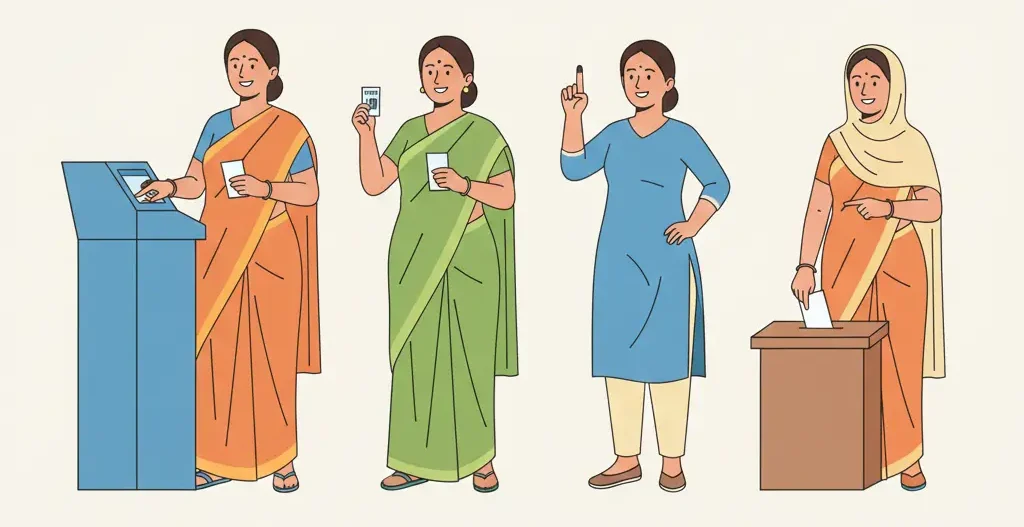
भारतीय राजनीति में महिला मतदाताओं की विशेष भूमिका है। लोकसभा और विधानसभा चुनाव हों या फिर पंचायती प्रतिनिधियों का निर्वाचन, महिलाओं का मत खास मायने रखता है। इसके बावजूद प्रतिनिधित्व के मामले में महिलाओं की भूमिका अपेक्षा के अनुरूप आगे नहीं बढ़ रही है।
इस बार बिहार विधानसभा चुनाव में महिलाओं ने जमकर मतदान किया। कई क्षेत्रों में महिलाओं ने पुरुषों की तुलना में अधिक मतदान किया। शहरों से लेकर गांवों-कस्बों तक के मतदान केंद्रों पर महिलाओं की लंबी कतारें एक नागरिक के तौर पर अपने मत का महत्त्व समझने का द्योतक भी बनीं। महिला मतदाताओं का यह उत्साह अब राजनीतिक समीकरण बनाने और बिगाड़ने वाला बन गया है।
व्यापक रूप से देखा जाए, तो महिलाओं की यह भागीदारी शिक्षा, सजगता और सामाजिक तौर पर उनकी भूमिका में आ रहे सकारात्मक बदलावों का परिणाम है। वास्तव में जीवन की बेहतरी से जुड़ी सरकारी योजनाएं हों या सुरक्षित परिवेश बनाने की कवायद, इनसे महिलाओं का जीवन सबसे अधिक प्रभावित होता है।
यही वजह है कि बिहार में वर्ष 2010 के बाद से आधी आबादी ने हर बार बढ़-चढ़कर मतदान किया है। हाल के वर्षों में कमोबेश हर प्रांत में महिला मतदाता चुनाव की धुरी बन गई हैं। मगर सवाल यह है कि जात-पात और मतदान की पारंपरिक लकीर से हटकर अपना मत देने वाली महिलाएं प्रतिनिधित्व के मामले में पीछे क्यों हैं?
इस बार के बिहार विधानसभा चुनावों में भी विपक्षी महागठबंधन के कुल उम्मीदवारों में महिलाओं की भागीदारी करीब बारह फीसद ही रही। इनमें राजद ने चौबीस महिलाओं और कांग्रेस ने पांच महिलाओं को उम्मीदवार बनाया। वीआइपी और भाकपा-माले ने एक-एक महिला को टिकट दिया।
वहीं, महिला मतदाताओं के बूते प्रचंड बहुमत पाने वाले राजग ने भी दो सौ तैंतालीस में से केवल चौंतीस सीटों पर महिलाओं को प्रत्याशी बनाया। इनमें भाजपा और जद (एकी) ने तेरह-तेरह और लोजपा (राम विलास पासवान) ने पांच महिलाओं को टिकट दिया। वहीं राजग में शामिल दूसरे दलों ने एक-एक महिला को उम्मीदवार बनाया। कुल मिलाकर दस राजनीतिक दलों ने अट्ठासी महिलाओं को ही चुनावी मैदान में उतारा।
गौर करने वाली बात है कि टिकट बंटवारे के मामले में यह असमानता मोटे तौर पर हर दल में और हर चुनाव में देखने को मिलती है। जबकि बीते कुछ वर्षों में मतदान में महिलाओं की सहभागिता बढ़ी है। महिलाएं अब जमीनी मसलों की समझ रखने लगी हैं। सामुदायिक भेद से परे एक मतदाता के रूप में अपने संवैधानिक अधिकार को इस्तेमाल करते हुए उनकी सोच बहुत स्पष्ट रहती है।
यही वजह है कि अब आधी आबादी केंद्रित योजनाओं पर विशेष ध्यान भी दिया जाने लगा है। बिहार चुनाव में भी चाहे राजग हो या फिर विपक्षी महागठबंधन, सभी दल इस आधी आबादी की महत्त्वपूर्ण भूमिका को समझने और सरकार बनाने के वास्ते उनका साथ पाने के लिए प्रयासरत दिखे। इन्हीं कोशिशों के अंतर्गत इस चुनाव में विकास, सुरक्षा, शिक्षा और रोजगार जैसे मुद्दे छाए रहे।
समझना मुश्किल नहीं कि ऐसे सभी मुद्दे महिलाओं के व्यक्तिगत, पारिवारिक और सामाजिक जीवन पर गहरा असर डालते हैं। नतीजतन, महिला मतदाताओं के झुकाव को समझने की कवायदें अब केवल राजनीतिक विश्लेषण का विषय भर नहीं रही हैं।
जीवनयापन में सहजता से संबंधित योजनाओं और नीतियों के अलावा सम्मान और सुरक्षा महिलाओं के लिए सबसे अहम मुद्दा बन गया है। महिलाओं में बढ़ती बुनियादी समझ और स्पष्ट सरोकारी भाव के बावजूद उनकी नेतृत्वकारी भूमिका आज भी पीछे क्यों है? इस पर गहराई और व्यापक रूप से विचार करने की जरूरत है।
आम चुनाव से लेकर विधानसभा चुनावों तक, हर बार महिला मतदाताओं की मुखर भूमिका देखने को मिल रही है। महिलाएं वोट बैंक के रूप में सियासी परिवर्तन की वाहक तो बन रही हैं, मगर राजनीतिक प्रतिनिधित्व उनके हिस्से कम ही आ रहा है।
अब तक देश में राष्ट्रपति, प्रधानमंत्री, मुख्यमंत्री, लोकसभा में विपक्ष की नेता और लोकसभा अध्यक्ष के साथ-साथ अन्य कई महत्त्वपूर्ण पदों को संभालने के बावजूद राजनीति में महिलाओं की भागीदारी में अपेक्षित सुधार नहीं हुआ है। सियासी जगत में सशक्त और निर्णयकारी भूमिका में महिलाओं की संख्या बहुत सीमित है।
महिला मतदाताओं को लुभाने की होड़ तो बढ़ी है, पर उन्हें प्रत्याशी बनाने के मामले में सभी दल कंजूसी दिखाते हैं। जबकि, चुनावों में मतदान का उत्साह और रुझान महिलाओं के दायित्वबोध को साफ दर्शाता है।
दरअसल, राजनीति में महिलाओं की सजग हिस्सेदारी के बावजूद उन्हें प्रतिनिधित्व के उचित अवसर न मिलना हमारे सामाजिक-पारिवारिक और राजनीतिक परिवेश में कायम तयशुदा मानसिकता को सामने रखता है। वर्ष 2020 में किए गए एक सर्वेक्षण में देश की महिलाओं और उनकी राजनीतिक सक्रियता से संबंधित कई पहलुओं पर विचारणीय स्थितियां सामने आई थीं।
सर्वेक्षण के अनुसार, महिलाओं की चुनावी भागीदारी में उनकी सामाजिक एवं आर्थिक स्थिति का विशेष प्रभाव होता है। गौरतलब है कि हमारे यहां राजनीति में उच्च सामाजिक एवं आर्थिक वर्ग की महिलाओं की भागीदारी सामान्य वर्ग से अधिक रही है।
सर्वेक्षण में लगभग छियासठ फीसद महिलाओं ने कहा कि उन्हें राजनीतिक निर्णय लेने की स्वायत्तता नहीं है। पारिवारिक मोर्चे पर देखें तो करीब एक-तिहाई महिलाओं का मानना है कि पितृसत्तात्मक समाज उनकी राजनीतिक भागीदारी में बाधा बनता है।
तेरह फीसद महिलाओं ने राजनीति में अपनी कम भागीदारी के लिए घरेलू जिम्मेदारियों को बड़ी वजह माना। शिक्षित एवं सजग महिलाओं के बढ़ते आंकड़ों के बीच यह भी आवश्यक है कि समय के साथ राजनीति में उनकी भागीदारी में बढ़ोतरी होती रहे।
न केवल परिवार और सामाजिक परिवेश में महिला नेतृत्व को सहज स्वीकार्यता मिलनी चाहिए, बल्कि तमाम राजनीतिक दलों को भी महिलाओं को अगुआई के अवसर देने के लिए आगे आना होगा। ताकि महिलाओं की भूमिका राजनीतिक दलों की जीत-हार के निर्णायक पक्ष तक ही सीमित न रहे, बल्कि उन्हें नीति निर्माण में भी व्यापक हिस्सेदारी मिले।
महिलाओं को सत्ता के गलियारों में पहुंचाकर निर्णयात्मक दायित्व सौंपने से देश की आधी आबादी की मूल समस्याओं के समाधान का मार्ग भी प्रशस्त हो सकता है। शिक्षा, स्वास्थ्य, सुरक्षा और लैंगिक समानता जैसी समस्याओं को महिलाएं भली-भांति समझ सकती हैं तथा नीतियों और योजनाओं में उनका हल तलाशने के उपाय भी सुझा सकती हैं।
यह बात भी महत्त्वपूर्ण है कि राजनीति में महिलाओं की जमीन पुख्ता करने के लिए हर स्तर पर उनकी सामुदायिक भागीदारी बढ़ाने की जरूरत है। साथ ही समाज की सोच और अपनों के विचारों में साथ देने के भाव को लेकर सकारात्मक बदलाव भी जरूरी है।
वर्ष 2023 में बनाए गए ‘नारी शक्ति वंदन अधिनियम’ को जमीनी स्तर पर प्रभावी तरीके से लागू करने की जरूरत है। इसमें लोकसभा और राज्यों की विधानसभाओं में एक तिहाई सीटें महिलाओं के लिए आरक्षित करने का प्रावधान है।
यानी महिलाओं का प्रतिनिधित्व बढ़ाने के लिए सामाजिक-पारिवारिक, आर्थिक और राजनीतिक हर स्तर पर प्रयास किए जाने चाहिए। भावी योजनाओं में आधी आबादी की बेहतरी से जुड़े पक्ष हों या महिला जीवन से संबंधित मुद्दों को प्रमुखता से उठाने का मसला, महिला प्रतिनिधियों की मौजूदगी हर मोर्चे पर बदलाव लाने के लिए आवश्यक है।

जलवायु संरक्षण की जंग से जुड़ने लगे ज्यादातर देश
सुमंत सिन्हा, ( संस्थापक और सीईओ, रिन्यू )

ब्राजील में शनिवार को संपन्न कॉप-30 इसको लेकर नहीं था कि जलवायु संकट से निपटने के लिए क्या किया जाए? यह तो पहले से सबको पता है। अलबत्ता, यह सम्मेलन इस बारे में था कि उन उपायों को कैसे अमल में लाया जाए? ऐसे में, जलवायु संबंधी कार्रवाइयों से जुड़ी छह सच्चाइयां हमें जाननी चाहिए।
पहली, पेरिस समझौते से अमेरिका के बाहर निकलने के बाद भी काम हो रहे हैं। गौरतलब है कि सत्ता संभालते ही राष्ट्रपति ट्रंप अमेरिका को ऐतिहासिक जलवायु समझौते से बाहर निकाल ले आए और जलवायु संरक्षण पर कोई भी कदम उठाने से बचते रहे। फिर भी, जलवायु संबंधी कार्रवाईयां चलती रहीं। जलवायु जैसे वैश्विक मुद्दों पर इस तरह की निरंतरता महत्वपूर्ण है, क्योंकि यह निवेश बढ़ाने में कारगर साबित होती है।
दूसरी स्वच्छ ऊर्जा की तरफ बदलाव धीमा जरूर है, लेकिन लंबे समय से नजरंदाज की गई अन्य जलवायु प्राथमिकताओं पर ध्यान दिया जा रहा है। मसलन, 115 देशों ने जलवायु परिवर्तन से निपटने के लिए अपनी योजनाओं और प्रतिबद्धताओं का खाका, यानी एनडीसी जमा किया है। अक्षय ऊर्जा के इस्तेमाल को लेकर भी प्रतिबद्धताएं बढ़ी हैं। हम 2030 तक अपनी अक्षय ऊर्जा क्षमता को दोगुना करने की ओर अग्रसर हैं। वैसे, एक सकारात्मक पहलू यह भी है कि वनों व महासागरों के संरक्षण के लिए छह अरब डॉलर की प्रतिबद्धता जताई गई है। यह उल्लेखनीय है, क्योंकि ये प्राकृतिक संसाधन हमारे उत्सर्जन का आधा हिस्सा सोख लेते हैं।
तीसरी, जीवाश्म ईंधन का चरणबद्ध खात्मा अब भी मुश्किल में है। इस मुद्दे पर तमाम देशों को सहमत करना उतना ही कठिन है, जितना इस काम को संपन्न करना । कॉप-28 में बेशक इस मुद्दे को उठाया गया था, लेकिन कॉप-30 में इसको लेकररोडमैप नहीं बन सका । जीवाश्म ईंधन का उपयोग कम करने के साथ ही हमें वैकल्पिक संसाधनों का इस्तेमाल बढ़ाना होगा, साथ ही उत्पादन में जो कमी आएगी, उसका भी निदान खोजना होगा। यह जटिल काम है और प्रतिस्पर्धी हितों के बीच अभूतपूर्वं सहयोग की मांग करती है। हालांकि, इसे तुरंत शुरू करने की दरकार भी है।
चौथी, जलवायु परिवर्तन के प्रभावों के अनुकूल कदम उठाने पर बात तो हुई, लेकिन बहुत कम विकसित देशों ने विकासशील देशों को जलवायु संकट के प्रभावों से निपटने और बुनियादी ढांचे आदि के लिए 2035 तक तीन गुना रकम देने का वायदा किया है। यह सुनने में तो अच्छा लगता है, पर देर से उठाया गया अस्पष्ट और अपर्याप्त कदम है। बाढ़ और सूखा झेल रहे देशों के लिए यह अस्तित्व का सवाल है।
पांचवीं, भारत का प्रभाव बढ़ रहा है। अक्षय ऊर्जा को साकार करने में जिस क्षमता का परिचय भारत ने दिया है, उससे उसने उचित ही विकसित देशों की कमजोर इच्छाशक्ति पर कड़ा रुख अपनाया। भारत ने विकासशील देशों के लिए और अधिक आर्थिक मदद की मांग भी की। यह बेहद अहम रुख है, क्योंकि अगले पांच वर्षों में दुनिया को उत्सर्जन में और ज्यादा कमी करने व वित्त- पोषण की जरूरत है, न कि यथास्थिति से आत्मसंतुष्ट होने की। यह काम जारी रहेगा। डर यह है कि कॉप ने व्यापार चर्चा के लिए दो साल की प्रक्रिया पर सहमति जताई है और यूरोपीय संघ का कार्बन टैरिफ 2026 में हमारे निर्यातकों पर असर डालेगा, जिससे प्रतिस्पर्द्धा कमजोर होगी। इस मुद्दे का समाधान अब यूरोपीय संघ के साथ चल रहे व्यापार समझौता संबंधी चर्चाओं में ढूंढना होगा।
छठी, भू-राजनीति हावी है, लेकिन व्यापार जगत के हितों को बातचीत की मेज पर जगह मिलनी ही चाहिए। चूंकि अमेरिका बाहर निकल गया है, इसलिए कॉप-30 में वैश्विक ताकत बनने का जोड़-तोड़ खूब चला । उभरते गठबंधन और व्यापार, महत्वपूर्ण खनिज, जलवायु वित्त जैसे जटिल मुद्दों को तब तक के लिए टाल दिया गया है, जब तक कि व्यापक व्यापार समझौते नहीं हो जाते। साफ है, कॉप-30 ने इस बंटी हुई दुनिया में जलवायु परिवर्तन पर बातचीत को जीवित रखा है। 190 देशों ने दिखाया है कि वे अब भी जलवायु संकट की लड़ाई में हैं, बेशक अभी जीत नहीं मिल रही है, लेकिन वे हार भी नहीं मान रहे। मौजूदा हालात में यही जीत है।