
18-11-2025 (Important News Clippings)
To Download Click Here.
 Date: 18-11-25
Revenge Trial
Judgment on Hasina is legally dodgy. And Dhaka is now a major security concern for New Delhi
TOI Editorial
She may not appreciate the irony – the court Sheikh Hasina set up in 2010 sentenced her yesterday to death, judges falling in step with the current Dhaka regime. Bangladesh’s International Crimes Tribunal (ICT) was instituted to try Pakistani war criminals and their Bengali collaborators for the genocide carried out during Bangladesh’s 1971 liberation struggle. Trying war criminals was a big demand of Bangladeshi civil society that sought justice for the 3 million killed and 250,000 women raped during 1971. The Hasina govt had responded to this, set up the ICT, and sentenced several Jamaat war criminals to death.
Therefore, to try Hasina for the loss of lives during the student-led protest in Bangladesh last year through ICT is legally questionable. The trial appears to be an exercise in revenge. Those who prosecuted Hasina clearly have an axe to grind. They are also going after secular intellectuals like Shahriar Kabir, who remains incommunicado in detention. Also, Hasina and her then home minister have been charged with superior command responsibility and the deaths of 12 student protesters. But the main witness in the case is Bangladesh’s former inspector general of police who is in custody and became state approver.
There is, therefore, much doubt about the whole legal process carried out under the watch of anti-Hasina forces. Dhaka hassaid it will again seek Hasina’s extradition from New Delhi. But the possibility of thathappening appears remote. Not only is Hasina not guaranteed a fair trial in Bangladesh, forces dangerously hostile to India, secular Bangladeshis and Bangladeshi Hindus have gained ground in that country. Add to this, threats issued by elements of the interim Bangladeshi regime against security of India’s Northeast, and growingcollaboration between Bangladeshi and Pakistani security agencies. There is a serious threat of ISI-backed anti-India groups reconstitutingin Bangladesh – something Hasina had prevented.
Plus, Hasina’s party, Awami League, has been suspended by the current Dhaka dispensation. That means Bangladeshi elections slated for next Feb won’t be representative. Mujibur Rahman’s secular Bangladesh looks perilously close to sliding into Islamic fundamentalism, and Hasina is the obvious target. Unsurprisingly, the current Dhaka regime is indifferent to India’s security concerns. It’s prepared to take economic hits just so that it can be nasty to New Delhi. All of this makes Bangladesh India’s dangerous eastern flank. Pakistan is already a constant security threat and the addition of Bangladesh makes the job of security agencies all that tougher.
Date: 18-11-25
Smoking Gun
All studies show vehicle emissions are strongly tied to mileage, not age. When will law take note?
TOI Editorial
Nowhere in the democratic world, barring India, are owners forced to scrap old vehicles. Berlin or London, you can drive your car as long as it passes regular fitness tests, which are strict. But in Delhi, your petrol vehicle is legally dead the day it turns 15 – diesels die at age 10. This is the state trying to protect citizens from themselves – from the emissions of their vehicles. Well-intentioned, but without scientific basis.
Now a Delhi Technological University (DTU) study questions the assumed correlation between vehicle age and emissions. It says mileage –kilometres run – affects emissions more: “Mileage is equally important and, in many cases, more reflective of how a vehicle behaves on the road.” Why? Because ignition systems, catalytic converters and combustion efficiency degrade with use.
Global energy and infra consultancy Ricardo had earlier shown that even Euro 3 cars, made during 2000-04, had good emissions till a mileage of 100,000km. This year, Polish researchers showed emissions from cars driven 86,000-160,000km were significantly higher than those for low-mileage cars. The takeaway from all rigorous research is that mileage matters more than age.
Given that Delhi govt has challenged the vehicle age-based scrappage policy in SC, these points deserve attention. Indiscriminate – without regard to actual condition – scrapping of vehicles has a huge environmental cost, because making new cars consumes materials and energy. You may recycle the steel and aluminium, but the plastics – dashboards, door panels, etc – can only be ‘downcycled’. The electronics – old chips, music systems, etc – are sheer waste, and so are the tyres, batteries, engine fluids.
Above all, mandatory scrapping is an impost on owners. What the state didn’t give, it mustn’t take away without a compelling reason, which, judging by the evidence, doesn’t exist.

Power grab
General Munir’s indirect coup in Pakistan could backfire on him
Editorial
The 27th amendment to Pakistan’s Constitution, passed on November 13, formalises what has long been an open secret — that the military establishment pulls the strings behind a facade of democracy. Gen. Asim Munir, the army chief, has been steadily consolidating power, and the Shehbaz Sharif coalition government operates with his blessings. In May, after a brief conflict with India, the government elevated Gen. Munir to the rank of Field Marshal — the second five-star General after Ayub Khan. The amendment goes further, restructuring the military command and the judiciary. It rewrites Article 243 of Pakistan’s Constitution, introducing a post — Chief of Defence Forces, who will exercise authority over the Army, Navy and Air Force; the army chief will also serve as the Chief of Defence Forces. It also creates the post of Commander of the National Strategic Command, to oversee nuclear and strategic assets. The commander will be appointed by the Prime Minister on the Army chief’s recommendation. Most strikingly, the amendment offers life-long immunity from criminal proceedings to any officer elevated to a five-star rank — currently, Gen. Munir — as well as the President. Five-star officers will remain in uniform for life and can be removed only through an impeachment-like process under Article 47.
In effect, Gen. Munir will be the new centralised power centre in the establishment. The amendment also strips the Supreme Court of its authority to interpret the Constitution, establishing a new constitutional court whose judges will be appointed by the government. Several senior judges have resigned in protest. Democracy has hardly been Pakistan’s strong point. Yet, civil society and segments of the political class have, at critical moments, resisted powerful generals, reclaiming limited democratic space. Today, however, the ruling elite seem more willing than ever to play second fiddle to the generals. The only mainstream politician challenging Gen. Munir is Imran Khan, in prison for more than two years. With a weakened government and an opposition leadership behind bars, Gen. Munir is expanding his authority with the full comfort of constitutional protection. But the story of the rise of Pakistan’s military strongmen typically ends with their eventual downfall. His power grab comes at a time when the country is fighting an insurgency in the tribal areas. Relations with India and Afghanistan are at a low. Imran Khan’s PTI continues to challenge the ‘hybrid’ civil-military rule from the streets. And the economy is in chronic distress. Gen. Munir’s response to these challenges was to stage an indirect coup using supine politicians. It could backfire sooner rather than later.
Date: 18-11-25
The lower judiciary — litigation, pendency, stagnation
There are solutions to improve the working of the subordinate judicial service
P.R. Ramakrishnan, [ is a practising lawyer in Coimbatore. ]

A Constitution Bench of the Supreme Court of India, headed by the Chief Justice of India, recently linked the sense of stagnation in the subordinate judicial service to prolonged litigation and the huge pendency in India’s courts. According to the National Judicial Data Grid, there are 4.69 crore cases pending in district courts. Another Bench of the Court has asked judges in Delhi to undergo training due to a lack of basic knowledge.
There are a few options to make changes in the administration of justice.
The Code of Civil Procedure and the Civil Rules of Practice contemplate procedures to be followed by courts in entertaining proceedings, issuing summons to the defendants, and for the appearance of parties. Subordinate judges handle this. They are forced to call every suit for the appearance of parties or order the issue of fresh summons and receive vakalathnamas. This takes up much time in the morning, leaving judges with very little time for the disposal of cases on merits. In most subordinate courts, the calling of cases goes on from 10.30 a.m. till well past noon. Quality time is lost by attending to such clerical and ministerial work.
A judicial officer in the lowest rank in hierarchy can be appointed in every district court to call all the cases of that particular cadre of courts (senior civil judges or civil judges or district munsifs, as the case may be). This court can do ministerial work the whole day and can also be assigned with the power to record ex parte evidence, issue of summons, receiving vakalath and written statements. At the end of the day, this court can list matters for trial and arguments the following day in each court. This list can be posted on the website in the evening.
The cases can be taken up, as in this list, from 10.30 a.m. every day by each court, and these courts can dispose of matters listed till evening. Even if some matters are adjourned, the orders can be still dictated, thus helping in judgements and case disposal.
The subordinate judiciary, its quality
There was a time when lawyers who practised law under the tutelage of a reputed lawyer in any branch of law, with at least 10 years of experience in the bar, used to be appointed district munsif/magistrates. Lawyers with more experience may also qualify after appearing for examinations for direct recruitment as district judges.
But now, judges are appointed without any experience and find it difficult to cope with the workload. In many cases, there are a number of judges who do not even pass orders as they are not equipped. Therefore, every civil judge or senior civil judge who is appointed must undergo training with different High Court Benches for a few months and observe how a High Court functions, how High Court judges hear matters, interact with lawyers, go through the judgments cited and study how orders are passed. This work culture by observation is a step that will definitely improve the working of the subordinate judge judiciary.
Whenever a statute is passed, new provisions are introduced, purportedly for the quick disposal of cases. But, in many cases, results are not achieved for expeditious disposal. On the contrary, there is a negative impact.
A typical example is Section 12(a) of the Commercial Courts Act and its provisions making pre suit mediation mandatory. The Supreme Court, while interpreting Section12(a), has held, in Patil Automation vs Rakheja Engineers (2022 (7) MLJ 139), that this provision is mandatory and that the plaint is liable to be rejected without pre suit mediation. In commercial cases, parties who are in business would have already exchanged notices. Only where exchange of notices do not result in settlement, do they resort to a legal proceeding in court. Therefore, at the time of filing the suit, it would be known where the matter is headed. So, where is the need to make mediation mandatory and direct the plaintiff to exhaust the remedy of mediation before filing the claim?
Another example is the six-month cooling-off period in marriage laws in filing for consent divorce. The parties concerned often want the disposal of the case within this period. Once a couple decides to separate on mutual terms, a pertinent issue is on whether they should be forced to wait for six months. Some courts do not allow this cooling- off period to be dispensed with, leading to further proceedings and pendency. It is not known if it is wise to have a one-year separation in filing a mutual consent petition, while the same is not applicable in a contested petition. An untrue declaration is made by the parties — making it out as if they have been separated for more than one year — to move a petition. Some of these provisions result in pendency and also the litigant facing frustration.
A third example is the new Rent Act. There is enough confusion already as to whether the absence of a written registered lease can vest the rent court with jurisdiction in conflicting judicial opinion. Armed with the same set of facts, one can approach a civil or a commercial court (in the case of commercial lease), but not a rent court. These anomalies could have been avoided had the legislation accepted oral lease as well as delivery of possession recognised by the Transfer of Property Act, as before. In the case of the lease of residential properties and small apartments, parties do not want to spend on stamp duty and registration fee for lease. The nebulous state of affairs created through statute is another reason for pendency in courts.
Archaic procedural law
A number of provisions in the Code of Civil Procedure have also become a tool for some litigants to delay proceedings. These provisions are misused for which there are many examples.
For instance, why should there be a preliminary decree and final decree in a partition action? Why cannot one decree be passed dividing the properties or order sale under the Partition Act soon after the passing of the decree?
Even if two decrees are contemplated, why should not the final decree proceeding be an automatic continuation of the preliminary decree, without a fresh application causing delay? Similarly, execution proceedings are not easily terminated because of many provisions under Order XXI of the Code which can be used by the judgment debtors to delay the process of execution. For example, why should there be 106 rules under Order XXI, many of which are hyper technical?
Unless drastic steps are taken to modify the procedure and compel parties to provide ways and means to satisfy the decree if passed in due course (even at the stage of framing and the list of assets by disclosure are made), a citizen will be forced to visit courts for years to realise his decree. This will be his plight in respect of all money claims including arbitration awards passed in his favour. There is a need to simplify the process of the execution of decrees and awards. and it is here that fast track procedure is needed.
What is important is the quick termination of the proceeding and not merely the conduct of trial or further proceedings by way of appeal. The code might have served the purpose when it was passed in 1908, but it is unfortunate that even after amendments in 1976 and 2002, there is still no solution to have the proceedings concluded expeditiously.
An example is the Amendment to Order VIII Rule 1 CPC making it mandatory for a defendant to file a written statement within 90 days (the Plaintiff can gather details for years to file the suit). What happens if the written statement is filed within 90 days? The suit is still not disposed of immediately and the trial takes its own course, especially when the right to appeal is exercised by the aggrieved party. So, why have a time frame only for filing the written statement?
This provision has not helped the cause other than its resulting in slipshod pleadings. While the time frame is fine when it is about money claims, it does not work in title suits.
Pendency and the higher judiciary
The issue of there being huge pendency needs to be addressed by the higher judiciary also. The termination of a judicial proceeding within a reasonable time — not a hasty approach to a proceeding when it commences or is work in progress — is the urgent need.
Solutions to reduce pendency ought to be considered. Unless we give up archaic laws and recruit competent lawyers as judges, we cannot expect the qualitative disposal of cases. Nor will pendency reduce.
The subordinate judiciary should be allowed to function as judges and not be a ministerial court officer ordering the issue of fresh summons, receiving vakalathnama and pleadings, and calling cases and writing notes on the docket for nearly two hours every day.
Date: 18-11-25
India needs to ‘connect, build and revive’ with Africa
Ten years after India hosted the last India-Africa Forum Summit, the next chapter needs to be written
Syed Akbaruddin, [ is a former Indian Permanent Representative to the United Nations and, currently, Dean, Kautilya School of Public Policy, Hyderabad ]
Ten years ago, New Delhi hosted the last India-Africa Forum Summit (IAFS-III). The 2015 summit was a moment of significance. Marking a leap in India’s diplomatic imagination under Prime Minister Narendra Modi, India had welcomed representatives from all 54 African states.
Since then India has added 17 new missions across Africa. Trade has surpassed $100 billion. Investment flows are gathering pace. India’s support for Africa’s global voice has grown. It was key in ensuring full membership for the African Union in the G-20. It is now time to take stock, not only of promises made but also of the foundations laid.
The opportunities and challenges
By 2050, one in four people on earth will be in Africa. India will be the world’s third largest economy. Between these two lies a potential growth corridor of commerce, demography, technology and aspiration.
India is among Africa’s top five investors, with cumulative investments of $75 billion. However, the underlying model has shifted. From ports to power lines, vaccine production to digital tools, the message for engagement is clear. Build together.
The evolution of ties is visible. In April 2025, India and nine African navies (Comoros, Djibouti, Kenya, Madagascar, Mauritius, Mozambique, the Seychelles, South Africa and Tanzania) exercised together in the first Africa-India Key Maritime Engagement (AIKEYME), initiating a security partnership rooted in shared oceanic geography.
India’s Exim Bank recently extended a $40 million commercial credit line to the ECOWAS Bank for Investment and Development (EBID) — modest in scale, but a signal of interest in African-led development. Education remains a trusted pillar.
The new campus of IIT Madras, in Zanzibar, is the most visible example. Behind it stands decades of knowledge partnerships, including the Pan-African e-Network and India’s Indian Technical and Economic Cooperation (ITEC) programme, which continue to train thousands across the continent.
These are not isolated efforts but part of a growing web. Beyond that, India continues to push for African representation in global institutions and contributes to United Nations peacekeeping missions on the continent.
India’s trade with Africa is growing, but it still lags behind China. Indian firms arrive full of promise but are often slowed by small balance sheets and bureaucratic drag. The temptation to scale back is real, but erroneous.
Instead, India must move up the value chain. That means co-investing in future-facing sectors — green hydrogen, electric mobility and digital infrastructure. Africa today is asserting its terms. The African Continental Free Trade Area (AfCFTA) is laying the groundwork for a single continental market. India’s UPI and digital stack can complement this transformation. Alas, tools alone are not strategy. Delivery is. In cities such as Kigali (Rwanda), Nairobi (Kenya) and Lagos (Nigeria), African innovation ecosystems are growing. But the competition is global.
The human link
India’s most enduring export to Africa is not technology. It is talent. Nearly 40,000 Africans have studied in India in the last decade, through the ITEC, the Indian Council for Cultural Relations (ICCR) and the e-Network platforms. Many have returned to shape policy, run ministries or lead innovation back home. They are living bridges that carry trust across borders.
The movement is not one way. African students, athletes and entrepreneurs are carving their space in India. Nigerian footballers such as Ranti Martins have become household names. The Indian cricket team’s fast bowling coach is South Africa’s Morne Morkel. African voices are present in India’s universities and laboratories. The partnership is not just strategic. It is lived.
Looking to the future
If India wants to sustain this momentum, three moves matter.
First, connect finance to real outcomes. Every line of credit must lead to something visible and valuable. Public finance must de-risk, not displace, private capital.
Second, build an India-Africa digital corridor. This should rest not only on UPI and India Stack but also on Africa’s digital strengths. Together, we can co-develop platforms for health, education and payments that serve the Global South.
Third, revive the institutional backbone. The IAFS has not met since 2015. That Summit, at Mr. Modi’s insistence, brought all of Africa together. As its chief coordinator, this writer saw first-hand the diplomatic energy it released. It is time to bring that spirit back as a date on India’s diplomatic calendar.
There was a time when merchants crossed the Indian Ocean in search of spice and gold. Today, India and Africa are not just exchanging goods. They are beginning to exchange confidence, capacity, ideas, and connecting futures.
A decade after India welcomed all of Africa to Delhi, the next chapter needs to be written. India once extended a hand to the whole of Africa. Now it is time to join hands and build together.

Date: 18-11-25
शेख हसीना को सजा-ए- मौत देने के क्या मायने हैं
संपादकीय
भारत में पनाह ले रहीं बांग्लादेश की पूर्व पीएम शेख हसीना को ढाका स्थित इंटरनेशनल क्राइम ट्रिब्यूनल ने छात्र आंदोलन के दौरान हुई हत्याओं का दोषी मानते हुए फांसी की सजा सुनाई है। इसके विरोध में अवामी लीग ने मंगलवार को देशव्यापी बंद का ऐलान किया है। पिछले दो हफ्तों से वर्तमान सत्ता के खिलाफ जनाक्रोश सड़कों पर उतरा है। यह फैसला भी उसी की प्रतिक्रिया में माना जा रहा है। यह सच है कि बांग्लादेश में हसीना-शासन के खिलाफ जनांदोलन के दौरान सरकारी लोगों द्वारा ज्यादतियों ने जनाक्रोश को हवा दी थी, जिससे युवा आंदोलन उग्रतर होता गया और अंततः हसीना को देश छोड़ कर भारत में पनाह लेनी पड़ी। पनाह देने से भारत से नाखुश मोहम्मद यूनुस नाराजगी में पाकिस्तान की गोद में जा बैठे। चूंकि बांग्लादेश के जन्म में भारत ने अहम भूमिका निभाई थी और हसीना के पिता शेख मुजीब को पद पर बैठाने में मदद की थी, लिहाजा हसीना और भारत में भी अच्छे संबंध रहे। इधर पाकिस्तान में भी 27वें संविधान संशोधन के जरिये जनरल मुनीर को असाधारण शक्तियां देने पर असंतोष है और सुप्रीम कोर्ट के दो जजों सहित कुछ निचली कोर्ट्स के जजों ने इसके विरोध में अपना इस्तीफा दिया है। अफगानिस्तान में भी महिलाओं के दमन को लेकर दबी जुबान से एक वर्ग आक्रोश जाहिर कर रहा है।

शेख हसीना को सजा
संपादकीय
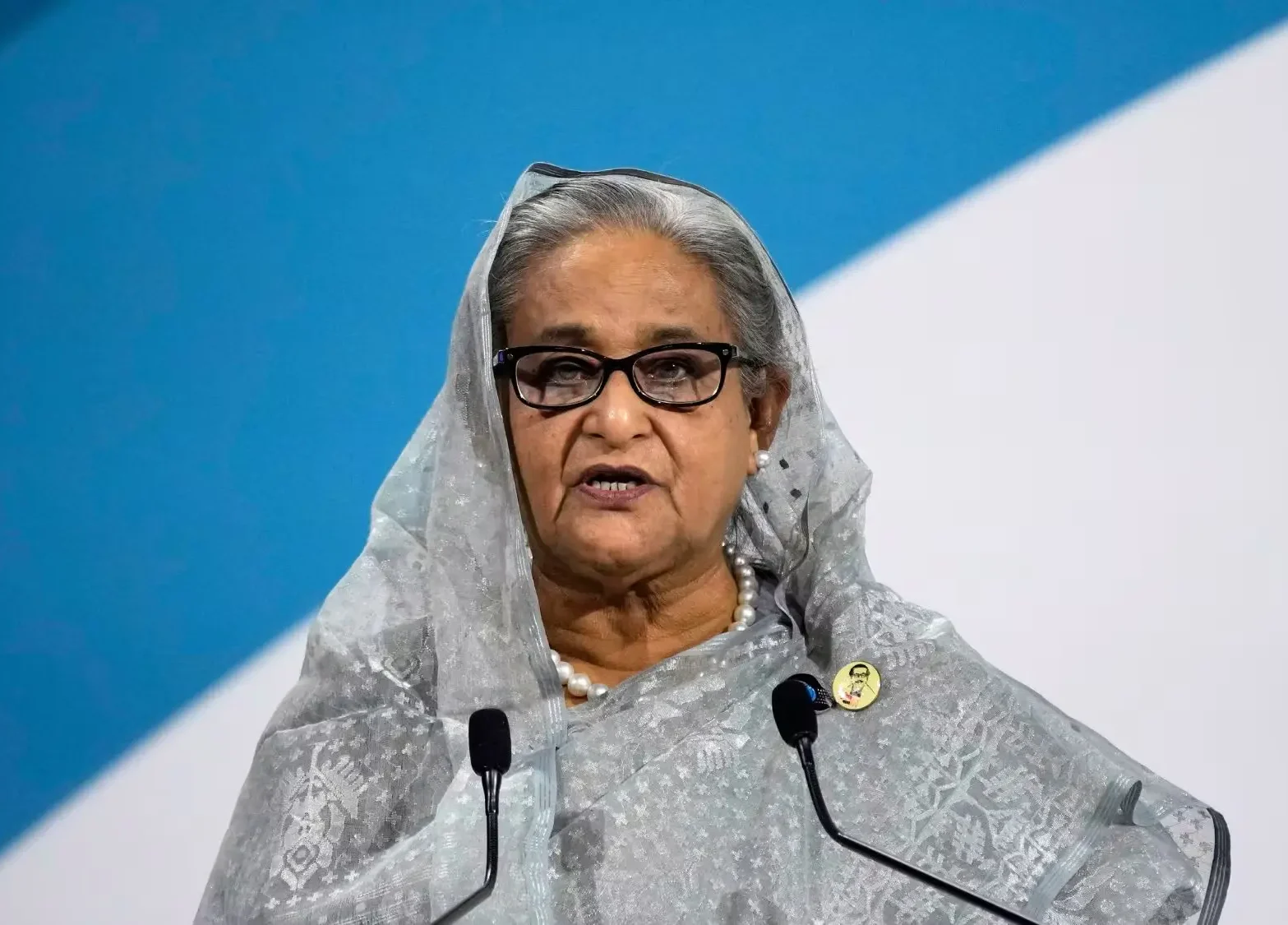
बांग्लादेश के इंटरनेशनल क्राइम ट्रिब्यूनल की ओर से भारत में शरण लिए पूर्व प्रधानमंत्री शेख हसीना को मानवता के खिलाफ अपराध का दोषी ठहराते हुए मौत की सजा सुनाने से ऐसी प्रतीति होना स्वाभाविक है कि किसी अंतरराष्ट्रीय संस्था ने यह फैसला सुनाया है, लेकिन यह तो अंतरराष्ट्रीय नाम वाला बांग्लादेश का अपना न्यायाधिकरण है, जिसके जज से लेकर वकील तक मोहम्मद युनूस के नेतृत्व वाली अंतरिम सरकार की ओर से तब किए गए। इस ट्रिब्यूनल की वैधानिकता और विश्वसनीयता उतनी ही संदिग्ध हैं, जितनी अंतरिम सरकार की । शेख हसीना को सजा सुनाने वाले ट्रिब्यूनल के फैसले पर सवाल इसलिए भी उठ रहे हैं, क्योंकि उसने छात्र आंदोलन के दौरान हुई हिंसा के समय पुलिस प्रमुख रहे चौधरी अब्दुल्ला को केवल पांच वर्ष की सजा सुनाई। इससे इन्कार नहीं कि शेख हसीना सरकार के समय जो आरक्षण विरोधी आंदोलन भड़का, उसमें अनेक लोग मारे गए थे, लेकिन तथ्य यह भी है कि यह आंदोलन भी हिंसक था और उसका उद्देश्य तख्ता पलट था। इस आंदोलन के निशाने पर अवामी लीग के समर्थकों के साथ पुलिस कर्मी भी थे। इसकी भी अनदेखी न की जाए कि इस आंदोलन के दौरान जिन पर हिंसा भड़काने के आरोप लगे, उनमें से कई अंतरिम सरकार में शामिल हो गए।
निःसंदेह सत्ता में रहते समय शेख हसीना ने पुलिस को हिंसक छात्र आंदोलन से निपटने के आदेश दिए होंगे, लेकिन इस निष्कर्ष पर पहुंचना विचित्र है कि उनके कहने पर छात्रों की हत्या की गई। तथाकथित इंटरनेशनल ट्रिब्यूनल की ओर से शेख हसीना के खिलाफ ऐसे ही किसी कठोर फैसले की भरी-पूरी आशंका थी, क्योंकि वहां की अंतरिम सरकार को वे फूटी आंख नहीं सुहा रही धीं। इसका पता इससे चलता है कि उनकी पार्टी अवामी लीग को प्रतिबंधित कर उसे चुनाव में भाग लेने से पहले ही रोका जा चुका है। इसके अलावा हिंसक आंदोलन की भेंट चढ़े लोगों की मौतों का संज्ञान नहीं लिया गया। शेख हसीना को मौत की सजा सुनाए जाने के बाद वह और स्पष्ट है कि बांग्लादेश में होने जा रहे चुनावों के समय उनके समर्थकों का दमन होगा। इन चुनावों में कट्टरपंथी संगठनों को जिस तरह भाग लेने की अनुमित दे दी गई है, उससे बांग्लादेश का भविष्य और अधिक संकट में दिख रहा है। चुनाव बाद कट्टरपंथी तत्व वहां की सत्ता में काबिज हो सकते हैं। यदि ऐसा होता है तो भारत की समस्या और बढ़ जाएगी। बांग्लादेश की अंतरिम सरकार ने जिस तरह भारत से मांग की कि वह शेख हसीना को उन्हें सौंपे उससे भी दोनों देशों के बीच तनाव बढ़ सकता है, क्योंकि यह तय है कि भारत ऐसा नहीं करने वाला । इसलिए और भी, क्योंकि ट्रिब्यूनल को कंगारू कोर्ट बता रहीं शेख हसीना उसके फैसले को चुनौती दे सकती हैं।
 Date: 18-11-25
डिजिटल काबिलियत का लाभ उठाए भारत
अजय कुमार
अमेरिकी प्लेटफॉर्म उदाहरण के लिए व्हाट्सऐप, इंस्टाग्राम, यूट्यूब, फेसबुक (मेटा) और एक्स का भारत के डिजिटल क्षेत्र में दबदबा है। करोड़ों लोग इनका इस्तेमाल करते हैं, इसके बावजूद इनका अधिकांश आर्थिक मूल्य विदेश चला जाता है। अगर प्रति उपयोगकर्ता राजस्व का अनुमान लगाया जाए तो मेटा के 90 करोड़ भारतीय उपभोक्ता ही करीब 45 अरब डॉलर सालाना का आर्थिक मूल्य तैयार करते हैं। गूगल, एमेजॉन और माइक्रोसॉफ्ट जैसे प्लेटफॉर्म्स पर भारत की डिजिटल मौजूदगी का मूल्य 100 अरब डॉलर से अधिक है जो विदेश जा रहा है।
इसके विपरीत चीन ने शुरुआती दौर में ही विदेशी ऐप्स पर प्रतिबंध लगा दिया और अलीबाबा, टेनसेंट, बायडू, वीबो और बाइटडांस जैसी स्वदेशी कंपनियां विकसित कीं। ऐसा करके उसने 1.4 अरब उपयोगकर्ताओं से जुड़े मूल्य को अपने देश में बनाए रखा। आज बाइटडांस (155 अरब डॉलर) और अलीबाबा (137 अरब डॉलर) जैसी कंपनियां रिलायंस और टाटा जैसे भारत के सबसे बड़े कारोबारी घरानों को टक्कर दे रही हैं। अगर भारत ने शासन और समावेशन के लिए तकनीक पर ध्यान केंद्रित करने के बजाय उसी दिशा में कदम बढ़ाया होता जैसा कुछ अन्य देशों ने किया, तो आज जो राजस्व, नौकरियां और नवाचार विदेश में केंद्रित हैं, वे भारत की अपनी डिजिटल अर्थव्यवस्था को मजबूत कर सकते थे।
अर्थशास्त्र से इतर उपयोगकर्ताओं के डेटा पर नियंत्रण भी एक बड़ी रणनीतिक ताकत है। आंकड़े उन सामाजिक रुझानों और राजनीतिक मिजाज के बारे में बताते हैं जो बाजार और लोकतंत्र को आकार देते हैं। कैंब्रिज एनालिटिका स्कैंडल बताता है कि कैसे फेसबुक के आंकड़े चुनावों को प्रभावित कर सकते हैं जबकि गूगल और एमेजॉन डेटा का इस्तेमाल आर्टिफिशल इंटेलिजेंस और वाणिज्य पर अपनी पकड़ को मजबूत बनाने के लिए करते हैं।
यहां तक कि व्हाट्सऐप द्वारा अमेरिकी एजेंसियों को कथित रूप से पिछले दरवाजे से पहुंच मुहैया कराने की खबरें भी भारत की संप्रभुता को लेकर गंभीर चिंताएं उत्पन्न करती हैं। भारत, जहां लगभग एक अरब इंटरनेट उपयोगकर्ता हैं, उसके लिए अपने डेटा पर संप्रभुता सुनिश्चित करना केवल आर्थिक लक्ष्य नहीं, बल्कि डिजिटल स्वतंत्रता और राष्ट्रीय सुरक्षा का एक मूल स्तंभ है।
चीन की सरकार नियंत्रित व्यवस्था के उलट भारत में इंटरनेट पूरी तरह खुला और वैश्विक संपर्क वाला है। चीन की राज्य-नियंत्रित फायरवॉल प्रणाली के विपरीत, भारत एक खुला और वैश्विक रूप से जुड़ा हुआ इंटरनेट संचालित करता है। ग्रेट फायरवॉल जैसा मॉडल न तो भारत के लोकतंत्र के अनुकूल है, और न ही उन करोड़ों भारतीयों के लिए जो पहले से वैश्विक प्लेटफॉर्म्स पर सक्रिय हैं। भारत का मार्ग प्रतिस्पर्धा का होना चाहिए, न कि बंदीकरण का। ऐसा मार्ग जिसमें स्थानीय रूप से विकसित प्लेटफॉर्म बनाए जाएं जो उपयोगकर्ताओं को उनकी पसंद से आकर्षित करें, और ऐसा नवाचार, सुरक्षा, और स्थानीय प्रासंगिकता के आधार पर हो।
भारत की सबसे बड़ी चुनौती उन वैश्विक डिजिटल प्लेटफार्म्स के शक्तिशाली नेटवर्क प्रभावों में निहित है, जहां उपयोगकर्ताओं को उसी प्लेटफॉर्म पर बने रहने से अधिक लाभ मिलता है। यही बात नए प्रतिस्पर्धियों के लिए रास्ता बंद कर देती है। फिर भी, पिछले एक दशक में एक महत्त्वपूर्ण मोड़ आया है जब जोमैटो, जोहो, पेटीएम, फोनपे और रेजरपे जैसी भारतीय मूल की डिजिटल कंपनियों ने उभरकर अपनी पहचान बनाई है। इन सफलताओं से स्पष्ट संकेत मिलता है कि भारत के डिजिटल उद्यम अब वैश्विक प्रभुत्व को चुनौती देने और डिजिटल अर्थव्यवस्था की शीर्ष पंक्ति में अपनी जगह बनाने के लिए तैयार हैं। आज कई शक्तियां एक साथ मिलकर इस परिवर्तन को वास्तविकता में बदलने की दिशा में काम कर रही हैं।
भारत के 90 करोड़ इंटरनेट उपयोगकर्ताओं के रूप में मौजूद भारी भरकम डिजिटल आधार पर काफी ध्यान केंद्रित है लेकिन वास्तविक कहानी तो इसके आगे है। अगले एक दशक में 50 करोड़ और भारतीय ऑनलाइन होंगे क्योंकि आय, शिक्षा और संपर्क सभी बढ़ रहे हैं। यह अगली लहर भारतीय कंपनियों के लिए एक विशाल और अब तक अप्रयुक्त बाजार का प्रतिनिधित्व करती है, जिसे वे स्थानीयकृत, किफायती और सांस्कृतिक रूप से अनुकूल समाधान के माध्यम से हासिल कर सकती हैं।
जैसे-जैसे स्थानीय प्लेटफॉर्म्स का विस्तार हो रहा है, वे उन उपयोगकर्ताओं को आकर्षित कर रहे हैं जो पहले वैश्विक प्लेटफॉर्म्स पर निर्भर थे। यह बदलाव अब स्पष्ट रूप से दिखाई दे रहा है। उदाहरण के लिए, नायिका ने नव-धनाढ्य, नई पीढ़ी के ब्रांड-प्रेमी उपयोगकर्ताओं को वैश्विक ई-कॉमर्स दिग्गजों से अपनी ओर खींचा है। भारत की भाषाई विविधता जो एक समय डिजिटलीकरण को अपनाने में बाधा थी, अब वह एक रणनीतिक बढ़त है। घरेलू प्लेटफॉर्म वैश्विक प्रतिद्वंद्वियों को पीछे छोड़ सकते हैं। स्थानीय भाषाओं और सांस्कृतिक सामग्री को लेकर भारतीय स्टार्टअप्स उन बाजारों तक पहुंच सकते हैं जो अब तक अनछुए हैं।
वर्षों से डिजिटल दबदबा नेटवर्क प्रभाव पर निर्भर रहा। ज्यादा उपयोगकर्ताओं का मतलब था बेहतरीन प्लेटफॉर्म। वह तर्क अब खत्म हो रहा है। एआई अब पैमाने पर सीख को तरजीह देता है। जैसा कि अमेरिकी अर्थशास्त्री हाल वैरियन ने 2019 में कहा था, एआई बेहतर आंकड़ों से खुद में सुधार करता है न कि सिर्फ संख्याओं से।
बोस्टन विश्वविद्यालय के प्रोफेसर जेम्स बेस्सेन ने दिखाया है कि ओपन-सोर्स एआई ने स्टार्टअप्स के लिए अपनाने की बाधाओं को कम कर दिया है। इस युग में लाभ अब डेटा की गहराई और विविधता तथा एल्गोरिदम की रचनात्मकता से प्राप्त होता है। भारत की विस्तृत, युवा और विविध जनसंख्या के कारण उसके पास सबसे समृद्ध उपयोगकर्ता डेटा सेट्स में से एक है, और वह इस बदलाव का लाभ उठाने के लिए सर्वोत्तम स्थिति में है। जहां पैमाने से बुद्धिमत्ता की ओर, और नेटवर्क से ज्ञान की ओर बदलाव हो रहा है।
कुछ दशक पहले भारत के डिजिटल स्टार्टअप्स वैश्विक स्तर हासिल करने के लिए जरूरी निवेशक जुटाने में संघर्ष करते थे। आज देसी कंपनियों ने साबित किया है कि वे नवाचार कर सकती हैं, बड़े पैमाने पर काम कर सकती हैं और एक परिपक्व व्यवस्था में प्रतिस्पर्धा कर सकती हैं। यूनिफाइड पेमेंट इंटरफेस यानी यूपीआई, आधार और ओपन नेटवर्क फॉर डिजिटल कॉमर्स ने उद्यमिता के लिए एक मजबूत बुनियाद पैदा की है। यह भारत के लिए उपयुक्त समय है कि वह नए वैश्विक डिजिटल प्लेटफॉर्म तैयार करे। देश की नई पीढ़ी साहसी है, जोखिम लेने वाली है और महत्त्वाकांक्षी भी है। जेनजी का आत्मविश्वास और रचनात्मकता नवाचार को बढ़ावा दे रही है और भारत दुनिया के बेहतरीन डिजिटल उपक्रम तैयार कर रहा है।
ये रुझान भारत से उत्पन्न होने वाले डिजिटल प्लेटफॉर्म्स की बात को मजबूती देते हैं। सरकार इसे बढ़ावा दे सकती है। दो करोड़ से अधिक कर्मचारियों वाला भारत का सरकारी क्षेत्र दुनिया के सबसे बड़े संगठित उपभोक्ता समूहों में से एक है। अगर ये आंशिक तौर पर भी भारतीय प्लेटफॉर्म को अपनाएं तो जबरदस्त प्रभाव पैदा हो सकता है।
भारत अपनी डिजिटल यात्रा के एक निर्णायक मोड़ पर खड़ा है जहां वह दुनिया के सबसे बड़े उपयोगकर्ता आधार से आगे बढ़कर डिजिटल शक्ति का प्रमुख उत्पादक बनने की दिशा में अग्रसर है। राष्ट्रीय सूचना विज्ञान (एनआईसी) द्वारा सभी ‘गव डॉट इन’ ईमेल और डेटा को जोहो के भारतीय सर्वरों पर होस्ट करने का निर्णय, या अरट्टई को मेसेंजर ऐप के रूप में अपनाना, डिजिटल संप्रभुता की दिशा में एक निर्णायक कदम है। एक आत्मविश्वासी नई पीढ़ी के नवप्रवर्तकों के साथ, भारत के पास आत्मविश्वास है, जिससे वह अपनी डिजिटल नियति को रचनात्मकता के साथ आकार दे सकता है।

गरिमा के विरुद्ध
संपादकीय
किसी भी सरकार में मंत्री या अन्य उच्च पद पर बैठे व्यक्ति की यह अनिवार्य जिम्मेदारी होती है कि वह अपनी राय जाहिर करते हुए संयमित भाषा का इस्तेमाल करे । यों यह दायित्व सभी विवेकवान आम नागरिकों का भी होता है, लेकिन इससे बड़ी विडंबना क्या होगी कि कोई नेता सार्वजनिक रूप से भी ऐसी बात बोलने से नहीं हिचकता, जो न केवल हर दृष्टि से अनुचित है, बल्कि इससे खुद उसकी गरिमा भी कम होती है। मध्य प्रदेश सरकार में उच्च शिक्षा मंत्री ने राजा राममोहन राय के बारे में आपत्तिजनक टिप्पणी करते हुए यह सोचना तक जरूरी नहीं समझा कि वे न केवल उनके योगदान को खारिज कर रहे हैं, बल्कि खुद अपनी समझ की सीमा भी जाहिर कर रहे थे। राममोहन राय को देश जिस रूप में जानता रहा है, उसमें स्वाभाविक ही ऐसे बयान के लिए मंत्री की तीखी आलोचना की गई। मामले के तूल पकड़ने के बाद भले ही मंत्री ने अपने शब्दों के लिए माफी मांग ली, लेकिन इससे एक बार फिर यही जाहिर हुआ कि महज सुर्खियों में बने रहने के लिए कैसे कुछ नेता किसी मसले पर विवाद खड़ा करने से नहीं हिचकते ।
सवाल है कि राज्य सरकार में उच्च शिक्षा मंत्री के पद पर होने के बावजूद क्या उन्हें इतिहास के उस अध्याय के बारे में जानकारी नहीं थी कि राममोहन राय अपने किन योगदानों के लिए जाने जाते हैं। भारत में समाज सुधार आंदोलन में पुनर्जागरण से लेकर सती प्रथा को खत्म कराने के लिए विख्यात राममोहन राय के बारे में एक मंत्री किसी भी स्थिति में अगर आपत्तिजनक राय जाहिर करता है, तो उसे कैसे देखा जाना चाहिए? क्या यह अपने ही नायकों को अपमानित करने का प्रयास नहीं माना जाएगा ? अफसोस की बात यह है कि इस तरह बिना सोचे-समझे बयान देने वाले मध्य प्रदेश के उच्च शिक्षा मंत्री अकेले नहीं हैं। इस तरह बेलगाम बोल का सहारा लेकर चर्चा बटोरने वाले नेताओं को न तो अपनी और न ही अपने पद की गरिमा का ध्यान रखना जरूरी लगता है। जबकि आम जनता के मुकाबले किसी ऊंचे पद पर बैठे व्यक्ति की यह जिम्मेदारी ज्यादा हो जाती है कि वह सार्वजनिक विचारों से एक आदर्श सामने रखे, न कि लापरवाह होकर ऐसी बातें बोले, जिसके लिए उसे माफी मांगनी पड़े ।