
16-04-2026 (Important News Clippings)
To Download Click Here.
 Date: 16-04-26
The Real Supply Chain Crisis
Whether it’s oil & gas or crucial inputs like gallium or cobalt, import restrictions/high prices rarely produce a complete breakdown. Because markets find alternatives. What’s scary is knowledge-based chokepoints. There’s no easy solution. That’s where GOI should focus
Pranay Kotasthane, [ The writer is deputy director, Takshashila Institution ]
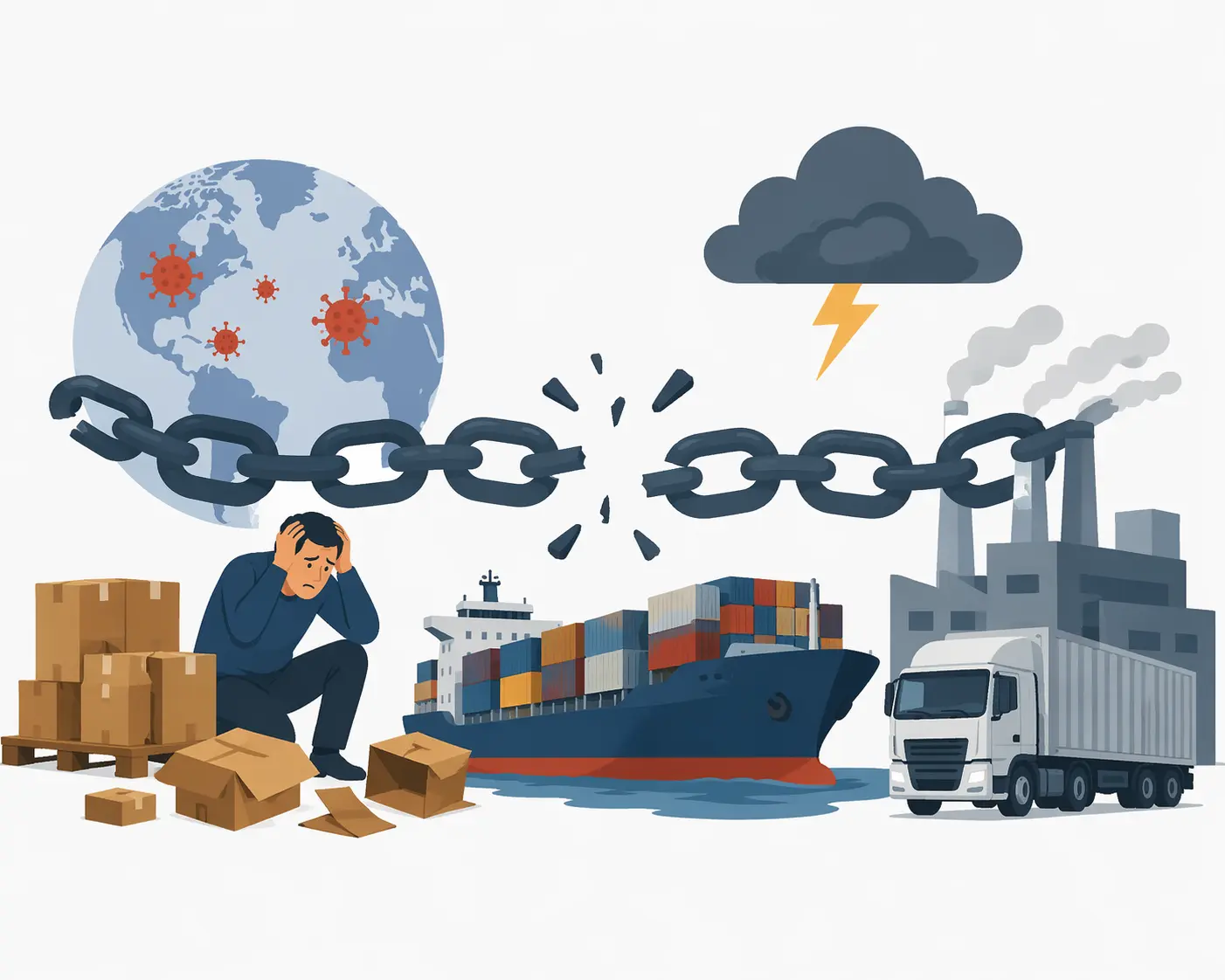
Every few months, a new article sounds an alarm that our adversaries control some material we had never heard of before. Pattern is predictable. First comes the jaw-dropping statistic: Country X produces Y% of the world’s supply of Material Z. Then the breathless conclusion: our supply chains are vulnerable, we must act. Govts oblige, with yet another industrial policy measure. By the time it is operationalised, spotlight moves to the next, obscure chokepoint. This whack-a-mole supply chain geopolitics is a weekly routine.
Problem is not that these dependencies are fictional. Some are real. But the analytical lens is permanently set to one focal length. Awash in studies documenting how dependencies were weaponised, we almost never see systematic studies of cases where weaponisation was attempted, and failed.
In scientific research, this is known as the ‘negative result’ – an expected effect did not materialise. Negative results are chronically underpublished, because journals prefer dramatic findings. Yet, these are indispensable for correcting false beliefs, or distorted policy.
Consider how China imposed licensing requirements on gallium and germanium exports in Aug 2023, escalating to a complete ban on US sales in Dec 2024. Gallium is essential for semiconductors and optoelectronic devices, with China accounting for roughly 99% of global low-purity production. If any case should vindicate the weaponisation thesis, this was it.
And yet, Amit Kumar and I found that while China’s controls induced significant price volatility (high-purity gallium prices rose over 200%), American consumption remained largely unaffected. China’s share of US gallium metal imports fell from 55% to 18%. Canada, Japan, and Germany stepped in as suppliers. Domestic recycling facilities got revived, backed by $36mn in federal funding. Alternative materials began displacing gallium in non-defence applications.
For germanium, the picture was even more striking. Belgium and Canada already supplied over 93% of US germanium dioxide imports, making China’s restrictions largely symbolic.
Beijing succeeded in raising costs, but it failed to create strategic leverage. And the reason it failed reveals something underappreciated: international cooperation between firms and govts proved far more potent than any single country’s industrial policy.
It was not American self-sufficiency that defeated China’s gallium controls. It was a network that collectively absorbed the shock – Canadian processors, Japanese suppliers, German refiners, Australian recyclers. Supply chain resilience, it turns out, is a multilateral achievement, not a unilateral one.
This is not an anomaly. It is the historical norm for resource weaponisation. Cobalt was the gallium of the 1970s. One tonne went into every F-16 jet engine. US imported almost all of it from Zaire. Then, rebels occupied mining regions in Zaire, cutting supply and spiking prices. And yet, there was no repeat of the 1973 oil crisis. High prices made mining in Canada, Brazil, and Australia viable. Molybdenum began displacing cobalt in alloys. Efficiency improvements reduced per-unit demand. Military stockpiles provided insurance. Congo still accounts for over 70% of global supply, but cobalt itself ceased to be an indispensable material.
The same script played out with Russia’s energy gambit against Europe. Putin’s hope of using gas as a weapon failed. European countries slashed Russian oil imports from 26% to 3.2% within a year. Gas imports fell from 38% to 17%. Germany built a long-stalled LNG terminal at record speed. Within months, it was Europe that went on the offensive, by weaponising shipping insurance. This, too, worked imperfectly. Because enforcement was leaky, and Russia redirected exports to Asia. Neither side’s weaponisation delivered the decisive blow it sought.
The pattern is consistent. Commodities and intermediate goods are far more elastic than the alarmist narrative assumes. When prices spike, four forces kick in simultaneously: alternative sources become viable, substitutes are commercialised, efficiency gains reduce demand, and international partners step in to rebalance supply.
China’s rare earth export controls have already pushed international prices to three times domestic Chinese levels. Under such conditions, Chinese companies themselves will find ways to circumvent restrictions – through shell companies, third country routing, and the age-old conversion of ‘black’ commodities into ‘white’ ones.
But there is a category where weaponisation does work: knowledge-rich chokepoints. EDA software, EUV lithography, and advanced semiconductor manufacturing require decades of cumulative capability-building. You cannot spin up an alternative ASML in three years, the way you can productise an existing alternative, or enlist allied suppliers.
The distinction between commodity chokepoints and knowledge chokepoints, is the single most important analytical framework for supply chain policy.
Govts should focus their limited fiscal resources on knowledge-intensive chokepoints, where market forces alone are insufficient. For commodities, the more effective approach is international coordination: offtake guarantees, strategic stockpile-sharing arrangements, joint research funding for substitutes, and trade agreements that keep alternative supply routes open. The gallium-germanium case confirms that allied firms and govts, working in concert, redirect supply chains faster than any single country’s PLI scheme.
What we need, then, is a research agenda that documents negative results, as rigorously as it documents successful weaponisation. Where did price signals redirect supply chains faster than govt intervention? Where did substitutes emerge organically? Such studies will not generate breathless headlines. But they will help govts distinguish between dependencies that genuinely need addressing, and those that markets and international cooperation are already addressing.

Placing women at the core of democracy
The first challenge to implementing the law is institutional as it is chained to the timely completion of the Census and the delimitation
Vandana Mishra, ( Professor,Centre for Political Studies, Jawaharlal Nehru University )
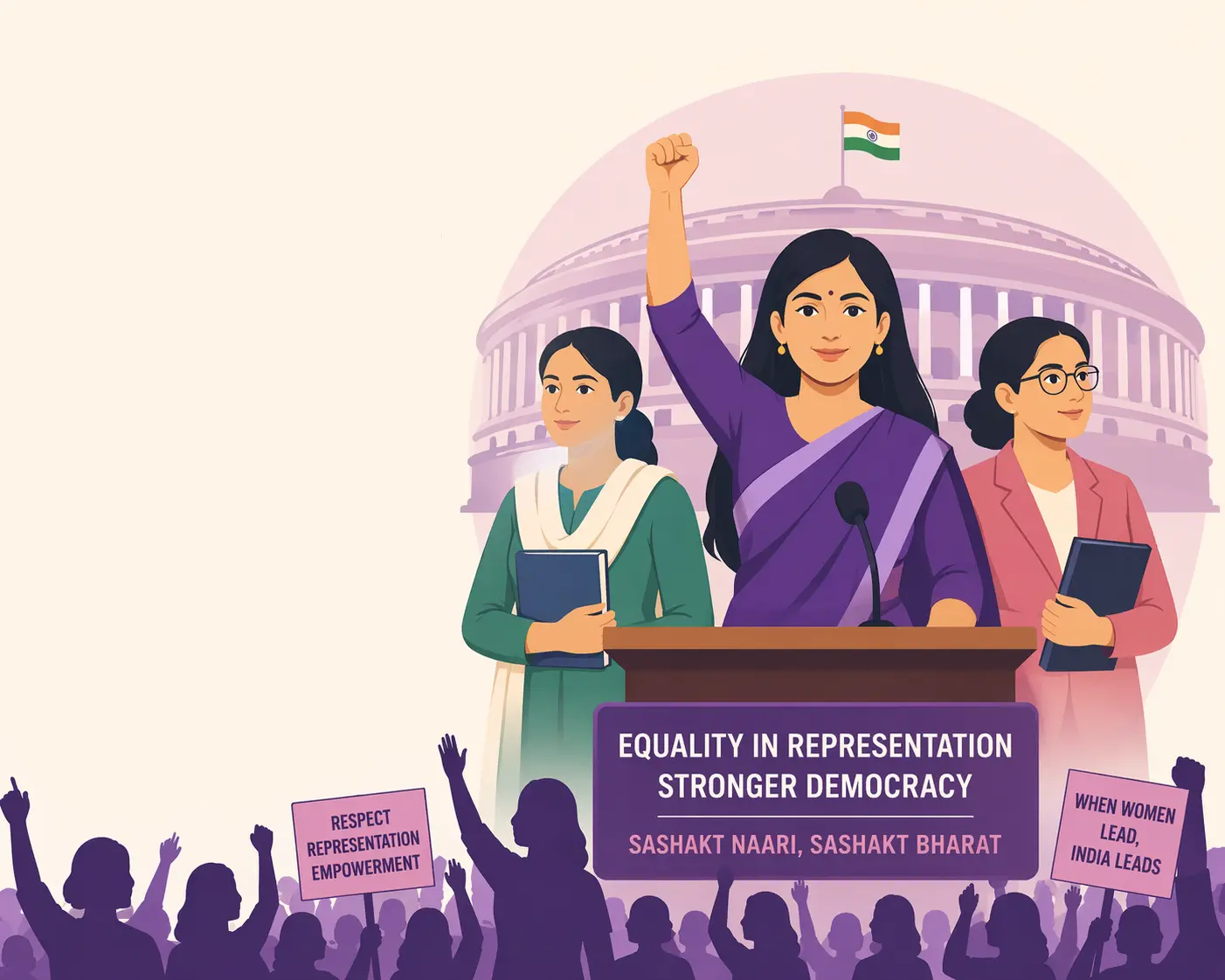
‘Guaranteeing the (women’s reservation) Act’s transformative potential will be a difficult nut to crack. It will largely depend on how well the ecosystem of politics, party organisation, and public discourse adapts to it’.
For decades, the need for making women agents of empowerment rather than just recipients of welfare has been acknowledged and discussed by various governments. But the credit for bringing on board all dissenting and delaying voices goes to Prime Minister Narendra Modi, who, by passing the Nari Shakti Vandan Adhiniyam (or Women’s Reservation Act) 2023 has established a milestone in India’s constitutional trajectory. The legislation guarantees 33% reservation for women in the Lok Sabha and the State Legislatures, but its significance goes far beyond the appeals of representation, equality, and inclusion. The lenses of institutional design, epistemic diversity, and developmental rationality establish this Act as a remarkable structural innovation in Indian democracy, which will go a long way in reaffirming that the reform is aimed not merely at reservation but also at the very intelligence and resilience of our constitutional order.
There is no doubt that the Adhiniyam will function as a mechanism that deepens democracy. There will be an expansion of the social and perceptive base from which democracy draws political authority, thus further strengthening representative democracy. It will also broaden the state’s decision-making intelligence by incorporating previously overlooked and ignored standpoints. Recruitment in Indian politics has been confined by politics of dynasty, caste, and networked masculinities. The Act has the potential to break this ecosystem and will force political parties to reorganise their structures and shift their focus from ‘just getting elected’ to ‘searching and nurturing the talent that can be elected’. The increased numbers of women in legislatures will broaden the horizons of legislative debate in content, tone, and ethical range. Governance will become more effective when deliberations are informed by multiple experiences. Women legislators, drawing upon their distinctively lived social realities, are likely to articulate different conceptions of justice, liberty, and fairness. Domestic violence, childcare infrastructure, public sanitation, and access to public services will no longer be peripheral or ‘soft issues’ as they will be reasoned differently. This can be rightly understood as a shift from procedural democracy, where the focus is on structures, institutions, and processes, to deliberative democracy, where the focus is on collecting competing arguments and the quality of the process rather than its outcome.
This law also finds reasonable justification in the grammar of political economy. It ensures that policy making is informed by real lives rather than statistics alone. Over the decades, women have made their mark in India’s informal economy. From agricultural labourers, self-help group leaders, and teachers to street vending and domestic work, women constitute the unacknowledged and hence uncounted macroeconomics of survival. When this dispersed expertise translates to formal decision making and policy formulation, it allows different stake-holders -political parties and the state – to listen to an entirely different set of micro-rationalities. The public policy discourse has already established that when decisions are made by those in the first line of consequence bearing, the feedback loop between the government and the citizenry shortens and becomes more effective.
Administrative readiness
However, guaranteeing the Act’s transformative potential will be a difficult nut to crack. It will largely depend on how well the ecosystem of politics, party organisation, and public discourse adapts to it. The centuries-old habits of thought, social hierarchies, inhibitions, and material constraints may resist or distort its content, thus delaying the democratic renewal. The first challenge is institutional as the Adhiniyam is chained to the timely completion of the Census and the delimitation of constituencies. It needs administrative readiness to translate the Act into action.
Secondly, genuine reform would require redesigning internal political party structures so that women can be recruited at all operating levels. It calls for a realistic acceptance of them as co-political actors and not figurative placeholders. Parties also have to ensure that the voices not yet heard – of the marginalised as well as of the mainstreamed – do not remain excluded in practice. The challenge here is to not be consumed by the already existing and overtly active elitist political oligarchies. Thirdly, VATION affective restructuring will be required because the institutions, which
habitually display performative aggression, may instinctively look through the ideas of empathy and social reasoning. Fourthly, women themselves have to stand up to the constraints of social norms and gender roles which still limit their mobility, time, and autonomy. Fifthly, the Indian society must rise to the need of the hour. This entails a thorough reconfiguration of social attitudes to confer women the space, dignity, and respect essential for profound and autonomous engagement in public life.
The reform should be seen as a long process of political refinement wherein we must develop the habit of recognising, listening, and accommodating different perspectives as it will lead to intelligent policy making and deepening of democracy.
Date: 16-04-26
BJP’s failed Christian outreach attempt
Union govt.’s push for amendments to FCRA Act deals the latest blow in Kerala
K.S. Sudhi
Nothing seems to be working for the Kerala unit of the BJP, espe- cially when it comes to the party’s attempts to woo Chris- tian voters. Its efforts to win over the Christians have back- fired on multiple occasions and that too at defining political moments.
A series of force majeure events has spoiled the party’s bid to win the trust of Chris- tian voters, whom it considers essential to ending its electo- ral drought in the State. The latest in the series is the pro- posed amendments to the Fo- reign Contribution (Regulation) Act (FCRA) pushed by the Union government, which are supposed to give wide- ranging powers to a government appointed designated authority to take control of the assets and properties acquired using foreign contributions, in the event of failure to renew or cancellation of FCRA li- cence. The move came at a time when the State was head- ing for Assembly polls.
Though the Union government has put the amendments on the back burner, apparently under pressure from Kerala BJP leaders, the dam- age has already been done.
Various church factions have vociferously come out against the proposed amend- ments as they felt that the Un- ion government was attempt- ing to choke their financial supply lines and usurp their properties under the cover of the legislation. The statements of BJP leader Shon George that only those who are engaged in shady financial deals need to be worried about the pro- posed amendments and the Church has no reason to be worried have not gone down well in the community. The last few days witnessed the rickety relationship bet- ween the party and the com- munity, which is a decisive vo- ter segment in the State, reaching its lowest ebb with the reported call of some Church heads to the faithful to vote for the Congress-led Unit- ed Democratic Front in the State through the community mouthpiece Deepika. The dia- tribe of Mr. Shon and his fath- er P.C. George, BJP’s candi- dates in Christian-dominated Poonjar and Pala Assembly constituencies, against some of the church heads, holding them accountable for cam- paigning in favour of the UDF has further strained the care- fully mended relationship bet- ween the party and a section of Church heads.
Earlier, the arrests of Sister Preethi Mary and Sister Van- dana Francis, two Kerala- based Catholic nuns belonging to the Assisi Sisters of Mary Immaculate on July 25, 2025, four months before the civic body polls, in Chhattisgarh on charges of forced religious conversion and human traf- ficking of a tribeswoman had set off a political storm.
While the Chhattisgarh unit of the party insisted that the nuns were involved in traffick- ing and forced conversion, Ra- jeev Chandrasekhar, the Kera- la unit president, stood with the nuns as he had much to lose politically in the State. A few months later, a Kerala priest and seven others were arrested in Amaravati in Mah- arashtra on December 30, 2025, again on allegations of forced religious conversion. The arrests, which invoked fierce criticisms from Kerala Chief Minister Pinarayi Vi- jayan and State Congress lead- ers, came when all the politi- cal formations were busy engaged in the preparatory works for the upcoming As- sembly polls. The BJP had to dispatch a team of its Christian leaders to Mumbai to liaise with the State government to secure their release.
The two instances had put the party leadership in a fix and forced it to go the extra mile to contain the damage caused by the allegations that Christian missionaries were being harassed in BJP-ruled northern States.
Similarly, the party’s move to win the trust of Christian re sidents of Munambam, an al- leged Waqf property, who were pitted against a few Mus- lim outfits demanding the restoration of alienated Waqf holdings, through the Waqf (Amendment) Act 2025, had failed to deliver desired results. Eventually, it was revealed that the amended Act could do little to solve the imbroglio. Besides the impact of the failed outreach programmes, the party now also faces the bleak prospect of antagonis- ing its core Hindu voters over its “minority appeasement measures.” Many in the party consider Christians as the “natural vote bank” of the Congress and efforts to pursue them is futile.
The BJP may have to rework its social engineering strategies for creating a political space for itself in Kerala in the wake of these developments.

नशे का जाल
संपादकीय
देश में महानगरों से लेकर ग्रामीण क्षेत्रों तक में नशीले पदार्थों का जाल लगातार फैलता जा रहा है। इसका सबसे ज्यादा और गहरा प्रभाव युवा वर्ग पर पड़ रहा है, जो उनके भविष्य और जान दोनों को खतरे में डाल रहा है। यह केवल व्यक्तिगत ही नहीं, बल्कि सामाजिक स्तर पर भी बड़ी चुनौती बन गया है। युवाओं के सामूहिक रूप से नशीले पदार्थों का इस्तेमाल करने के लिए विशेष आयोजन की खबरें भी अक्सर आती रहती हैं। मगर, अब इस तरह के आयोजनों का स्वरूप भी बदल रहा है। ऐसी ही एक घटना हाल ही में मुंबई के गोरेगांव में सामने आई, जहां नशीले पदार्थों के अत्यधिक सेवन से प्रबंधन संस्थान में पढ़ाई करने वाले दो विद्यार्थियों की मौत हो गई। ये दोनों अपने दोस्तों के साथ एक संगीत कार्यक्रम में आए थे। सवाल है कि जब नशीले पदार्थों की अवैध बिक्री और खरीद के खिलाफ कानून में सख्त प्रावधान है, तो फिर युवाओं की इन तक आसानी से पहुंच कैसे संभव हो पा रही है ?
यह बात छिपी नहीं है कि नशीले पदार्थों की बिक्री और इनके सेवन के लिए नए-नए तरीके अपनाए जा रहे हैं। ‘रेव पार्टी’ की बजाय अब संगीत कार्यक्रमों की आड़ में इस तरह के आयोजन किए जाते हैं। पुलिस के मुताबिक, गोरेगांव में संगीत कार्यक्रम में भाग लेने आए जिन दो छात्र-छात्रा की मौत हुई, वे पहले से नशा करके आए थे और उन्होंने कार्यक्रम के दौरान फिर से नशीले पदार्थ का सेवन किया। यह बेहद चिंताजनक है कि पिछले कुछ वर्षों में मनोरंजन की आड़ में युवाओं में नशाखोरी की प्रवृत्ति बढ़ी है, लेकिन इस पर अंकुश लगाने के लिए सरकार और प्रशासन के स्तर पर गंभीरता से प्रयास करने की इच्छाशक्ति कहीं नजर नहीं आती है। जबकि युवाओं में नशाखोरी की बढ़ती प्रवृत्ति से आपराधिक घटनाएं भी लगातार बढ़ रही हैं। हैरानी की बात है कि मुंबई जैसे महानगर में संगीत कार्यक्रमों की अनुमति देने से पहले प्रशासन की ओर से जांच और निगरानी की जरूरत महसूस नहीं की जाती है। जब तक सख्त कानूनी कार्रवाई के साथ-साथ सामाजिक स्तर पर सतर्कता नहीं बरती जाएगी, तब तक यह समस्या हल नहीं हो पाएगी।