01-09-2025 (Important News Clippings)
To Download Click Here.

Date: 01-09-25
Grim Soap Opera
New study shows how basic hygiene can reduce infections in Indian hospitals
TOI Editorials

Hospital infections are often more dreaded than a patient’s illness. Bacterial and fungal germs that enter the bloodstream are hardy survivors, nearly impossible to defeat. It’s why doctors can’t wait to pack post-surgery patients home, just so they’re protected from catching a hospital bug. Overuse of antibiotics has rendered the strongest of drugs toothless against these persistent infections. Now, the results of a seven-year study coordinated by AIIMS and funded by US’s CDC, has quantified the medical fraternity’s apprehensions. One major route that ferries hospital germs are central-line tubes inserted for chronic conditions or in very sick patients to deliver medicines, fluids, nutrition. The rate of CLABSI (central line-associated bloodstream infection) is high for Indian hospitals, almost 9 per 1,000 central line-days. In US, this was less than 1 infection for every 1,000 central line days. About 40% of patients with CLABSI die. The sobering point – these infections are entirely preventable.
Hospitals may want to see how best to follow the example of Johns Hopkins ICU, as narrated by surgeon Atul Gawande in The Checklist Manifesto. In 2001, critical care specialist Dr Peter Pronovost in Hopkins ICU took a leaf out of the aviation sector – the checklist – and supported nurses to call out any doctor who didn’t follow the five basic steps (wash hands with soap, wear gloves etc) when inserting a central line. At the time in Hopkins ICU, about one line in nine was getting infected. Dr Pronovost knew doctors were skipping at least one critical step. Following protocol ensured that within a year, central line infection rate dropped from 11% to zero. It isn’t rocket science. As the latest study’s authors noted, India’s challenge is basic – staff strength and training. What will it take for our doctors and nurses to wash hands with soap, wear gloves etc, and use sterile drapes when inserting central lines?

Renewed focus
India and Japan showed that their ties were stable amid a global churn
Editorials
On the first leg of his tour East, Prime Minister Narendra Modi travelled to Japan for a two-day visit for the 15th Annual Summit with Japanese Prime Minister Shigeru Ishiba before moving to Tianjin to attend the SCO Summit. The last summit, in India, was in 2022. The two sides issued at least a dozen documents, aimed primarily at updating their agreements and giving them a “Next-Gen” focus. Japanese businesses have raised their investment targets in India to $68 billion and signed about 170 MoUs with Indian partners. Apart from the Joint Statement, there was a 2035 Vision Statement, including eight areas of cooperation such as economic security, mobility and green technology transition. A “Next-Gen State-Prefecture Partnership” highlighted grassroot-level ties and a boosting of direct flight connectivity. India and Japan updated their 2008 Security partnership to include an annual NSA-level dialogue, more engagement over the Quad, Indo-Pacific cooperation and UN Security Council reform. Of interest is their Economic Security Partnership goal to build resilient supply chains and secure critical infrastructure, using Japanese technology to help manufacture and process semiconductor technology in India, as Indian companies face Chinese restrictions on the export of rare earth magnets. Japan’s collaboration with India’s High Speed Rail “Bullet Train” project was showcased, with Mr. Modi and Mr. Ishiba travelling to Miyagi province by train, where they also inspected a semiconductor factory. The joint statement included strong language condemning North Korea’s missile tests and nuclear programme, and the Pahalgam attack and cross-border terrorism, albeit without mention of Pakistan. The leaders also stressed the importance of the upcoming Quad Summit of leaders in India this year, which has come under a cloud over Mr. Trump’s actions against India.
While the text of the India-Japan meetings was largely bilateral, the subtext was geopolitical. Mr. Modi flew to Tokyo in the wake of the massive American tariffs which threaten to upturn the Indian economy. He also chose to make Japan his first stop before his talks with Chinese President Xi Jinping on Sunday (August 31, 2025) towards normalising relations after a four-year standoff. Japan too is concerned about the situation in the East China Sea, and has tensions over trade with the U.S., which led it to cancel a trade negotiation team visit to Washington. The message that Mr. Modi and Mr. Ishiba sent out was that amidst geopolitical turmoil caused by global powers, the India-Japan relationship remains stable and continues to grow.
Date: 01-09-25
Giving wings to India’s youth
Pradhan Mantri Viksit Bharat Rozgar Yojana is a concrete step towards converting demographic dividend into public prosperity
Mansukh Mandaviya, [ Union Minister of Labour and Employment and Youth Affairs and Sports, Government of India ]
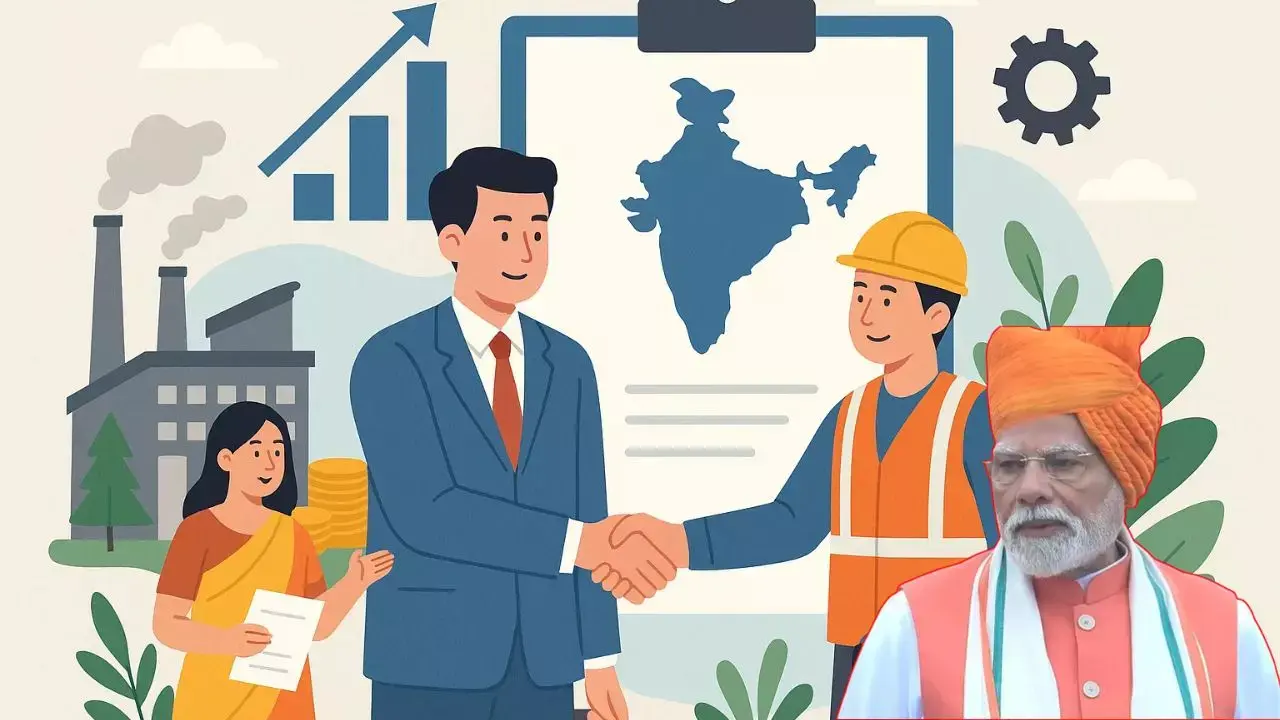
India’s growth story has always been written by its Shram Shakti, or labour power. There has been a remarkable arc in India’s economic progress over the past 11 years, under Prime Minister Narendra Modi’s leadership. India has risen from the world’s 10th largest economy in 2014 to the fourth largest today. It has carved out an enviable niche for itself in the global arena, and the strength of its human resource has had no small role to play in this journey.
Fueling this success story is the fact that India’s economic growth has been accompanied by an unprecedented expansion of employment. According to RBI-KLEMS, while only 2.9 crore jobs were created between 2004-2014, over 17 crore jobs were created in the decade that followed. Formalisation has also accelerated, as EPFO data shows.
Social security coverage
The real transformation, however, has been in social security coverage. In 2015, only 19% of Indians were covered under at least one social protection scheme. By 2025, that number has surged to 64.3%, reaching 94 crore beneficiaries, making India the second-largest social security system in the world. The International Labour Organization has acknowledged this achievement as one of the fastest expansions of coverage globally.
As we look ahead, it is clear that the future of the nation will be decided not only by the pace of GDP growth, but also by the quality of jobs we create, the security we extend to workers, and the opportunities we provide to our youth. Against a global backdrop of rising automation, uncertainties induced by Artificial Intelligence, supply-chain shifts, and other vulnerabilities shaping jobs worldwide, India stands at a demographic inflection point.
Of India’s population, about 65% is under 35 years of age, constituting a critical demographic dividend that gives our economy an edge as countries in the West reflect ageing populations. For years, India’s demographic dividend – its Yuva Shakti – has been cited as its greatest strength. Yet, this potential remained underutilised. As we strive towards the vision of a Viksit Bharat by 2047, the task before us is clear: we must shift from ‘possibility’ to ‘prosperity’.
Employment, in this backdrop, is no longer just an economic indicator; it is the foundation of dignity, equality and national strength. It demands that we make our youth employable, integrate them into the formal economy, equip them with financial literacy, and ensure that they are protected by a robust social security net. Only then can our demographic advantage truly translate into a lasting national dividend.
An ambitious programme
It is to address this challenge, and to bridge any gap between aspiration and opportunity, that the government has launched the Pradhan Mantri Viksit Bharat Rozgar Yojana. Initially put forth in the Union Budget 2024-25, and announced by the Prime Minister in his 12th Independence Day address, it represents a significant break from the past in both scale and design. With an outlay of ₹1 lakh crore, this is the most ambitious programme in India’s history, expected to create over 3.5 crore jobs over two years.
What sets this scheme apart is its architecture. Unlike earlier programmes supporting employment generation, this scheme addresses the dual challenge of youth employability and enterprise competitiveness simultaneously. By offering direct financial incentives to both first-time employees under Part A (up to 15,000 in two instalments) and employers under Part B (up to *3,000 per new hire per month), it lowers entry barriers for workers while reducing hiring risks for businesses.
Equally important is the scheme’s explicit push towards formalisation and social security integration. Benefits will be channelled through Direct Benefit Transfer, ensuring transparency and linking new workers to social security systems from day one. The scheme is thus a structural nudge towards a formal, secure and productive labour market. Further, the added focus on incentives to employers in the manufacturing sector is a further propellant towards making Bharat aatmanirbhar (self-reliant).
The Pradhan Mantri Viksit Bharat Rozgar Yojana signals a shift from scheme-based interventions towards a comprehensive employment ecosystem. It builds on the
learnings of earlier initiatives, such as the Production-Linked Incentive, the National Manufacturing Mission, and Make in India, and recognises the changing nature of work in a competitive global set-up.
By supporting workers and employers, the scheme recognises that job creation is a shared responsibility. As India seeks to become a global manufacturing hub while embracing digital innovation, the scheme ensures that no one is left behind. Even the smallest enterprise and the newest entrant to the workforce are integrated into the journey of national development.
A new India
This scheme is more than a policy announcement. This initiative is a concrete step towards converting demographic dividend into public prosperity. It is part of the foundation towards realisation of the vision of Viksit Bharat, where every youth has access to meaningful work, every work has dignity, and every youth gets the opportunity to realise his or her dreams. Employment is, in its truest sense, nation-building. With this initiative, the Modi government reaffirms its commitment that no aspiration will remain unsupported, and no youth will remain without opportunity.

Date: 01-09-25
साझेदारी की राह
संपादकीय
शुल्क संघर्ष बढ़ने के बीच भारत और जापान ने अपने विशेष रणनीतिक एवं विभिन्न क्षेत्रों में सहयोग को और प्रगाढ़ करने के वास्ते अगले दस वर्षों के लिए साझेदारी का एक नया खाका तैयार किया है। इसमें रक्षा, स्वास्थ्य, स्वच्छ ऊर्जा दूरसंचार, दवा, महत्त्वपूर्ण खनिज, उभरती प्रौद्योगिकी और आर्थिक सुरक्षा ढांचा शामिल हैं। इसके तहत कई द्विपक्षीय समझौते हुए हैं, जिनमें न केवल साझा हित निहित हैं, बल्कि वैश्विक कारोबार में भी दोनों देशों की साख मजबूत होगी। खासकर, अमेरिका की ओर से भारत पर लगाए गए पचास फीसद शुल्क से निपटने के उपायों की तलाश के बीच जापान से यह साझेदारी और भी महत्त्वपूर्ण हो जाती है। भारत व्यापार के वैकल्पिक रास्ते खोजने में जुटा है और जापान के साथ समझौतों को इसी कड़ी का एक हिस्सा माना जा रहा है। अमेरिका की शुल्क नीति से जापान भी अछूता नहीं है और ऐसे में वह भी भारत की ओर उम्मीद भरी नजरों से देख रहा है।
अमेरिकी शुल्क को निष्प्रभावी करने की कोशिशों के तहत भारत ने चालीस देशों के साथ व्यापारिक संवाद का अभियान शुरू किया है। जापान भी उनमें से एक है। विभिन्न समझौतों के तहत जापान ने भारत में एक दशक के भीतर दस हजार अरब येन (करीब 60,000 करोड़ रुपए) के निवेश का लक्ष्य रखा है। इसके अलावा दोनों देशों के बीच आपसी कामगारों को एक-दूसरे के यहां आसानी से आने- जाने एवं काम करने का मौका देने को लेकर भी एक कार्ययोजना बनी है। माना जा रहा है कि इससे पांच लाख भारतीय प्रशिक्षित कामगारों के जापान जाने का रास्ता खुलने की उम्मीद है। एक समझौता भारतीय अंतरिक्ष अनुसंधान संगठन (इसरो) और जापान एअरोस्पेस एक्सप्लोरेशन एजेंसी के बीच चंद्रमा के लिए संयुक्त अन्वेषण मिशन में सहयोग को लेकर हुआ है। दरअसल, भारत-जापान की साझेदारी न केवल दोनों देशों के लिए, बल्कि वैश्विक शांति और स्थिरता के लिए भी महत्वपूर्ण है मजबूत लोकतंत्र एक बेहतर दुनिया को आकार देने में अहम भूमिका निभाते हैं।
इसमें दोराय नहीं कि जापानी तकनीक और भारतीय प्रतिभा का संयोजन अंतरराष्ट्रीय पटल पर एक नए आयाम को आकार दे सकता है। रक्षा उद्योग और नवाचार के क्षेत्र में दोनों देशों के बीच सहयोग परस्पर आत्मनिर्भरता के लिए भी महत्त्वपूर्ण है। दोनों देशों ने पेरिस समझौते के तहत कार्बन क्रेडिट व्यापार पर एक साथ काम करने के लिए भी समझौता किया है। इस कदम से भारत को अपने जलवायु लक्ष्यों के लिए धनराशि और प्रौद्योगिकी हासिल करने में मदद मिल सकती है। जापान के साथ व्यापार, नवोन्मेष और उद्यमिता आदि क्षेत्रों में सहयोग की अपार संभावनाएं हैं। नवउद्यम, प्रौद्योगिकी और कृत्रिम मेधा जैसे भविष्योन्मुखी क्षेत्र भी परस्पर लाभकारी हो सकते हैं। इस तरह की संभावनाओं को तलाशना इसलिए भी जरूरी है, ताकि अमेरिकी शुल्क नीति जैसे और कोई दबाव भविष्य में भारत पर असर न डाल सकें। प्रधानमंत्री नरेंद्र मोदी अब चीन की यात्रा पर हैं और उम्मीद है कि वहां भी द्विपक्षीय व्यापार को लेकर सार्थक बातचीत होगी। वैसे तो भारत-चीन के रिश्ते परंपरागत रूप से ज्यादा अच्छे नहीं रहे हैं, लेकिन अमेरिकी शुल्क के मुद्दे पर दोनों देश एक मंच पर आ गए हैं और इस मसले पर रूस भी भारत के साथ है। माना जा रहा है कि इन तीनों आर्थिक शक्तियों का आपसी संवाद वैश्विक उथल-पुथल के बीच नए समीकरणों को आकार दे सकता है।
Date: 01-09-25
जापान के साथ अहम संधि
संपादकीय
जापान ने भारत में एक दशक में 10 हजार अरब येन (करीब 60 हजार | करोड़ रुपये) के निवेश का लक्ष्य रखा है, और दोनों देशों ने महत्त्वपूर्ण खनिजों, रक्षा और प्रौद्योगिकी जैसे कई प्रमुख क्षेत्रों में सहयोग बढ़ाने के लिए दस वर्षीय बड़ी रूपरेखा भी तैयार की है। दोनों पक्षों ने 13 प्रमुख समझौतों और दस्तावेज को अंतिम रूप दिया। महत्त्वपूर्ण बात यह है कि जापान ने यह फैसला व्यापार और शुल्क पर अमेरिकी ट्रंप प्रशासन की नीतियों के चलते वैश्विक पटल पर मची उथल-पुथल के बीच किया। भारत-जापान विशेष रणनीतिक और वैश्विक साझेदारी के विस्तार की घोषणाएं प्रधानमंत्री नरेन्द्र मोदी और उनके जापानी समकक्ष शिगेरू इशिबा के बीच शिखर वार्ता के बाद की गई। प्रधानमंत्री मोदी दो देशों – जापान और चीन की अपनी यात्रा के पहले चरण में जापान पहुंचे थे जहां जापान के प्रधानमंत्री शिगेरू इशिबा के साथ शिखर वार्ता हुई। शिखर वार्ता के उपरांत प्रधानमंत्री मोदी ने कहा कि जापान की ‘निर्बाध और खुले हिन्द-प्रशांत’ की अवधारणा और इस बाबत भारत की सोच में गहरा सामंजस्य है। ‘विजन महासागर’ और हिन्द- प्रशांत महासागरों की पहल से भारत की सोच मुखर होती है। दोनों देश शांतिपूर्ण, समृद्ध और स्थिर हिन्द-प्रशांत क्षेत्र के लिए प्रतिबद्ध हैं। इसके साथ ही दोनों देशों के हिन्द-प्रशांत क्षेत्र के देशों के साथ मजबूत और व्यापक संबंध भी हैं। इसके चलते दोनों देशों को अपने साझा उद्देश्यों को अभिव्यक्ति देने के लिए हिन्द-प्रशांत देशों में से कुछ के साथ बहुपक्षीय प्रारूपों में संवाद करने में मदद मिलती है। बेशक, भारत और जापान ने अपनी विशेष रणनीतिक और वैश्विक साझेदारी में एक नये और सुनहरे अध्याय की मजबूत नींव रखी है। दो प्रमुख अर्थव्यवस्थाओं और जीवंत लोकतंत्र के रूप में भारत-जापान की साझेदारी न केवल इन दोनों के लिए, बल्कि वैश्विक शांति और स्थिरता के लिए भी बहुत महत्त्वपूर्ण है। मौजूदा वैश्विक अस्थिरता के बरक्स जापान और भारत का परस्पर सहयोग बढ़ना इसलिए भी महत्त्वपूर्ण है क्योंकि दोनों के बीच हुए समझौतों से इस तथ्य की तस्दीक होती है कि मजबूत लोकतंत्र बेहतर दुनिया को आकार देने में स्वाभाविक साझेदार होते हैं। प्रधानमंत्री मोदी की इन दो प्रमुख एशियाई देशों की यात्रा ऐसे समय में हुई है, जब अमेरिकी राष्ट्रपति डोनाल्ड ट्रंप की टैरिफ नीति को लेकर भारत और अमेरिका के संबंधों में अचानक गिरावट आई है। ऐसे में जापान-भारत के बीच साझेदारी का फैसला बेशक, आश्वस्त करने वाला है।

चीन में नई मिठास
संपादकीय
वर्षों बाद भारत और चीन के बीच एक तरह की अनुकूलता का माहौल स्वागतयोग्य है। चीन की धरती पर प्रधानमंत्री नरेंद्र मोदी और चीनी राष्ट्रपति शी जिनपिंग के बीच प्रतिनिधिमंडल स्तर पर आमने-सामने की वार्ता हुई है, जिसमें दोनों देशों के नेताओं ने माना है कि हाथी और ड्रैगन का साथ साथ चलना जरूरी है। खासतौर तौर पर चीन की ओर से यह बात समझाने की कोशिश हुई है कि दोनों देश परस्पर प्रतिद्वंद्वी नहीं, बल्कि विकास में साझीदार हैं। वास्तव में, भारत की चीन के प्रति सद्भावना सदैव रही है, पर चीन की ओर से ही नाना प्रकार की आक्रामकता का दुखद इतिहास रहा है। बीजिंग में खुशनुमा बातचीत के बावजूद इस आक्रामकता को भुलाया नहीं जा सकता। हाँ, जिनपिंग के अच्छे उद्गार उम्मीद जरूर जगाते हैं कि ड्रैगन अब हाथी के महत्व को नए सिरे से स्वीकारना चाहता है। जिनपिंग की यह भावना स्वागतयोग्य है कि ‘चीन और भारत दो सबसे सभ्य देश हैं। हम दुनिया के दो सबसे ज्यादा आबादी वाले देश हैं और ग्लोबल साउथ का हिस्सा हैं। हमारा दोस्त और अच्छे पड़ोसी बनना जरूरी है।’
इसमें कोई संदेह नहीं कि दुनिया के 2 अरब 80 करोड़ लोग इन दोनों देशों में ही रहते हैं और दोनों के बीच शांतिपूर्ण संबंध जरूरी है। दोनों देशों के बीच व्यापार भी बहुत ज्यादा है और दोनों का एक-दूसरे के बिना काम नहीं चल सकता। चीन की तेज तरक्की काबिलेगौर है और विश्व स्तर पर भारत को भी नजरंदाज नहीं किया जा सकता। दोनों देशों के बीच मतभेद रह सकते हैं, मगर उन्हें विवाद में बदलने से अवश्य रोका जा सकता है। यहां विवाद को बढ़ने से रोकने व समाधान की जिम्मेदारी चीन पर ज्यादा है, क्योंकि महाशक्ति बनने की उसकी रणनीति व महत्वाकांक्षा भारत की तुलना में बहुत विस्तृत है । किन्हीं अर्थों में भारत महत्वाकांक्षी राष्ट्र नहीं है और न उसे साम्राज्यवाद के प्रति कोई लगाव है। प्रधानमंत्री नरेंद्र मोदी ने वार्ता के दौरान उचित ही कहा है कि भारत आपसी विश्वास, सम्मान और संवेदनशीलता के आधार पर चीन के साथ अपने संबंधों को आगे बढ़ाने के लिए प्रतिबद्ध है। लगे हाथ, प्रधानमंत्री मोदी ने यह भी कहा है कि पिछले साल फौज वापसी प्रक्रिया के बाद सीमा पर शांति और स्थिरता है। वाकई, दोनों देशों के बीच किसी तरह का सामरिक विवाद नहीं होना चाहिए। जिस तरहसे चीन ने कुछ देशों के साथ अपने सीमा विवादों को सुलझाया है, ठीक वैसे ही भारत के साथ भी उसे करना चाहिए। वैस, चीन सीमा विवाद के महत्व को जानता है, इसलिए वह दोनों देशों के संबंधों को इस विवाद तक समेटकर नहीं देखना चाहता।
कोई दोराय नहीं कि विगत एक वर्ष में भारत-चीन संबंधों में सुधार आया है। कैलाश मानसरोवर यात्रा फिर शुरू हुई है। दोनों देशों के बीच सीधी उड़ान शुरू होने वाली है। पिछले वर्ष 2024 में कजान में दोनों शीर्ष नेता मिले थे और उसके बाद दोनों देशों के संबंधों में बहुत सुधार आया है। ऐसी मुलाकातें फायदेमंद होती ही हैं। अब दोनों देशों को और आगे बढ़ने की जरूरत है, ताकि दोनों फायदे में रहें। बीजिंग में दोनों नेता मिलकर दुनिया को जो संदेश देना चाहते थे, उन्होंने दे दिया है। अब आगे हकीकत में रिश्तों को मजबूत करने के लिए ठोस काम की जरूरत है। प्रधानमंत्री नरेंद्र मोदी के इस चौन दौरे से हम उम्मीद रख सकते हैं। बेशक, 31 अगस्त को तियानजिन में ‘शंघाई सहयोग संगठन’ के शिखर सम्मेलन के दौरान दोनों नेताओं की मुलाकात एक खुशनुमा वर्तमान है, जहां से हम नए भविष्य की शुरुआत कर सकते हैं।