
25-11-2025 (Important News Clippings)
To Download Click Here.

Date: 25-11-25
Dictator Next Door
Asim Munir’s power grab in Pakistan makes South Asia a more dangerous neighbourhood. The Pak military is no longer a state within a state. It is the state
Ajay Bisaria, [ The writer is former high commissioner to Pakistan ]
Yesterday’s attack on the Peshawar headquarters of Pakistan’s Federal Constabulary that killed three security personnel exemplifies the chaos engulfing that country. But the Pakistani leadership appears keen to pour fuel on the fire. Earlier this month, Pakistan crossed a perilous threshold when its parliament rubberstamped a constitutional amendment that re-engineers the country’s civil-military equation to give untrammelled power to one man: Field Marshal Asim Munir. In nine minutes and without debate, Munir was granted sweeping authority over all branches of the armed forces and fortified with lifelong legal immunity. President Trump’s ‘favourite field marshal’ has effectively pressed reset to grant himself a further five-year term as Pakistan’s boss, this time as CDF, chief of defence forces, a new title elevating him above the navy and air force as well.
The 27th amendment also grants Munir substantial control over the judiciary. A new Federal Constitutional Court, superior to the existing Supreme Court in constitutional matters, neuters the judiciary’s role as a check on executive or military overreach. This rests atop the 26th amendment, bulldozed through parliament (in 16 minutes) a year earlier, which curtailed the Supreme Court’s authority, empowered the legislature in judicial appointments, and weakened senior judges. Parliament had then also amended the Pakistan Army Act of 1952, giving the army chief a five-year term and removing the retirement age. The cumulative effect is unmistakable: Pakistan’s judicial independence has been structurally dismantled, its military made the de jure ruler, and Munir the effective dictator.
Munir has had a busy three years in a tenure that should have by law ended this month. Since assuming command of the army, he has expanded his reach across major institutions. He jailed Pakistan’s most popular politician, Imran Khan; purged his army of Khan sympathisers; rigged an election to revive the Sharifs-led PML-N; and crushed two major rounds of street unrest in May 2023 and Oct 2024. He entered conflicts at various times with Iran, India and Afghanistan, and recalibrated ties with Washington, Beijing and Riyadh, enhancing his stature abroad. On the back of a limited conflict with India last summer – where he claimed victory despite defeat – Munir promoted himself twice, becoming field marshal and chief of defence forces, ensuring his grip on power through 2030.
Munir’s foreign policy manoeuvres have revived the geopolitical rents Pakistan traditionally relied on from China, US and Saudi Arabia. These had been drying up after the US exit from Afghanistan in 2021. The Trump administration’s transactionalism and some skilful lobbyists he hired helped Munir restore Pakistan’s relevance in Washington.
By reshaping Pakistan’s legal architecture, Munir has executed a coup without summoning the tanks of the infamous 111 Brigade or resorting to chilling midnight broadcasts. It is a coup-by-statute, embedding military supremacy into the constitutional order. With another tweak, he could even add the presidency to his portfolio.
These amendments institutionalise a Pakistan where civilian oversight is effectively outlawed. By embedding the army chief’s authority in the constitution, the military has created a template future generals will inherit. Informal dominance is now formalised; democratic institutions are reduced to ornaments.
Pakistan’s history has often turned on whether its army chiefs were content to depart quietly after their prescribed three-year terms, manoeuvred for a six-year stay, or sought outright dominance through coups. Munir has upended this typology. He has secured an eight-year tenure by tailoring the constitution to his ambition.
The contrast with India this month could not be starker. As Pakistan hollowed out democratic institutions, Indian voters delivered a decisive mandate to NDA govt in Bihar, reaffirming faith in electoral civilian politics. India’s democratic consolidation stands in sharp relief to Pakistan’s authoritarian shift. But India’s ‘new normal’ of firmly countering terrorism will increasingly clash with Pakistan’s new abnormal: a de jure garrison state.
Munir’s consolidation also coincided with a disturbing sequence of events in Nov: a blast in New Delhi on Nov 10 with suspected Jaish-e-Mohammed links, followed by an explosion in Islamabad blamed on the Tehreek-e-Taliban Pakistan, Afghanistan and India. Proven or not, both incidents strengthen the case for a more powerful Pakistani security state.
Transitions in Pakistan often bring volatility spilling across borders. The Pahalgam attack this summer boosted Munir’s domestic standing. A perverse incentive for terror thus emerges: acts of terrorism can trigger brief conflicts with India, which in turn reinforce the army’s claimed indispensability.
For India and the region, the moment is unsettling. Strategic decisions will now emerge from a military leadership untroubled by civilian oversight. A centralised command structure without even symbolic checks heightens the risk of miscalculation. Diplomatic space may shrink even as crises multiply.
The implications for India, Afghanistan and the wider region are troubling. Pakistan’s oscillation between weak civilian govts and assertive military leadership has shaped regional geopolitics for decades. That oscillation is over. What replaces it is a Pakistan run by a military establishment with few constraints, deeper structural entrenchment and a higher risk appetite.
Munir’s willingness to take risks has grown, bolstered by expected diplomatic support in any conflict with India. China may again act as a collusive military partner, while US and Saudi Arabia would likely intervene faster, further emboldening Islamabad.
South Asia is entering a more dangerous phase. The constitutional dictatorship next door promises a region more brittle, combustible and vulnerable to miscalculation than at any time in recent memory. Pakistan’s military is no longer a state-within-a-state; it has become the state itself.

Date: 25-11-25
Use Wealth to Control Your Surroundings
Mittal and Rikki Agarwal tell a ‘shifty’ tale
ET Editorial
The function of wealth — being wealthy — is to be as much in control of one’s surroundings as possible. British-Indian steel magnate Lakshmi Mittal’s reported move to leave Britain for Switzerland and Dubai before the Labour government’s anticipated ‘tax heave-ho’ budget announcement tomorrow kicks in, continues the trend of HNIs leaving that country for friendlier shores. Along with the end of non-domiciled (‘non-dom’) tax status in April, tomorrow’s budget is expected to bring in an inheritance tax that would apply to all assets regardless of their location. Currently, only assets in Britain come under the tax. So, even as ArcelorMittal’s business architecture — as with most mega corporations in this day and age — is location-agnostic, its executive chairman’s ‘Brexit’ would be a giant billboard for Britain’s continuing HNI exodus. For the ultra-rich, this subversion of the Westphalian ‘notion’-state is not just logical but also desirable.
Such a trend also applies to less stratospheric HNIs. Blink Digital co-founder-CBO Rikki Agarwal recently announced he would be moving from Mumbai to Bangkok ‘Not for tax breaks. Not to escape. Definitely not for some dramatic life pivot’ — even though all these are legit enough reasons to relocate — but for ‘something much simpler: I want to live better.’ A week ago, Hotmail co-founder was less apologetic when he stated, ‘Air is unbreathable. Water is undrinkable. Food is adulterated. What’s the point of becoming the 4th largest economy if people can’t even live with dignity?’
Mittal and Agarwal’s reasons for leaving their countries may seem different. But both point to the same aspect of utilising wealth to make life, of which business is part of, better. If Britain’s policy of putting the screws on the superrich is good reason enough for Mittal to up and leave, India’s infrastructural shortcomings and pollution provide ample reason for Agarwal’s shift to a better quality of life in Thailand. Countries, and states, should compete to get Mittals and Agarwals to come and live in their backyards.

Missing ‘Ubuntu’
The U.S. boycott of the G-20 summit in Johannesburg was impolitic
Editorial

The G-20 leaders’ summit in Johannesburg, the first ever held in an African country, was unique in many positive, and some not-so-positive ways. The summit has an added voice as the African Union was made a member during India’s G20 Presidency in 2023. As a result, the deliberations and the declaration seemed imbued by the spirit of the “Global South”, as they listed the multiple challenges the world faces including conflicts, deepening inequality and increasing economic uncertainty. In particular, the nations gathered called for a “just, comprehensive, and lasting peace” in “Sudan, the Democratic Republic of Congo, the Occupied Palestinian Territory [and] Ukraine”, invoking the UN charter. Prime Minister Narendra Modi spoke at all three sessions of the G-20, suggesting six initiatives that India could lead in order to address some of those issues, particularly on the need to “reconsider” the parameters of global development. These initiatives included a Traditional Knowledge Repository, a G20-Africa Skills Multiplier Initiative (where India proposed to train a million people across Africa), a Global Healthcare Response Team, an Initiative on Countering the Drug–Terror Nexus, an “Open Satellite Data Partnership” to share agriculture, fishing and disaster-related information, and a “G20 Critical Minerals Circularity initiative”. The government asserted that it had a role in drafting the declaration, but would have been disappointed by the brief condemnation of terrorism when compared to the 2023 New Delhi declaration, given the Delhi blast and the Pahalgam attack.
The leaders present spoke volubly about the need for bolstering the G-20’s role in managing global challenges, but were silent on the absence of the most important dignitary — U.S. President Donald Trump did not just skip the Summit, but the U.S. government also boycotted it, sending only a diplomat as an observer. This is the first time that the U.S., that has cited tensions with South Africa over “alleged discrimination” against “White minority farmers”, has walked away from the summit of the biggest economies. Aside from the irony of a “boycott” against South Africa, which suffered apartheid under the Afrikaner-led regime, the U.S.’s decision also raises questions over its commitment to the G-20 even as it takes over its presidency for 2026. The absence of the leader of the largest economy and the lack of universal criticism of the decision run counter to the hope and hype of the G-20 finally representing a more democratic world order over the last few years. The spirit of ‘Ubuntu’ or “I am because we are”, referred to in this year’s declaration, must be heeded by the very powers that would seek to sideline the grouping today.
Date: 25-11-25
Labour and honour
Smooth execution of the Labour Codes is linked to tripartite consultations
Editorial
The Centre’s announcement to implement the four Labour Codes – they concern wages, industrial relations, social securlty and occupational safety, health and working conditions – has been heralded by the business and investment community as the biggest reform in a long time. Passed by Parliament between 2019 and 2020, the implementation of these Codes was delayed for multiple reasons. The Codes replace 29 laws that regulated employer- employee relations, and significantly reduce the compliance requirements for a company every year. The Centre has maintained that it will hand- hold the States to draft and adopt the Rules in accordance with the Codes – most States and Union Territories have published the draft Rules for the Codes. Free market advocates have always considered India’s labour laws to be a hindrance to its growth potential. Under the Codes, worker- employer relations, social security mechanism and wage and aspects of emoluments will wit- ness huge changes. India needs to generate employment for its growing youth population as it is estimated that 12 million people attain working age every year. This is a trend that will hold for several years. The Economic Survey of 2023-24 noted that there needs to be an average of nearly 78.5 lakh jobs created annually until 2030 in the non-farm sector to engage the rising workforce.
Despite the long delay in the implementation of the Codes, the concerns raised by labour un- lons have not been addressed in full. Labour rpresentatives allege that the government ignored the pro-worker recommendations of the Second National Commission on Labour, (submitted in 2002) and, instead, accommodated all “pro employer” recommendations and made them a part of the Codes. Those issues are now redundant, but the nature of work is undergoing rapid trans- formation. Considering the uncertainties due to wars, trade disruptions and climatic challenges, enhancing both agriculture and industrial productivity is necessary and ensuring a healthy worker-employer relationship is key to this. With gig and platform works and artificial Intelligence disrupting conservative definitions of work, wage and social security, the Government should take the steps needed to reform the labour sector wisely. The Indian Labour Conference (ILC), which has met 46 times between 1940 and 2015, has not been convened since then. Prime Minis- ter Narendra Modi had promised that labour laws would be changed only after wider tripartite consultations. So, it becomes imperative that the Government conducts the 47th session of the ILC on the Labour Codes to ensure their smooth implementation. In the process, States should also be consulted along with employers and employees.

अवसाद की छाया में घिरता बचपन
अमित बैजनाथ गर्ग
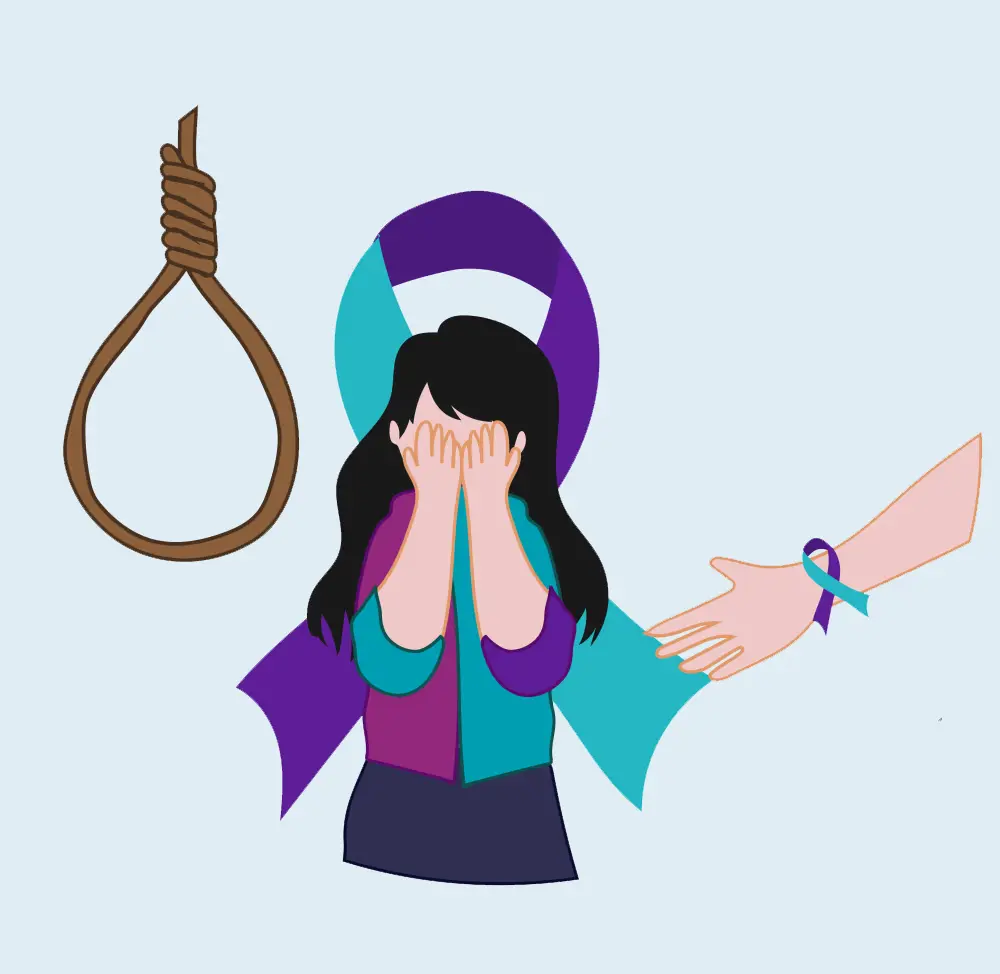
देश में बच्चों और किशोरों से संबंधित आत्महत्या की बढ़ती घटनाएं कई सवालों पर सोचने के लिए मजबूर करती हैं। सबसे पहला सवाल तो यह है कि आखिर बच्चे इस तरह का जानलेवा कदम उठाने को क्यों मजबूर हो रहे हैं? दूसरा, हम अपने बच्चों को कैसी शिक्षा व्यवस्था और परिवेश में ढाल रहे हैं। तीसरा और सबसे अहम सवाल है कि आखिर बच्चे मानसिक रूप से इतने कमजोर क्यों हो रहे हैं? ये सभी पहलू आपस में एक-दूसरे से गहरे तक जुड़े हुए हैं।
असल में आज के दौर में बच्चे मानसिक स्वास्थ्य विकार और अवसाद से ग्रस्त हो रहे हैं। बच्चों में आत्महत्या के प्रयास अक्सर आवेगपूर्ण होते हैं। ये प्रयास उदासी, भ्रम, क्रोध और अति सक्रियता संबंधी समस्याओं से जुड़े हो सकते हैं। उन पर पढ़ाई और परीक्षा में बेहतर प्रदर्शन का दबाव भी बना रहता है। यह दबाव इतना गहरा हो जाता है कि वे अवसाद का शिकार हो जाते हैं और पढ़ाई का बोझ सहन नहीं कर पाते। यह कहना गलत नहीं होगा कि हमारी शिक्षा व्यवस्था और आसपास का माहौल नौनिहालों के जीवन पर भारी पड़ रहा है।
पिछले दिनों जयपुर के एक स्कूल की छठी कक्षा की छात्रा ने विद्यालय भवन की चौथी मंजिल से कूदकर आत्महत्या कर ली। इसके बाद मध्य प्रदेश के रीवा में एक स्कूली छात्रा ने खुदकुशी कर ली थी। इसी तरह दिल्ली के एक स्कूल के छात्र ने मेट्रो प्लेटफार्म से कूदकर अपनी जान दे दी। इस तरह की घटनाएं समाज को झकझोर देने वाली हैं। सवाल है कि इन विद्यार्थियों के मन में पनपती पीड़ा को आखिर कोई क्यों नहीं समझ पाया, जो उनकी मौत का कारण बन गया। दरअसल, बच्चों से लेकर युवाओं तक में आत्महत्या की बढ़ती प्रवृत्ति एक गंभीर समस्या बनती जा रही है।
एक अनुमान के अनुसार, 15 से 24 वर्ष की आयु के किशोरों और वयस्कों में आत्महत्या मृत्यु का एक बड़ा कारण है। खुदकुशी के प्रयास तनाव, आत्म-संदेह, सफलता का दबाव, वित्तीय अनिश्चितता, निराशा और नुकसान की भावनाओं से जुड़े हो सकते हैं। इसके अलावा, स्कूल में शिक्षकों या सहपाठियों का अनुचित व्यवहार, पारिवारिक कलह, हिंसा के संपर्क में आना, आवेगशीलता, आक्रामकता, अस्वीकृति और लाचारी की भावनाएं भी आत्महत्या के विचार को गहरा कर सकती हैं।
मनोवैज्ञानिकों के मुताबिक, अगर थोड़ी सी सतर्कता बरती जाए तो बच्चों और किशोरों की कुछ खास अभिव्यक्तियों से इस बात का अंदाजा लगाया जा सकता है कि उनके भीतर आत्महत्या के विचार पनप रहे हैं। जैसे- वे अक्सर खुद को नुकसान पहुंचाने वाली टिप्पणियां कर सकते हैं या किसी छोटी-सी बात पर अचानक आक्रामक व्यवहार करने लगते हैं। इसके अलावा चेतावनी के अन्य संकेतों में खाने या सोने की आदतों में बदलाव, उदास मन, दोस्तों-परिवार और नियमित गतिविधियों से दूरी तथा शैक्षणिक कार्यों की गुणवत्ता में गिरावट देखी जा सकती है।
आत्महत्या के बारे में सोचने वाले भविष्य की योजना बनाने या उसके संबंध में बात करना भी बंद कर सकते हैं। असल में अवसाद और आत्महत्या की भावनाएं मानसिक विकार हैं, जिनका इलाज संभव है। बच्चे या किशोर की बीमारी की पहचान कर उचित उपचार किया जा सकता है। अक्सर देखा गया है कि आत्महत्या के बारे में बात करने में लोग असहज महसूस करते हैं। हालांकि अपने बच्चों से यह पूछना मददगार हो सकता है कि क्या वह अवसादग्रस्त है या आत्महत्या के बारे में सोच रहा है। इस तरह के प्रश्न बच्चे को यह आश्वासन दे सकते हैं कि कोई उसकी परवाह करता है और ऐसे में बच्चे अपनी समस्याओं के बारे में खुल कर बात कर सकते हैं।
बच्चों के साथ संवाद की कमी भी एक बड़ी समस्या है। असल में आज की भाग-दौड़ भरी जिंदगी में माता-पिता अपने बच्चों को पर्याप्त समय नहीं दे पाते हैं। कामकाजी परिवारों में यह समस्या सबसे ज्यादा है, जहां एकल परिवारों में पति और पत्नी दोनों काम कर रहे हैं। ऐसे परिवारों के बच्चों में अवसाद सबसे ज्यादा घर कर रहा है। इन बच्चों को लगता है कि माता-पिता के पास उनके लिए समय नहीं है। ये बच्चे अपने मन की बात किससे कहें? मनोचिकित्सकों का मानना है कि आजकल छोटे बच्चे भी अवसाद और चिंता का शिकार हो रहे हैं। इसकी दो बड़ी वजह हैं। पहली, बच्चों को लगता है कि दुनिया में उनका कोई नहीं है, उनकी किसी को परवाह नहीं है। दूसरी, उन पर पढ़ाई का बोझ सबसे ज्यादा है। बेहतर प्रदर्शन की दौड़ में पिछड़ने का डर उनके मन में इस कदर बैठा दिया गया है कि वे किताबों से आगे कुछ सोच ही नहीं पाते।
राष्ट्रीय अपराध रेकार्ड ब्यूरो (एनसीआरबी) की एक रपट के मुताबिक, वर्ष 2022 में देश में 13,044 बच्चों ने आत्महत्या की। इन मामलों में 2,248 विद्यार्थियों ने परीक्षा में अनुत्तीर्ण होने पर यह कदम उठाया। वहीं एनसीआरबी के वर्ष 2001 के आंकड़े के मुताबिक, देश भर में 5,425 बच्चों ने आत्महत्या की थी। ये आंकड़े बताते हैं कि विद्यार्थियों की आत्महत्या की घटनाओं में कितनी तेजी से इजाफा हो रहा है। राष्ट्रीय मानसिक स्वास्थ्य सर्वेक्षण के अनुसार, देश में अवसाद से जूझ रहे 40 से 90 फीसद किशोर कई तरह की परेशानियों का सामना कर रहे हैं। वे मानसिक चुनौतियां की वजह से मादक पदार्थों का सेवन तक करने लगते हैं। आइसीएमआर का सर्वेक्षण बताता है कि देश में बारह से तेरह फीसद विद्यार्थी मनोवैज्ञानिक, भावनात्मक और व्यवहार संबंधी समस्याओं से जूझ रहे हैं। ‘द लांसेट’ पत्रिका का एक अध्ययन बताता है कि दुनिया का हर बारह में से एक बच्चा कभी न कभी आत्महत्या के विचार अपने मन में लाता है।
अवसाद, चिंता, अकेलापन और दोस्तों या घर-परिवार से किसी तरह का समर्थन नहीं मिलने के कारण बच्चों में आत्महत्या के विचार पनपने लगते हैं। बच्चों के काम करने के तरीके, उनके व्यवहार में आ रहा बदलाव, उनकी खामोशी या फिर गुस्सा और चिड़चिड़ापन जैसी व्यवहारगत आदतें सबसे पहले माता-पिता को पता चलती हैं, इसलिए उन्हें सतर्क रहने की जरूरत है। इसके अलावा स्कूल में शिक्षकों और दोस्तों को भी सावधानी बरतने की आवश्यकता है। आत्महत्या के विचार या योजना बनाने वाले बच्चे या किशोर को तुरंत किसी अच्छे मनोचिकित्सक के पास ले जाकर उपचार किया जा सकता है।
बच्चों और किशोरों की आत्महत्या की घटनाएं बढ़ना न केवल हमारी शिक्षा व्यवस्था पर सवाल है, बल्कि हमारे घर-परिवार और समाज की उदासीनता एवं लापरवाही को भी उजागर करता है। आखिर क्यों हम अपने बच्चों को समझ नहीं पा रहे हैं? क्यों हम उनके मन को पढ़ नहीं पा रहे हैं? चूक कहां हो रही है? इस पर गंभीरता से विचार करना होगा कि कहीं हमने पैसे कमाने की होड़ में अपने बच्चों को अकेले घुटने के लिए तो नहीं छोड़ दिया है? पढ़ाई में अव्वल आने की दौड़ में उन्हें जीवन जीने या यों कहिए कि बचपन से दूर तो नहीं कर दिया है? हमें सोचना होगा कि आखिर जिंदगी बड़ी है या किताबी सफलता। सवाल बहुत हैं, जिनके जवाब हम सबको मिलकर तलाशने होंगे, ताकि बच्चों और किशोरों के जीवन को सुरक्षित और खुशहाल बनाया जा सके।