
06-04-2026 (Important News Clippings)
To Download Click Here.
 Date: 06-04-26
Poopular Mechanics
Apollo to Artemis, plumbing is space travel’s Achilles’ heel – there are 96 bags of human poop on Moon
TOI Editorials
Forget Mars. It’s not happening. You might make bulletproof rockets and cosmic wave shields, but where’s the toilet to last the trip? After 50 years of trying, the best we’ve got is the $30mn UWMS – Universal Waste Management System – that broke down as soon as Nasa’s Artemis II mission started, and has proven buggy on the way, too. The crew are lucky they’ve got “space plumber” Christina Koch with them on the 10-day mission. But Mars is at least a nine-month journey one way. You’d need a crew hired entirely from Kendrapara – India’s plumber nursery – to make it there, and back.
Then what? You could be on a plane that’s forced to turn back midway , due to choked toilets. Truly, when it comes to human flight, fate is faecal. One time, 11 of a plane’s 12 toilets were choked. International Space Station has only four. The most ironic plane tale is from Jan 2018, when a Norwegian flight to Munich U-turned after 20 minutes due to choked toilets. It had 85 plumbers on board. That same year, in a village near Gurgaon, a large and icy “meteorite”, weighing 10-12kg, fell. It turned out to be “blue ice” – frozen waste from a plane lavatory. Blue ice is not a joke. It smashed a woman’s shoulder in MP, in 2016, cracks a few roofs every year, and once knifed off a plane’s engine at 35,000ft.
All because we can’t stop plane loos from leaking. But it’s a lot worse on spacecraft. In declassified files from 1969’s Apollo 10 mission, astronauts are heard asking for napkins to catch faeces floating around the cabin. Nasa shuttle Discovery’s waste system failed on 10 of its first 11 missions and needed a $12mn fix. As late as 2021, SpaceX’s Crew Dragon spacecraft had a malfunction. Still think Mars is doable? All the best, but we’re staying.

Elastic rules
India needs proper reckoning of plastic collection and reuse targets
Editorial
The latest iterations of India’s plastic waste management rules, announced on March 31, suggest that the government has hit a wall in its attempts to curb plastic waste collection and recycling. The Plastic Waste Management Rules, first introduced in 2016, have been amended periodically, reflecting a policy framework in constant evolution. The intent is to make companies that produce and use plastics invest in recycling plastic so that, ultimately, less plastic is wasted and dumped in landfills, rivers, oceans, and public spaces. The paradox is that the same qualities that have made plastic ubiquitous — adaptable to a near infinite range of consumer goods, easy to produce, accessible to the richest and the poorest, and flexible in a way that metal can never be — also make it near impossible to incentivise collection and reuse. This is why the Rules were necessary.
Since 2022, when the Extended Producer Responsibility (EPR) regime came into force, producers, importers and brand owners — makers and users of plastic packaging and raw materials — were required to collect and process plastic waste equivalent to 35% of the plastic they introduced into the market in 2021-22, increasing to 70% in 2022-23 and 100% by 2024-25. The amendments of 2026 bring in new mandates. This time, companies must ensure that recycled content makes up a minimum (and increasing) percentage of their plastic packaging annually. For instance, producers, importers and brand owners must ensure that rigid plastic packaging (Category I) contains at least 30% recycled material, rising to 60% by 2028-29. There are also similar ‘reuse’ obligations. But, strangely, companies that fail to meet their targets in 2025-26, the gazette notification says, may carry forward the shortfall for up to three years, provided they make up at least a third of the deficit annually. In effect this means that the 2025-26 target can be met in 2028-29. Also, at present, there is no evidence or even a claim by the government that all companies are collecting 100% of their obligations. By the government’s own responses to Parliament it hovers from 50%-60%, and yet there are no targets set for 2025 and beyond. This seems to suggest that the government has given up on pushing companies to collect or recycle plastic, or has shifted focus to having them use recycled plastic irrespective of how it is sourced. There are provisions on using ‘trading certificates’ that suggest the logic is to let market economics decide on what is an environmental problem. Without a proper reckoning of collection and recycling targets, the new targets on reuse, which are already elastic, risk being ignored, thus undermining the intent of the EPR regime.
Date: 06-04-26
The World Trade Organization is flailing
The WTO’s fourteenth Ministerial Conference has showed up the cracks in the rules-based system
Prabhash Ranjan, [ Professor and Vice Dean (Research), Jindal Global Law School, O.P. Jindal Global University.]
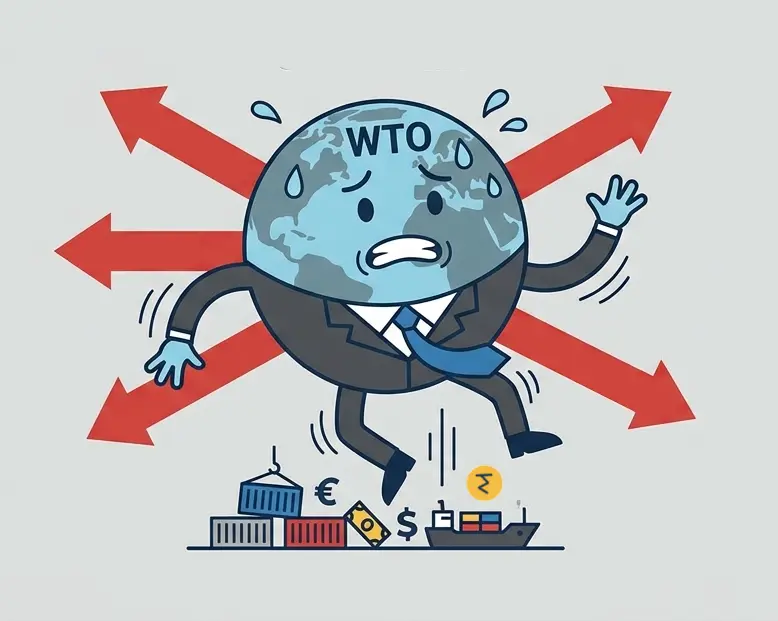
Trade multilateralism is facing its biggest stress test since the Second World War. The United States’ coercive unilateralism and attempts to dilute foundational rules such as the most-favoured nation (MFN) treatment threaten to hollow out the entire system. At such a critical juncture in history, the World Trade Organization (WTO)’s fourteenth Ministerial Conference (MC14), which recently concluded in Yaoundé, Cameroon (March 2026), was expected to reassure the global community about the importance of a rules-based global trading order, which limits hegemonic tendencies.
Regrettably, the MC14 failed to meet this challenge. While no one expected the MC14 to turn up trumps, the fact that the 166-member WTO failed to reach consensus on even issuing a ministerial declaration outlining future work is disconcerting. To paper over the cracks, the WTO’s Director General declared that the MC14 had produced a Yaoundé package comprising certain draft decisions, that is, decisions yet to be finalised, which will be discussed at Geneva in the months ahead.
Tale of two moratoriums
The MC14 will go down in history as the one that broke the long-standing consensus on moratoriums for two things. First, customs duties on electronic commerce transactions. Since 1998, WTO member-countries agreed not to impose customs duties on electronic commerce transactions to keep digital trade flows free. The moratorium has been extended every two years since its inception. However, at MC14, countries were unable to reach an agreement on extending the moratorium, which, thus, lapsed on March 31.
Today, countries are free to impose tariffs on digital trade flows, though it is expected that the WTO’s General Council will deliberate on this issue again in the months ahead. While this may provide developing countries with an opportunity to augment their revenue, it will burden consumers and businesses. A significant development that accompanied the end of the e-commerce moratorium was the signing of an e-commerce agreement (ECA) by 66 WTO members, which prohibits customs duties on digital trade.
Although not yet part of the WTO rulebook and binding only for the signatories, this agreement will establish two separate legal frameworks: the WTO, which allows tariffs on digital trade, and the ECA, which does not.
The second moratorium, in force since 1995, barred non-violation complaints under the WTO’s TRIPS Agreement. The WTO allows countries to file claims not only for legal violations but also when a country’s measures nullify another country’s anticipated benefits, even if those measures are legal.
This raises concerns for developing nations that their laws to promote public health could provoke complaints from developed countries alleging that they nullify the benefits of their intellectual property. Although such complaints are possible, history suggests they are unlikely to succeed, as evidenced by the failure of all 10 non-violation complaints related to trade in goods at the WTO.
Plurilateral innovation
A so-called low-hanging fruit at the MC14 was the incorporation of the plurilateral Investment Facilitation for Development (IFD) agreement into Annex 4 of the WTO Agreement, with support from 129 of 166 countries. However, it did not materialise due to India’s opposition. New Delhi opposed the IFD’s inclusion for multiple reasons, including the absence of legal safeguards to incorporate plurilateral agreements into the WTO acquis.
Plurilateral agreements to be incorporated into the WTO should be open and inclusive rather than exclusive. The failure to include the IFD Agreement has deepened the WTO’s legislative crisis, as the organisation struggles to establish rules for 21st century challenges.
No road map for the future
The MC14 failed to provide a clear road map for WTO reforms. Critical issues such as reviving the stalled appellate function of the WTO’s dispute settlement system have been postponed. Any attempts by the developed world, especially the U.S., to undermine key principles, such as MFN and the special and differential treatment, must be strongly resisted.
It is often said that those who do not learn from history are doomed to repeat it. The history of trade multilateralism demonstrates that whenever trade multilateralism slows, American unilateralism tends to rise. This occurred in the early 1970s when the General Agreement on Tariffs and Trade (GATT) negotiations floundered, leading to the enactment of strict measures such as Section 301 of the U.S. Trade Act of 1974. This provision empowers the U.S. President to take unilateral action against perceived unfair trade practices. We are currently witnessing a similar situation, but this time without Congressional approval and with far greater vengeance. A setback at the MC14 will exacerbate these trends.
Additionally, the failure of the MC14 will accelerate the trend of countries creating new trade rules outside the WTO. To keep the WTO relevant, innovative solutions must be found, such as plurilateralising the WTO. India should take the lead in developing the legal guardrails needed for the development and adoption of plurilateral agreements within the WTO. Achieving this will require a novel approach and unflinching political commitment to trade multilateralism.

विश्व में शांति बनाए रखने की चुनौती
जगमोहन सिंह राजपूत, ( लेखक एनसीईआरटी के पूर्व निदेशक हैं )
अमेरिकी राष्ट्रपति डोनाल्ड ट्रंप ने इतिहासकारों का कार्य सरल कर दिया है। वे खुद को महान शांतिदूत बताते हैं। फिर भी, अपने युद्ध मंत्री की इच्छापूर्ति के लिए ईरान पर आक्रमण कर दिया। हमले के बाद से वे लगभग प्रतिदिन विजय की घोषणा करते आ रहे हैं। वे कहते हैं कि अमेरिकी सुरक्षा के लिए कनाडा एवं ग्रीनलैंड पर भी आधिपत्य आवश्यक है। उन्होंने वेनेजुएला के राष्ट्रपति को सपत्नीक उठवा लिया है। क्यूबा उनकी जकड़न में पहले से ही है। वे भारत पर भी इन दिनों अपनी मनमानी चलाने की कोशिश कर रहे हैं। उनकी बातों को कोई मानता है या नहीं, उनकी प्रतिष्ठा एवं उनके देश की साख पर इसका कैसा असर होता है, इस सब पर वे ध्यान नहीं देते। उनके लिए इस तथ्य का भी कोई महत्व नहीं है कि विश्व का हर देश, परिवार और व्यक्ति अमेरिका-इजरायल एवं ईरान युद्ध की विभीषिका से प्रभावित है, कष्ट में है और भविष्य को लेकर आशंकाओं से घिरा है। इस युद्ध ने भारत सहित विश्व के सौ से अधिक देशों को कष्टपूर्ण ढंग से प्रभावित किया है।
द्वितीय विश्व युद्ध के पश्चात स्थापित संयुक्त राष्ट्र (यूएन) और उसकी सुरक्षा परिषद अपना आभामंडल बहुत पहले से ही खो चुके हैं। दुनिया में मारकाट मची है, लेकिन वे कहां हैं, क्या कर रहे हैं किसी को पता नहीं। वे निस्तेज होकर कहीं पड़े हैं। जबकि उसकी शिक्षा और संस्कृति से जुड़ी संस्था यूनेस्को का सूत्र वाक्य है कि युद्ध मनुष्य के मस्तिष्क में निर्मित होते हैं। अतः शांति का संरक्षण भी वहीं से प्रारंभ होगा। बड़ी उम्मीदों से संयुक्त राष्ट्र सुरक्षा परिषद का गठन किया गया था, परंतु अपनी श्रेष्ठता के अहंकार में डूबे पूर्व उपनिवेशवादी देशों ने अपने स्वार्थ में अंधे होकर इसे प्रभावहीन कर दिया है। साम्राज्यवाद समाप्त हो गया। उपनिवेशवाद अपने को बचा नहीं सका, लेकिन जिन्होंने केवल अन्य देशों को लूटना ही लक्ष्य बनाया था, वे आज भी अपने वर्चस्व की जकड़न से निकल नहीं पा रहे हैं, लोकतंत्र के सार-तत्व को स्वीकार नहीं कर पा रहे हैं। कितने ही उदाहरण दिए जा सकते हैं।
मिस्र ने जब स्वेज नहर का राष्ट्रीयकरण किया, तब ब्रिटेन, फ्रांस और इजरायल ने उस पर चढ़ाई कर दी। इसके लिए उन्होंने तर्क दिया कि यह उनकी सुरक्षा और रणनीतिक दृष्टि से आवश्यक है, विश्व हित में भी है, लेकिन उस आक्रमण से ब्रिटेन की जो वैश्विक साख गिरी, वह आज तक भी बहाल नहीं हो पाई है। उस समय दूसरे विश्व युद्ध को समाप्त हुए केवल दस वर्ष ही हुए थे। यूएन आज के मुकाबले अधिक प्रभावशाली था। तब अमेरिका ने सुरक्षा परिषद में युद्ध विराम का प्रस्ताव पास कराया, यह आशंका व्यक्त करते हुए कि कहीं तीसरा विश्व युद्ध प्रारंभ न हो जाए। आज ट्रंप का अमेरिका खुद ही विश्व को तीसरे विश्व युद्ध की आग में झोंक रहा है। 20वीं सदी में दो विश्व युद्ध, रूसी गृहयुद्ध तथा चीनी गृहयद्ध में करोड़ों निर्दोष नागरिक और सैनिक मारे गए थे। आज भी उस विभीषिका के दोहराए जाने का भय लगातार बना हुआ है।
गत दिनों अमेरिका और इजरायल ने बिना किसी से कोई संवाद किए ईरान पर आक्रमण कर दिया। इसीलिए विश्व का कोई भी अन्य देश खुलकर उनका साथ नहीं दे रहा है। इस समय हर देश में युवा वर्ग के दृष्टिकोण में परिवर्तन हो रहा है। उसमें मानव की समानता की व्यावहारिक समझ बढ़ी है। अपने स्वार्थ के लिए शांति, समानता और राष्ट्रीय सार्वभौमिकता जैसे विचारों को तिलांजलि देने का समय अब नहीं रहा। विश्व के अन्य देशों का इस युद्ध से दूर रहना इसी बड़े ऐतिहासिक परिवर्तन को स्थापित करता है। भारतीय नेतृत्व ने इस कठिन समय में भी धैर्य का परिचय देते हुए राष्ट्रहित और जनहित को प्राथमिकता दी है। इसकी सामान्यजन में सराहना हो रही है, लेकिन इस युद्ध से आम लोगों को हो रहे कष्ट को दूर करने के लिए जरूरी है कि दलगत राजनीति से ऊपर उठकर सभी पार्टियां एकजुट हों। जो केवल सरकार की आलोचना कर रहे हैं, वे कोई व्यावहारिक विकल्प प्रस्तुत करते नजर नहीं आ रहे हैं।
मनुष्यमात्र की एकता के पक्षधर समय-समय पर न केवल शांति, सहयोग और समन्वय की महती आवश्यकता का मानवहित में प्रचार-प्रसार करते रहे, बल्कि वे उसकी व्यावहारिकता भी सिद्ध करने में सफल हुए। महात्मा गांधी, मार्टिन लूथर किंग जूनियर, नेल्सन मंडेला जैसे महापुरुषों से लोग प्रभावित हुए, उनका साथ दिया, लक्ष्य प्राप्त करने में सफलताएं भी मिलीं, लेकिन हिंसा, अविश्वास, पंथक कट्टरता, वर्चस्व की अमिट आकांक्षा कम होने के स्थान पर बढ़ती ही रही। हिंसा और युद्ध न रुके, न ही समाप्त हुए।
मानव इतिहास की यह कैसी विडंबना है कि विश्व में शिक्षा और साक्षरता का सराहनीय प्रसार हुआ है, मनुष्य की मानवीय प्रवृत्तियों की समझ भी बढ़ी है। इनके मनोवैज्ञानिक, सामाजिक पक्ष की गहराई तक शोध और अध्ययन हो चुके हैं, लेकिन मनुष्य की क्रूरता घटी नहीं, बल्कि बढ़ी ही है। शिक्षाशास्त्री मानते रहे हैं कि हर राष्ट्र का भविष्य उसके स्कूलों और अन्य शैक्षणिक संस्थाओं में लिखा जाता है। इतिहास के वर्तमान कालखंड में यह अत्यंत स्वीकार्य तथ्य लगता है। सभी वैश्विक समस्याओं का समाधान भारत की ज्ञानार्जन और उसके सदुपयोग की परंपरा में निहित हैं। भारत को ही शांति स्थापना में अपने ऐतिहासिक उत्तरदायित्व को निभाने की दीर्घकालीन रणनीति तैयार करानी होगी। अन्य कोई रास्ता नहीं है।

Date: 06-04-26
वैश्विक सुरक्षा ढांचे में बदलाव
संपादकीय
अब बात स्पष्ट होती जा रही है कि अमेरिकी राष्ट्रपति डोनाल्ड ट्रंप ईरान पर एक महीने पहले शुरू किए गए हमले से किसी तरह अपना चेहरा बचाते हुए बच निकलने के लिए जूझ रहे हैं। इस युद्ध के लिए दो लक्ष्य घोषित किए गए थे सत्ता परिवर्तन और परमाणु क्षमता को नष्ट करना। लेकिन पिछले सप्ताह राष्ट्र के नाम किए गए एक अत्यंत निराश करने वाले संबोधन में शांति और तनाव कम करने का मार्ग पेश करने के बजाय राष्ट्रपति ट्रंप ने कहा कि अमेरिका ईरान को पाषाण काल में पहुंचाने तक उस पर बमबारी करेगा। एक संप्रभु राष्ट्र को पूरी तरह नष्ट करने तक उस पर चमचारी करने को कोई उद्देश्य नहीं माना जा सकता है। इससे न तो ईरान किसी तरह आत्मसमर्पण करने के बारे में सोचेगा और न ही यह पश्चिम एशिया में स्थायी शांति की गारंटी देगा। ईरान पर बहुत घातक हमले किए गए लेकिन इसके बावजूद उसके पास अब भी मिसाइल क्षमता बची हुई है और इस बात ने उसके विरोधियों तक को चकित किया है। इजरायल को यह सबक मिला है कि लगातार दो साल तक गाजा और लेबनान पर की गई तेज बमबारी के बावजूद वह सुरक्षित नहीं रह सका है। ईरान प्रायोजित हमास अब भी गाजा के खंडहरों के आधे हिस्से पर नियंत्रण रखता है, जिससे अमेरिकी नेतृत्व वाले ‘बोर्ड ऑफ पीस’ की महत्त्वाकांक्षी रियल एस्टेट योजना खतरे में पड़ जाती है, और हिजबुल्ला ने उत्तरी इजरायल पर रॉकेट और ड्रोन से हमले जारी रखे हैं। लाल सागर के किनारे ईरान- प्रायोजित हृतियों की देर से हुई लामबंदी ने ईरान की विषम युद्ध क्षमताओं को भी रेखांकित किया है।
यह युद्ध वैश्विक अर्थव्यवस्था पर बहुत अधिक दबाव डाल रहा है और इसे समाप्त कर पाने में अक्षमता के बावजूद किसी तरह के आत्मावलोकन की प्रक्रिया शुरू होती नहीं नजर आती। इसके बजाय अमेरिकी राष्ट्रपति अपने देश का इस्तेमाल विशुद्ध तेल एवं गैस निर्यातक के रूप में कर रहे हैं जो पश्चिम एशिया की आपूर्ति पर निर्भर नहीं है। उनका यह भी कहना है कि होयुंज स्ट्रेट अमेरिका का सिरदर्द नहीं है। यह बात सही है कि इन रास्तों से अमेरिका का आयात नगण्य है लेकिन अमेरिकी राष्ट्रपति का वक्तव्य असाधारण रूप से जवाबदेही से भागने का रहा है। अगर अमेरिका और इजरायल ने क्रमशः ऑपरेशन एपिक फ्यूरी और राइजिंग लायन नहीं लॉन्च किया होता तो ईरान ने खाड़ी में अमेरिका के सहयोगी देशों के तेल और गैस ढांचों में से कुछ को निशाना नहीं बनावा होता । न ही उसने होर्मुज स्ट्रेट को बंद किया होता। गौरतलब है कि विश्व स्तर पर कच्चे तेल और गैस परिवहन का पांचवां हिस्सा इसी रास्ते से गुजरता है।
उल्लेखनीय यह है कि अमेरिका के सहयोगी देश, विशेषकर यूरोप में, और प्रतिद्वंद्वी चीन तेजी से वैश्विक सुरक्षा ढांचे को नया रूप देने की कोशिश कर रहे हैं ताकि एक अप्रत्याशित महाशक्ति पर निर्भरता कम की जा सके। ट्रंप के नाटी (उत्तर अटलांटिक संधि संगठन) से बाहर निकलने की बात पहले ही वैकल्पिक गठबंधनों को प्रोत्साहित कर रही है। यह नाखुश हैं क्योंकि प्रमुख यूरोपीय देशों ने अमेरिकी सैन्य विमानों को उदान अधिकार देने से इनकार कर दिया। अटलांटिक पार संबंधों में बदलाव पिछले वर्ष शुरू हो गया था, जब यूरोप ने यूक्रेन को अपनी सहायता में उल्लेखनीय वृद्धि की, जबकि ट्रंप प्रशासन ने उसकी बड़े पैमाने पर वित्तीय सहायता कम कर दी। पिछले सप्ताह की घटनाओं ने उन प्रवृत्तियों को और मजबूत किया है।
ब्रिटेन की पहल, जिसमें विभिन्न देशों के विदेश मंत्रियों को एकत्रित करके होर्मुज स्ट्रेट को फिर से खोलने के तरीकों पर चर्चा की गई, इसका एक उदाहरण है। इसके साथ ही 1974 से पश्चिम एशिया में तेल व्यापार को सहारा देने वाली पेट्रो- डॉलर प्रणाली को चुनौती दी जा रही है, क्योंकि ईरानी शासन अपने सहयोगी समझे जाने वाले देशों को चीनी युआन में तेल खरीदने की अनुमति देकर एक छोटा लेकिन बढ़ता हुआ पेट्रो- युआन व्यापार चला रहा है। ये बदलाव और वैश्विक व्यवस्था में पुनसंयोजन समय ले सकते हैं। लेकिन एक बात निश्चित है। भले ही ट्रंप युद्ध को ‘दो या तीन सप्ताह’ में समाप्त करने में सफल हो जाएं, बिना स्ट्रेट को फिर से खोले अमेरिका की वैश्विक स्थिति बेहद कमजोर हो चुकी है।

कठघरे में खिलाड़ी
संपादकीय
इसमें कोई दोराय नहीं कि अंतरराष्ट्रीय प्रतिस्पर्धाओं में भारतीय खिलाड़ियों ने अपने दमखम के बूते देश की प्रतिष्ठा को नया मुकाम दिया है। ऐसे कई खेल हैं, जिनमें अब तक सिर्फ अमेरिका, रूस, चीन आदि विकसित देशों की तूती बोलती रही है, लेकिन पिछले कुछ समय से भारत के खिलाड़ियों ने अपनी धमक से वर्चस्व की स्थिरता को तोड़ा है और अपनी दमदार उपस्थिति दर्ज की है। विडंबना यह है कि क्रमशः मजबूत होती मौजूदगी के बरक्स ऐसे मामले भी तेजी से बढ़ते पाए जाने लगे हैं, जिनमें हमारे खिलाड़ियों ने किसी ऐसी दवा या मादक पदार्थ का सेवन किया, जो डोपिंग से संबंधित नियमों के खिलाफ है। यही वजह है कि डोपिंग मामलों की जांच करने वाली संस्थाओं की नजर में भारत के खिलाड़ी अब विशेष रूप से निगरानी के दायरे में हैं। गौरतलब है कि डोपिंग नियमों के उल्लंघन की वजह से निलंबित किए गए खिलाड़ियों की सूची में भारत अब कीनिया को पीछे छोड़ कर शीर्ष पर पहुंच गया है। भारत के ट्रैक एंड फील्ड के एक सौ अड़तालीस एथलीट और उनके सहयोगी कर्मचारी डोपिंग मामलों की वजह से निलंबित हैं।
सवाल है कि राष्ट्रीय-अंतरराष्ट्रीय स्तर की खेल प्रतिस्पर्धाओं का आयोजन कराने वाला समूचा तंत्र और खेल प्रबंधन से जुड़े अधिकारियों के कामकाज की वह कौन-सी शैली है कि डोपिंग नियमों का उल्लंघन करने वाले खिलाड़ियों के निलंबन के मामले में देश सबसे ऊपर पहुंच गया। करीब चार महीने पहले भी निगरानी संस्था वैश्विक डोपिंग रोधी एजेंसी ने अपने आकलन में वर्ष 2024 के आंकड़ों में भारत को लगातार तीसरे साल डोपिंग के मामलों में सबसे ऊपर पाया था। अंतरराष्ट्रीय प्रतियोगिताओं में तमगा और उसके बाद नगद इनाम हासिल करने या फिर भविष्य में अपनी जगह सुनिश्चित करने की मंशा से कुछ खिलाड़ी प्रतिबंधित प्रदर्शन वर्धक दवाएं लेने की ओर प्रवृत्त हो सकते हैं। मगर इससे उनकी सेहत और करिअर पर कितना और क्या विपरीत असर पड़ता है, इसके बारे में उन्हें शिक्षित और जागरूक किए जाने की जरूरत है। हैरानी की बात यह है कि बीते कई वर्षों से यह समस्या कायम रहने के बावजूद इसमें सुधार के लिए ठोस कदम नहीं उठाए गए, जिससे डोपिंग के नियमों के उल्लंघन पर काबू पाया जा सके।

चांद के पास इंसान
संपादकीय

एक ओर, दुनिया में सबकी निगाह पश्चिम एशिया के युद्ध पर टिकी है, तो दूसरी ओर, चंद्रमा की परिक्रमा के लिए अंतरिक्ष यात्रियों के साथ गया अमेरिकी यान भी चर्चा में है। लगभग 53 साल बाद इस तरह का कोई अभियान संभव हुआ है और नासा ने रविवार को आर्टेमिस 2 मिशन के दल द्वारा ली गई चंद्रमा की एक तस्वीर साझा की है। इस विशेष अंतरिक्ष अभियान का लक्ष्य है चंद्रमा के चक्कर लगाकर उसके रहस्यमय सुदूर भाग की तस्वीरें खींचना। नासा द्वारा पोस्ट की गई खास तस्वीर में चंद्रमा की डिस्क के दाहिने किनारे पर स्थित पूरा ओरिएंटेल बेसिन दिखाई दे रहा है, जिसे पहले कभी नहीं देखा गया था । यह एक बड़ी वैज्ञानिक कामयाबी है, जिसकी प्रशंसा होनी चाहिए। सबकुछ योजना अनुसार हुआ, तो तीन अमेरिकी और एक कनाडाई अंतरिक्ष यात्री सोमवार को अपने गंतव्य पर पहुंच जाएंगे। यहां यह अवश्य याद करना चाहिए कि साल 1972 में अपोलो मिशन के बाद ये चारों अंतरिक्ष यात्री चंद्रमा की यात्रा करने वाले पहले मानव हैं। यहां से चंद्रमा के प्रति मानव समाज में एक नए वैज्ञानिक लगाव की शुरुआत हो सकती है। इस अभियान की सफलता इसलिए भी जरूरी है कि इससे मानव समाज में विज्ञान के प्रति लगाव बढ़ेगा।
ध्यान रहे, आर्टेमिस 2 चंद्रमा के पास पहुंचने के लिए करीब 4,00,000 किलोमीटर की दूरी तय करेगा। यान चंद्रमा की सतह पर नहीं जाएगा और न चंद्रमा की कक्षा में प्रवेश करेगा। यह चंद्रमा की कक्षा से बाहर ही रहते हुए उसकी परिक्रमा करेगा। यह 10 दिन का अभियान 10 अप्रैल को जब संपन्न होगा, तब मानव और चंद्रमा के बीच संबंधों की एक आधुनिक शुरुआत होगी। यह शीतयुद्ध का ही नतीजा था कि अमेरिका और सोवियत संघ के बीच चांद पर पहुंचने की होड़ मची थी। इस होड़ में अमेरिका कामयाब रहा और रूस को अपने अभियान में अपेक्षाकृत कामयाबी नहीं मिली। बाद में अमेरिका भी इस महंगी होड़ से पीछे हट गया। चंद्रमा के अध्ययन से वैज्ञानिकों को कुछ खास हासिल होने की उम्मीद भी नहीं थी। ऐसे में, पांच दशक से भी ज्यादा वक्त बगैर किसी चंद्र अभियान के बीत गया। अब रूस की प्राथमिकता बहुत बदल गई है, तो चीन होड़ के लिए आगे आ गया है। चीन चांद पर मानव भेजने के अपने प्रयासों को अंतिम रूप देने में जुटा है। ऐसे में, अमेरिका को भी चांद पर पहुंचना जरूरी लग रहा है। यदि आर्टेमिस 2 को कामयाबी मिली, तो अमेरिका या नासा का अगला प्रयास चांद पर मानव मिशन भेजना होगा।
दरअसल, चंद्रमा पर स्थायी मानव मौजूदगी बनाने की कोशिश हो रही है। अगर चंद्रमा पर एक अंतरिक्ष आधार तैयार हुआ, तो वहां से अन्य ग्रहों तक पहुंचने में सुविधा होगी। अभी अंतरिक्ष केंद्र काम कर रहे हैं, पर वहां से किसी दूसरे ग्रह की ओर प्रक्षेपण संभव नहीं है। नासा चंद्रमा पर अंतरिक्ष केंद्र बनाने की अपनी दीर्घकालिक योजना पूरी करने की ओर बढ़ रहा है। उसका अगला लक्ष्य साल 2028 तक चंद्रमा के दक्षिणी ध्रुव के पास अंतरिक्ष यात्रियों को उतारना है। जहां तक चीन की योजना है, वह साल 2030 में अपने यात्रियों को चांद पर भेजेगा और भारत ने साल 2040 को लक्ष्य बना रखा है। करीब तीन साल पहले चंद्रयान-3 की सफलता के साथ भारत चांद पर उतरने की क्षमता हासिल कर चुका है और अब वहां से सुरक्षित लौटने की क्षमता हासिल करने में जुटा है। इस दिशा में भारतीय वैज्ञानिक मुस्तैदी से काम कर रहे हैं और उनके काम में किसी तरह की ढिलाई नहीं आनी चाहिए।