
18-08-2026 (Important News Clippings)
To Download Click Here.
 Date: 18-08-26
Questions On Questions
Census authorities should explain the rationale of new entries in the questionnaire
TOI Editorials
India’s first census under the Raj asked 17 questions. The ongoing 16th Census will ask 40. That’s not a bad thing because data about people helps govt plan for the future – how many cities, schools, hospitals, airports, etc to build. It also helps govt understand changing demographics – educational levels, family structure, age pyramid, etc. But census data, although collected from individuals, is always about aggregates and averages. For example, when the census asks how you commute to work, you’re just a data point. The real interest is population-wide – how people across a town or district or state commute.
That’s why census data has always been anonymised. That’s the case in UK, US, Australia. And it was so in India, too, until 2011. This time, though, you’ll be asked your mobile number, passport number and Aadhaar. And we don’t know why. Govt maintains all data collected during the census is confidential and secure, but when such specific personal details are thrown in, security and confidentiality become sharper.
In just the past two months we’ve heard about frontier AI models hacking databases wantonly. But even before that, Indian data was highly vulnerable. Recall how Aadhaar login credentials were being sold on WhatsApp for 500 in 2018. There was an alleged CoWIN data leak in 2023, and a confirmed ICMR breach the same year that exposed personal details of 81cr citizens. With this being India’s first fully digital census, the vulnerabilities of 30L personal phones and tablets used by enumerators must be factored in.
But the bigger question remains why phone number, Aadhaar, passport, and voter ID should be collected as part of the census. It’s OK to ask whether you have a passport, but why record the identifier? Govt should explain the necessity to citizens in detail, and if the answer isn’t convincing, or if the risks – which are real – outweigh the benefits, some questions should be dropped. Because when all these details sit together with other demographic data in one place, a “reconstruction attack” could piece together extremely detailed profiles of citizens, and make them available to bad actors. Neither a citizen nor govt wants that.

FCNR(B), Nothing Magical About It
RBI must tweak, not ditch, its crisis playbook
ET Editorial
A special window to raise bank deposits from the Indian diaspora at sweetened interest rates has been so successful that it is being shut ahead of schedule. Technically, RBI will stop a dollar-rupee forex swap facility to banks for fresh FCNR(B) deposits of 3-5-yr tenor. The facility was provided from June 8 till September 30, but will now be switched off on August 31. Banks have till Sep 11 to execute their swaps with RBI. The special elements of the scheme are that RBI — not banks — will bear the currency risk, the fresh FCNR(B) deposits are exempt from bank liquidity requirements, and banks have more elbow room in deciding the interest rates offered for these deposits.
The response to similar special offers to NRIs saving some of their income in India has been enthusiastic. This time, too, expectations were that the attractive deposit rates would draw in forex deposits above the desired objective. Since the drawdown in forex reserves since the outbreak of the Iran conflict was modest, the special deposit window was designed appropriately. It turns out that RBI erred on the side of caution and is making suitable adjustments. These adjustments are necessary because of liquidity considerations.
An injection of dollars into the banking system will require compensatory liquidity absorption through RBI’s open market operations. With an anticipated range of special FCNR(B) deposits, the policy response should not need to deviate much from the central bank’s monetary policy stance. At the end of its latest monetary policy meeting on Aug 5, RBI had indicated it was not planning to close the special window before schedule. Some policy assessments were altered between then and Aug 14, when RBI announced the premature withdrawal. The apex bank’s strategy of tapping diaspora deposits with sweeteners during extreme currency movements is well established. Since every global crisis is unique, RBI needs to fine-tune its crisis response accordingly without straying too far from the playbook.

Awaiting answers
Student agitations in Ranchi reveal angst over flawed exam processes
Editorial
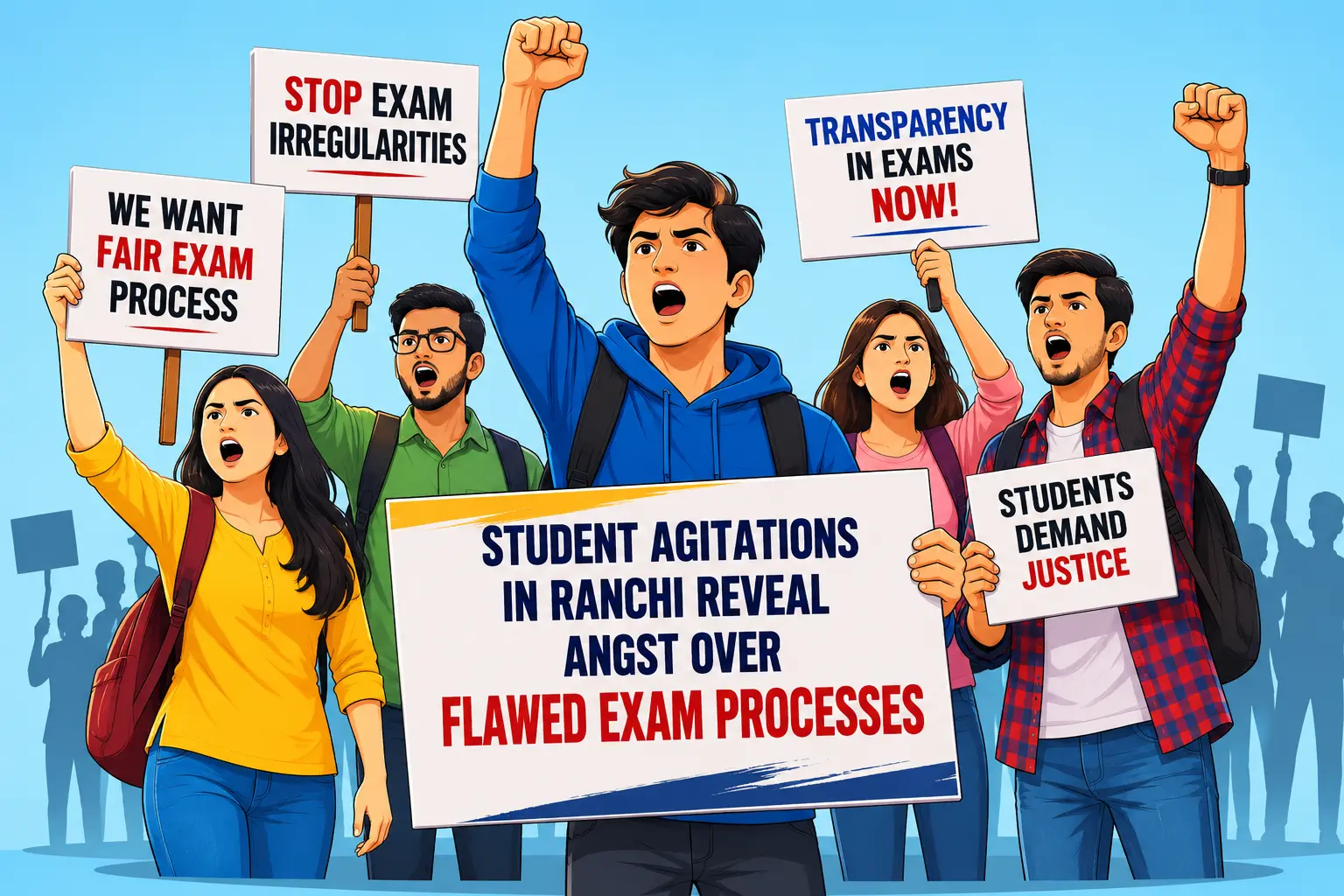
When the route up the economic ladder in society is limited to an ever-narrowing range of options in the public sector, and the process of gaining entry through entrance examinations becomes tainted, angst and agitation are the results. This is why students in Jharkhand, loosely organised into two platforms — the Jharkhand Public Service Commission (JPSC)-Jharkhand Staff Selection Commission (JSSC) Abhyarthi Nyay Manch and the JPSC-JSSC Reform Manch — have been protesting in Ranchi for over three weeks. The trigger was the July 2 result of the JPSC’s 14th Combined Civil Services preliminary examination, which shortlisted 2,204 candidates from about 3.5 lakh aspirants for 103 posts. Aspirants pointed to undisclosed category-wise cut-offs, oddities in the merit list, a widely circulated OMR sheet on which an ostensibly successful candidate had attempted fewer than half the questions, and the fact that the conducting agency had been blacklisted in May 2025. The two platforms differ in their political leanings and have sought to negotiate separately with the government, but both want the cancellation of the disputed JPSC and JSSC exams, a CBI investigation and prosecution of officials, besides the reconstitution of commissions and a predictable examination calendar. The Jharkhand Mukti Morcha-led coalition government has responded with CID raids, arrests, resignations in the JPSC, and a cabinet committee. On Monday it went further, announcing the cancellation of all examinations conducted since 2014 by the outsourced agency, TSR Data Processing, which might help assuage the agitating students but could leave those who cleared the examinations fairly in the lurch.
The rot in the exam system is deep-rooted. Since the State’s formation in 2000, results have frequently been delayed and cycles have been bunched up many times. In a recent JSSC exam, an SIT reported no organised leak despite CID reports that described money changing hands for pre-examination access. These have eroded students’ trust in the government; hence the demand for a CBI probe. The 2003 and 2005 exams were subject to CBI scrutiny but the cases are still pending. Yet, the Hemant Soren-led government should concede this politically unpalatable demand, along with other steps, including a fixed exam calendar, and fair and transparent marking with clear cut-offs and time-bound results. Jharkhand is one of India’s poorest States, and its mineral wealth has not led to sufficient employment. With youth forced to rely on monsoon-dependent agriculture and allied activities, a government job offers a steady option. Aspirants spend years in coaching centres and libraries in pursuit of this. The youth deserve not only a fair recruitment system but also a government that diversifies their options for gainful employment.
Date: 18-08-26
Losing forest for trees
India is counting trees when it should be restoring forests
Editorial

A performance audit by the Comptroller and Auditor General (CAG) of the Green India Mission (GIM) has found that a scheme conceived to heal India’s forests had, across a decade, achieved almost nothing it set out to do. Instead of improving forest quality over 1.4 million hectares, the mission only managed 0.11 million — not even a tenth of the target. On expanding forest cover, the mission barely scraped together four per cent. The Compensatory Afforestation Fund Management and Planning Authority (CAMPA) channels money collected from industry for diverting forest land into afforestation, while the Mahatma Gandhi National Rural Employment Guarantee Scheme, now rebranded as VB-G RAM G funds rural wage labour that can be used for plantation and land-restoration works, but GIM’s intended convergence with these schemes never materialised. The mission was one of the eight pillars of the National Action Plan on Climate Change, unveiled in 2008, and the instrument through which India promised the Paris Agreement an additional carbon sink of 2.5 billion to 3 billion tonnes by 2030. Its animating idea was ecological — biodiversity, water, sequestration, and the revival of habitat. GIM however seems to be on the back burner and, for all practical purposes, replaced by a tree plantation drive called ‘Ek Ped Maa Ke Naam (A Tree in the Name of Mother)’. Launched in 2024, the government reports planting 140 crore saplings so far, but the latest forest data expose the gulf between a tree and a forest. The India State of Forest Report 2023 records a gain of 1,445 square kilometres in green cover but only 156 sq km of it is true forest. The rest, 1,289 sq km, is ‘tree cover outside recorded forests.’ Within the recorded forests, dense canopy is thinning into scrub. Ergo, India is planting more and foresting less.
Few examples encapsulate this as much as the controversy over the Aravallis. Arguably the country’s most degraded range — its hillocks quarried away, its native growth overrun by the invasive ‘vilayati kikar’ (Prosopis juliflora) — it is now to be rescued by a ‘Green Wall’ of fresh planting. But these arboreal conscripts cannot undo the damage from years of mining, halt encroachment, or summon back an ecosystem that took millennia to form. Restoration is not landscaping. The CAG’s instrument is accountancy: it can count hectares and rupees, not the worth of a living forest; and its assessment cannot always capture the practical challenges of implementing missions. However, its verdict still lands. A mission to restore India’s forests has been allowed to wither while the state busies itself counting trees.

देश में टैलेंट तो मिल जाएगा, निखारना सरकार का काम
संपादकीय
कुपोषण – जनित नाटयपन, दुबलापन और जन्म के समय कम वजन एक बड़ी समस्या है। महिलाओं में एनीमिया भी खत्म नहीं हो रहा है। ऐसे में प्रधानमंत्री का ओलिंपिक में भाग लेने और मेडल जीतने के आशय से टैलेंट हंट का अभियान सामयिक तो है, लेकिन उसके सफल होने की कई शर्तें हैं। जिन एक-तिहाई स्पर्धाओं में भारत भाग लेता है क्या उनमें वह अपेक्षित सफलता पा सका है? दक्षिण कोरिया की आबादी दिल्ली से थोड़ी ही ज्यादा है, पर उनकी पदक तालिका देखें। इस कमी को कई स्तर पर देखना होगा। कुपोषण से मुक्ति पहला चरण है। खेलों के लिए बेहतर वातावरण, सुविधाएं और भविष्य की गारंटी देनी होगी। जब राष्ट्रीय स्पर्धा में भाग लेने वाला हॉकी या फुटबाल का खिलाड़ी भी आजीविका के लिए संघर्ष करता हो तो अभिभावक भी बच्चों को खेल के मैदान पर नहीं भेजने में ही भलाई समझते हैं। टैलेंट हंट से पहले टैलेंट के लिए अपेक्षित न्यूनतम स्वास्थ्य सुनिश्चित करें, फिर उनके लिए खेलों के बेहतर उपकरणों और मैदानों की व्यवस्था करें। साथ ही खेल और चयन में राजनीति या भाई-भतीजावाद के दंश को खत्म करें। चीन ने 2008 में ओलिंपिक कराया और सबसे ज्यादा गोल्ड जीते, लेकिन इसके लिए 15 वर्ष पहले ही बच्चों की क्षमताओं को परखने का काम शुरू कर दिया था। क्या भारत में खेलों पर ऐसा ही ध्यान दिया जा रहा है?
 Date: 18-08-26
कई मोर्चों सुधार जरूरी
संपादकीय
प्रधानमंत्री की आर्थिक सलाहकार परिषद द्वारा महामारी के बाद देश के हालात में सुधार से जुड़ी एक केंद्रीय कमजोरी को रेखांकित किया गया है। कॉरपोरेट मुनाफा निवेश की तुलना में कहीं अधिक तेजी से सुधरा है। ब्याज और कर पूर्व लाभ (पीबीआईटी) वर्ष 2023-24 में 21.4 फीसदी बढ़ा जबकि सकल अचल परिसंपत्ति केवल 6.1 फीसदी बढ़ी। इससे 15.3 फीसदी का अंतर पैदा हुआ। निवेश महामारी के झटके से उबर चुका है लेकिन उसकी वापसी की दर कमजोर रही है। यह इसलिए मायने रखता है क्योंकि निवेश संबंधी निर्णय मौजूदा परिसंपत्तियों पर अर्जित लाभ पर कम निर्भर करते हैं और आगामी पूंजी के अनुमानित लाभ पर अधिक पत्र में निवेश पर दबाव के प्रमाण मिले हैं जो घटती सीमांत लाभप्रदता की वजह से है। कंपनियां अपने मौजूदा परिसंपत्ति आधार पर लाभप्रद बनी रह सकती हैं लेकिन यदि नई क्षमता से तुलनीय रिटर्न की उम्मीद नहीं है तो वे नया पूंजीगत व्यय टाल सकती हैं घरेलू कंपनियों और आयात से बढ़ती प्रतिस्पर्धा, वैश्विक औद्योगिक अति-क्षमता, और तेज तकनीकी पुराने पड़ने की संभावना उन कारकों में शामिल हैं जिन्हें पत्र ने संभावित कारण बताया है।
भारत को केवल ऐसी नीतियों की आवश्यकता नहीं है जो कंपनियों को अधिक व्यय के लिए प्रेरित करें। उसे ऐसी नीतियों की आवश्यकता है जो उत्पादक निवेश को अधिक मुनाफे वाला बनाएं। इस संदर्भ में नीति आयोग-क्रिसिल का एक हालिया खाका जो भारत को वैश्विक विनिर्माण केंद्र के रूप में बदलने का इरादा रखता है, 12 ऐसे क्षेत्रों को चिह्नित करता है जिनमें वैश्विक नेतृत्व और पैमाना हासिल करने की क्षमता है। और यह बड़े पैमाने, बुनियादी ढांचे, तकनीक, कौशल, घरेलू स्तर पर मूल्यवर्धन और वैश्विक मूल्य श्रृंखलाओं के साथ गहरे एकीकरण पर जोर देता है। भारत का विनिर्माण हिस्सा पिछले दो दशकों से सकल मूल्य वर्धन (जीवीए) में लगभग 16-18 फीसदी पर अटका हुआ है, जबकि लॉजिस्टिक्स और अधोसंरचना की खामियां, बिखरे हुए सूक्ष्म, लघु और मध्यम उद्यम (एमएसएमई) और सीमित पैमाने की अर्थव्यवस्थाएं प्रतिस्पर्धात्मकता को बाधित करती रही हैं। क्लस्टर- आधारित विनिर्माण इन बाधाओं में से कुछ को दूर कर सकता है। साझा उपयोगिताओं, लॉजिस्टिक्स, परीक्षण सुविधाओं और सुव्यवस्थित अनुमोदनों वाले एकीकृत औद्योगिक पार्क स्थिर और परिचालन लागत को कम कर सकते हैं, आपूर्तिकर्ता संबंधों को सुगम बना सकते हैं और कंपनियों को पैमाना डासिल करने में मदद कर सकते हैं।
शुल्कों को युक्तिसंगत बनाना भी इस प्रयास का हिस्सा होना चाहिए। आयातित मध्यवर्ती वस्तुओं और घटकों पर उच्च शुल्क घरेलू उत्पादन की लागत बढ़ाते हैं और निर्यात पर अप्रत्यक्ष कर की तरह काम करते हैं। आधुनिक विनिर्माण में जहां उत्पादन कई देशों में फैला होता है वहां प्रतिस्पर्धी कीमतों पर मध्यवर्ती कच्चे माल तक पहुंच वैश्विक मूल्य श्रृंखलाओं में भागीदारी के लिए आवश्यक है। इसलिए एक सरल और कम शुल्क संरचना कच्चे माल की लागत को कम करके और निर्वात प्रतिस्पर्धात्मकता में सुधार करके विनिर्माण निवेश के पक्ष को मजबूत करेगी। वैश्विक मूल्य श्रृंखला का तर्क विशेष रूप से महत्त्वपूर्ण है। भारत का वैश्विक विनिर्माण मूल्यवर्धन में हिस्सा 1995 में लगभग 1.5 फीसदी से बढ़कर 2023 में 3.2 फीसदी हो गया जबकि चीन का हिस्सा लगभग 5 फीसदी से बढ़कर करीब 32 फीसदी हो गया। स्पष्ट है कि कंपनियों को बड़े निर्यात बाजारों, विश्वसनीय आपूर्तिकर्ताओं, तकनीक और पैमाने तक पहुंच की आवश्यकता है। जब तक घरेलू शुल्क, लॉजिस्टिक्स और निवेश की स्थितियां भारतीय कंपनियों को वैश्विक उत्पादन नेटवर्क से जुड़ने की अनुमति नहीं देतीं तब तक हालिया व्यापार समझौते सीमित लाभ ही देंगे।
तकनीकी क्षमता पर भी ध्यान देने की आवश्यकता है। प्रधानमंत्री की आर्थिक सलाहकार परिषद के पत्र ने अत्यधिक नवोन्मेषी ‘सितारा’ कंपनियों की अनुपस्थिति को एक कारण बताया है कि पहले का निवेश उछाल वापस नहीं आया। वर्ष 2025 में भारत का सकल अनुसंधान एवं विकास व्यय सकल घरेलू उत्पाद का केवल लगभग 0.6 से 0.7 फीसदी था जबकि अमेरिका में यह लगभग 3.45 फीसदी और चीन में 2.58 फीसदी था। यकीनन उद्देश्य यह नहीं होना चाहिए कि पूंजीगत व्यय को अनिश्चितकाल तक सब्सिडी दी जाए। इसके बजाय टिकाऊ निजी निवेश तभी उभर कर आयेगा जब कंपनियां निरंतर वाणिज्यिक रिटर्न देखें।
Date: 18-08-26
रोजगार वृद्धि का नया इंजन हो सकता है सेवा क्षेत्र
कविता राव, ( लेखिका राष्ट्रीय लोक वित्त एवं नीति संस्थान की निदेशक हैं। ये उनके निजी विचार हैं )
पिछले एक महीने में देशभर में बड़े पैमाने पर विरोध प्रदर्शन प्रदर्शनों में प्रमुख पाठ्यक्रमों में प्रवेश और सरकारी नौकरियों में भर्ती के लिए क्षण निष्पक्षता की मांग की गई। इसका तात्कालिक कारण नीट-यूजी परीक्षा के प्रश्नपत्र का लीक होना था। लेकिन इस दौरान प्रदर्शनकारियों ने अन्य कई परीक्षाओं का भी उल्लेख किया।
इस के जवाब में सरकार ने संसद में नया विधेयक पेश किया। सार्वजनिक परीक्षाएं (अनुचित साधनों की रोकथाम) संशोधन विधेयक, 2026 नामक इस विधेयक के तहत किसी भी लीक के लिए जिम्मेदार पाए जाने वालों पर और कठोर सजा का प्रावधान किया गया है। राष्ट्रीय परीक्षण एजेंसी (एनटीए), जो नीट और कॉमन यूनिवर्सिटी एंट्रेंस टेस्ट जैसी महत्त्वपूर्ण परीक्षाएं आयोजित करती है, उसको पुनर्गठित किया जा रहा है और 47 अधिकारियों को निलंबित किया गया है। परीक्षा प्रणाली पर उठ रहे सवाल मूल रूप निष्पक्षता से जुड़े हैं। पैसों के बदले प्रश्नपत्र बेचे जाने की आशंका पूरी प्रणाली की विश्वसनीयता को कमजोर करती है। इसलिए केवल एनटीए ही नहीं बल्कि बल्कि उन सभी एजेंसियों का पुनर्गठन आवश्यक है जो कार्यक्रमों / पाठ्यक्रमों या सार्वजनिक क्षेत्र की नौकरियों में प्रवेश के लिए परीक्षाएं आयोजित करती हैं। इसके साथ ही एक बुनियादी सवाल उठता है। वह यह कि आखिर लीक का बाजार क्यों और कैसे बनता है और टिकता है ? शायद इसका उत्तर भारत के रोजगार बाजार की प्रकृति में छिपा हुआ है। आवधिक श्रम शक्ति सर्वे (पीएलएफएस) भारत में नौकरियों की संरचना पर कुछ चौंकाने वाले आंकड़े प्रस्तुत करता है।
वर्ष 2025 में कुल कार्यबल में नियमित श्रमिकों का हिस्सा 23.06 फीसदी था जिनमें से आधे से अधिक सरकारी या सार्वजनिक उपक्रमों में कार्यरत थे। स्वरोजगार करने वालों का हिस्सा आधे अधिक अधिक यानी करीब ( 56 फीसदी ) था अस्थायी श्रमिक थे । नियमित श्रमिकों का औसत मासिक वेतन लगभग 22,699 रुपये बताया गया जो स्वरोजगार करने वालों की औसत मासिक आय 14,861 रुपये और अस्थायी श्रमिकों की आय 10,000 रुपये (यह मानकर कि वे औसतन वे महीने में 22 दिन काम करते हैं) से अधिक है। नियमित श्रमिकों में भी बड़ा अंतर है। 50 फीसदी से अधिक के पास लिखित अनुबंध नहीं है और न ही उन्हें सामाजिक सुरक्षा का लाभ मिलता है।
विभिन्न गतिविधियों में वेतन के अंतर को समझने के लिए सर्वेक्षण ने कई व्यवसायिक वर्गीकरण दिए हैं। नियमित श्रमिकों में सबसे अधिक और सबसे कम वेतन का अनुपात 4:1 है। यदि सबसे अधिक वेतन पाने वाले नियमित श्रमिकों की तुलना अस्थायी श्रमिकों से की जाए तो अंतर 7: है। इसके अलावा सार्वजनिक क्षेत्र में विशेषकर निचले स्तर की नौकरियों में ज्यादा वेतन मिलता है। दूसरी ओर स्वरोजगार करने वालों की श्रेणी में कई अवैतनिक पारिवारिक कामगार शामिल है।
भारत में अच्छी वेतन वाली नौकरियों की कमी और सार्वजनिक क्षेत्र की नौकरियों में वेतन अधिक होने के कारण इन नौकरियों की मांग अधिक है और लोग इनमें किसी भी तरह से शामिल होना चाहते हैं। इच्छुक उम्मीदवार अवसर मिलने पर अपने पक्ष में तराजू झुकाने को तैयार रहते हैं। पेपर लीक को प्रोत्साहन यहीं से मिलता है। इसलिए जहां अल्पकालिक समाधान प्रस्तावित कानून और परीक्षा आयोजित करने वाली एजेंसियों का पुनर्गठन है वहीं हमें यह भी देखना होगा कि अर्थव्यवस्था कितनी नौकरियां पैदा कर रही है ताकि मूल कारण का समाधान हो सके।
देश में रोजगार सृजन की अर्थव्यवस्था पिछले वर्षों में काफी बदल गई है। केएलईएमएस डेटाबेस बताता है कि पूंजी की प्रति इकाई पर श्रम का अनुपात समय के साथ सभी प्रमुख क्षेत्रों में लगातार घटा है। यानी आर्थिक गतिविधियां समय के साथ अधिक पूंजी – गहन होती जा रही हैं। कृषि और संबद्ध सेवाओं में यह अनुपात बाकी अर्थव्यवस्था की तुलना में अधिक है लेकिन विनिर्माण और सेवाओं में यह अनुपात तेजी से एक समान हो रहा है। तकनीकी प्रगति के रुझान भविष्य में और अधिक पूंजी – गहनता की ओर इशारा करते हैं। आर्टिफिशल इंटेलिजेंस का विकास शारीरिक और मानसिक दोनों प्रकार के नियमित कार्यों में नई स्वचालन लहर लाने वाला है। यह नीति-निर्माण के लिए चुनौतीपूर्ण समय है। वैश्विक प्रतिस्पर्धा के कारण तकनीकी क्षेत्र में सबसे आगे रहने की आवश्यकता है। इस दृष्टिकोण से नीति को नई तकनीकों के निर्माण और उन्हें अपनाने को प्रोत्साहित करना चाहिए। यह भारत के लिए वैश्विक बौद्धिक संपदा अधिकार में हिस्सेदारी और आय स्रोत बनाने का आवश्यक कदम है। विनिर्माण और सेवा क्षेत्र में नया रोजगार पैदा करने की लागत लगभग एक जैसी है। शायद, स्वचालन के इस नए दौर में सेवा क्षेत्र को रोजगार पैदा करने के मुख्य स्रोत के तौर पर देखने का समय आ गया है। केएलईएमएस डेटा के अनुसार, प्रमुख सेवा क्षेत्र में निर्माण, व्यापार, होटल और रेस्तरां, शिक्षा और स्वास्थ्य जैसे सेक्टर शामिल हैं, जिनमें श्रम की जरूरत ज्यादा होती है।
पहले तीन क्षेत्रों में अधिकतर अकुशल श्रम शामिल हो सकता है, जबकि बाद वाले क्षेत्रों (शिक्षा और स्वास्थ्य) में कुशल कार्यबल की आवश्यकता होगी। क्या अब समय आ गया है कि हम शिक्षा और स्वास्थ्य सेवाओं की भूमिका को इस परिदृश्य में नए सिरे से देखें ? इन दोनों क्षेत्रों में सेवाओं की गुणवत्ता सुधारने से भारत को स्वास्थ्य और शिक्षा का वैश्विक केंद्र बनाया जा सकता है। साथ ही युवाओं के लिए व्यापक रोजगार अवसर भी उपलब्ध होंगे।
विश्व स्तर पर और भारत में भी बुजुर्ग होती जनसंख्या नए अवसर पैदा करेगी। ये क्षेत्र मध्यम अवधि में ऐसी नौकरियां प्रदान कर सकते हैं जो एआई से प्रभावित नहीं होंगी। वर्तमान समय की सबसे बड़ी आवश्यकता है कि इन दोनों क्षेत्रों में सेवाओं की गुणवत्ता को सहारा देने के लिए बेहतर नियमन किया जाए।

दिमागी नक्सलियों पर पूरे देश में चर्चा के मायने
बृजलाल, ( सांसद एवं पूर्व डीजीपी )
प्रधानमंत्री नरेंद्र मोदी ने लाल किले के प्राचीर से राष्ट्र को संबोधित करते हुए ‘दिमागी नक्सल’ के खतरे से सावधान किया है। यह चेतावनी बेहद महत्वपूर्ण है, क्योंकि नक्सलवाद केवल जंगलों में हथियार उठाने से नहीं फैलता, बल्कि एक ऐसी विचारधारा से फैलता है, जो नौजवानों के मन में राष्ट्र, लोकतंत्र, सुरक्षा बलों, न्यायपालिका, संविधान और सांविधानिक संस्थाओं के प्रति अविश्वास पैदा करने का प्रयास करती है।
ये ‘दिमागी नक्सली’ जंगलों, बीहड़ों, ग्रामीण अंचलों में नहीं, शहरों में रहते हैं। वे प्रोफेसर, लेखक, पत्रकार, एनजीओ संचालक, कलाकार, दलित-ओबीसी-आदिवासी चिंतक का लबादा ओढ़कर शहरों में रहते हैं, सेमिनार करते हैं, नक्सलियों के लिए फंड इकट्ठा करते रहते हैं, ताकि पशुपति से तिरुपति के बीच भारत में ‘लाल गलियारे’ का निर्माण हो सके। बतौर पुलिस अधिकारी मैंने इनके काम करने की शैली को बेहद करीब से जांचा-परखा है। एक वाकया आपके साथ साझा करना चाहूंगा। साल 2009-2010 की बात है। मैं एक नक्सली नेता चिंतन दा से पूछताछ कर रहा था। तब उसकी उम्र 62 साल थी। वह बहुत पढ़ा-लिखा था। सिंदरी से इंजीनियरिंग की पढ़ाई करने वाले चिंतन ने जेएनयू से एम फिल, पीएचडी कर रखी थी। यह शिक्षक की वेशभूषा में रहता और बच्चों को पढ़ाया करता था। भाकपा माओवादी की केंद्रीय समिति के सदस्य चिंतन को ‘थ्री-यू स्पेशल एरिया कमिटी’ का मुखिया बनाया गया था। उत्तर बिहार, उत्तर प्रदेश और उत्तराखंड की जिम्मेदारी उसे दी गई थी।
उत्तर प्रदेश में चंदौली, मिर्जापुर और सोनभद्र में ही नक्सलियों की गतिविधियां थीं। यहीं पर इन्होंने सशस्त्र क्रांति शुरू की थी। साल 2004 में हिनौता घाट (चंदौली) में एक पुलिया को ब्लास्ट करके नक्सलियों ने पीएसयू की एक बस उड़ा दी थी, जिनमें 16 जवान मारे गए थे। तभी से प्रशासन ने कम्युनिटी पुलिसिंग के जरिये नक्सलवाद के उपचार का फैसला किया था। इसी वजह से चिंतन दा भी हमारी गिरफ्त में आया। चिंतन बहुत अच्छी अंग्रेजी बोलता था। पूछताछ के दरमियान आंखों पर पट्टी बंधी रहती थी। एक दिन मैंने उससे पूछा कि तुम्हारा संगठन झारखंड, बिहार, छत्तीसगढ़, ओडिशा में कामयाब हुआ, उत्तर प्रदेश में क्यों सफल नहीं हुआ?
उसने जवाब दिया कि इसीलिए हमको इंचार्ज बनाया गया था। हम वहां कामयाब इसीलिए हुए थे, क्योंकि वहां ‘वैक्यूम’ था, जिसे हमने ‘ऑक्यूपाई’ किया, लेकिन यहां आपने कम्युनिटी पुलिसिंग के जरिये हमें शुरुआत में ही रोक दिया। दरअसल, इन प्रदेशों के पहाड़ी, आदिवासी इलाकों में कोई सरकारी एजेंसी जाती नहीं थी। वहां के बाशिंदे खुद को उपेक्षित महसूस करते थे, वहीं उत्तर प्रदेश के इन तीनों जिलों में प्रशासन ने आदिवासी लड़कियों की शादी, बच्चों को नि:शुल्क किताबें व बैग मुहैया कराने, डॉक्टरों को साथ ले जाकर उनकी चिकित्सा कराने के साथ-साथ युवा आदिवासियों को पुलिस भर्ती के दौरान विशेष प्रशिक्षण देने, ड्राइवरी का प्रशिक्षण व लाइसेंस दिलाने जैसे काम किए। इस तरह वैक्यूम बनने नहीं दिया।
पूछताछ में चिंतन ने जो बताया, उसका लब्बोलुआब यही था कि ये नक्सली सीधे सशस्त्र क्रांति नहीं करने वाले थे, बल्कि अलग तरीके से अपने मिशन पर आगे बढ़ रहे थे। जैसे, पहले चरण में किसानों के मुद्दों को लेकर इलाहाबाद के ‘लाल सलाम’ जैसे आंदोलन चलाना; बालू माफिया, भू-माफिया आदि के मुद्दों पर लोगों को गोलबंद करना। फिर दूसरे चरण में ये सशस्त्र विद्रोह का अभियान शुरू करते। बहरहाल, पुलिस ने इन दिमागी नक्सलियों की शिनाख्त की, उन्हें गिरफ्तार किया गया और उन्हें सलाखों के पीछे भेजा गया। साथ ही किसानों और आम लोगों की जो वाजिब शिकायतें थीं, उनको तत्परता से हल कराया।
साफ है, ये ‘दिमागी नक्सली’ युवाओं को भ्रमित करते हैं और उन्हें हिंसात्मक वामपंथी विचारधारा की ओर आकर्षित करते हैं। ये हरेक आंदोलन में अवतरित हो जाते हैं। इन्हें विदेशी ‘डीप स्टेट’ से फंडिंग मिलती है। प्रधानमंत्री का संदेश स्पष्ट है। देश के युवाओं को भ्रम, नकारात्मकता व विध्वंस की मानसिकता से निकालकर शिक्षा, नवाचार, राष्ट्र-निर्माण की दिशा में आगे बढ़ाना है, इसलिए उन्हें दिमागी नक्सली से सावधान रहना होगा।