
15-04-2026 (Important News Clippings)
To Download Click Here.
 Date: 15-04-26
Working Solutions
Reasonable minimum wages address one labour market issue. Too few jobs, is the bigger problem
TOI Editorials
UP govt moved swiftly – and rightly – to raise minimum wages in NCR zones Noida and Ghaziabad, after protests by factory workers in Noida. The protest should have been anticipated, though, since the trigger was Haryana raising its minimum wages from April 1. That meant higher wages in NCR’s Gurgaon and Faridabad. But setting minimum wages is a delicate dance. For instance, the new rate for skilled workers in Noida and Ghaziabad – a little less than ₹16,900 pm – is still lower than Delhi’s, about ₹22,400 pm for skilled workers. Haryana’s new skilled-worker rate is ₹18,500; for highly skilled workers, it’s ₹19,425. Yes, there is a solid argument for NCR neighbourhoods to have uniform wage policy, accounting for industry diversity and market needs. But when four different govts set minimum wages in what is essentially one economic area, it’s a recipe for trouble.
NCR is India’s largest labour market. But even after decades, it doesn’t match up to the South’s handling of manufacturing investment. NCR govts could take a leaf out of TN’s ecosystem for investors. Companies set up shop in land already allotted, and infra and worker housing complexes, built. In employer-worker disputes, govt is a mediator , not a party. State protects workers’ rights, but isn’t indifferent to capital’s needs.
But, there’s a larger problem still. India is not creating enough good jobs, aka, regular, wage-paying, factory jobs in light manufacturing. So, too many people are chasing too few jobs. Some pundits say this bus has left, and India shouldn’t chase after it. Others disagree. The truth may lie somewhere in between. Get into more basic manufacturing, but train millions of young Indians for certain services jobs, too. Not easy. But better, certainly, than dealing with angry workers.

Reservation ruse
Women’s empowerment is an excuse to undermine federal equity
Editorial
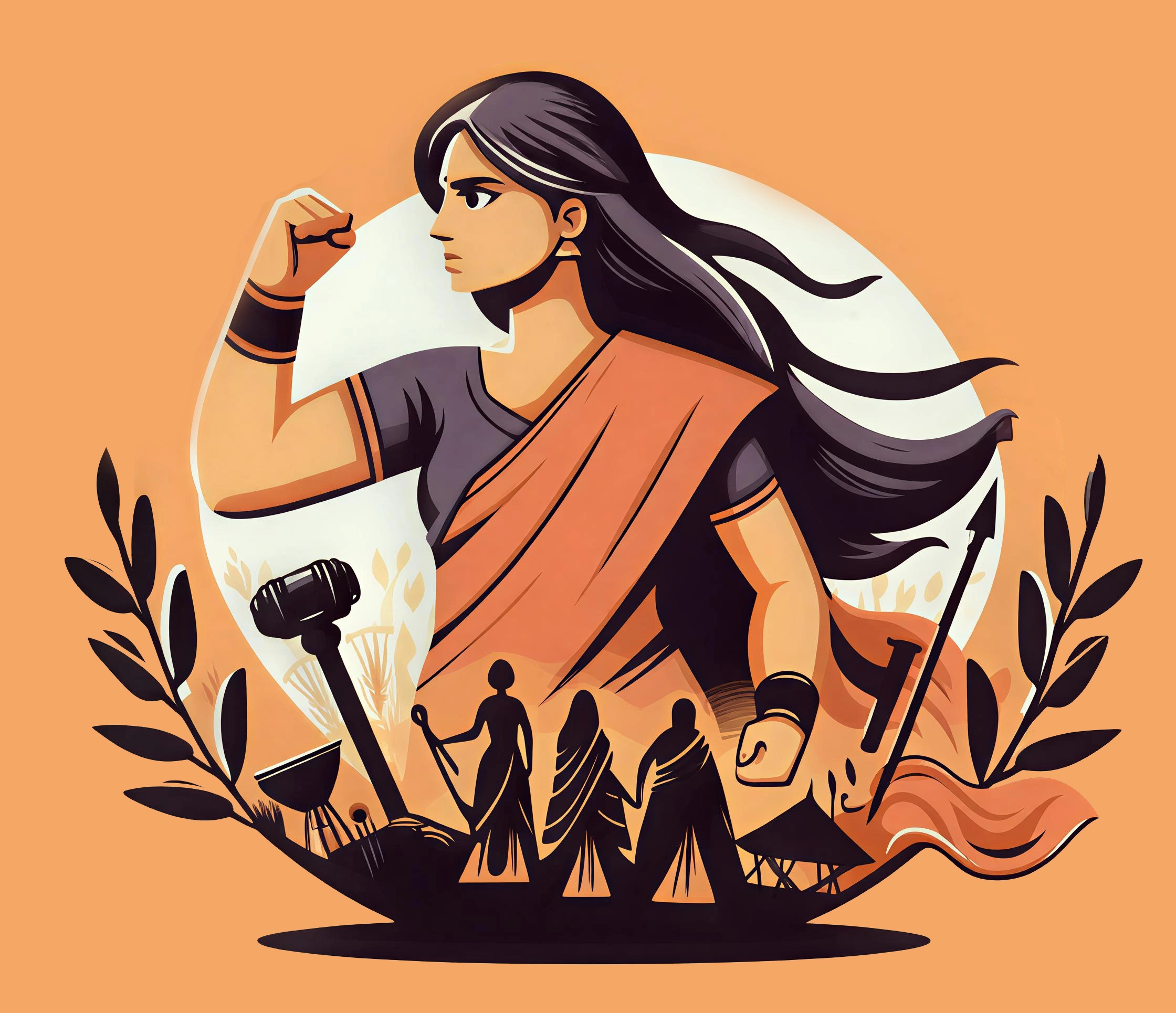 In a Parliament sitting convened from April 16, the Union government is seeking to advance women’s empowerment, but as part of a wider legislative package: the Constitution (131st Amendment) Bill, 2026, and a companion Delimitation Bill. The stated rationale is the operationalisation of the Nari Shakti Vandan Adhiniyam (the 106th Amendment of 2023), which reserves one-third of Lok Sabha and Assembly seats for women but was tied to a post-Census delimitation. The government’s insistence on bundling women’s reservation with delimitation suggests that the former is being used as political cover for the latter: a sweeping reallocation of Lok Sabha seats that would reshape the federal composition of Parliament to the advantage of States where the Bharatiya Janata Party (BJP) enjoys electoral dominance, and at the expense of States where it has been historically weak.
When India’s decennial Census was delayed for more than five years without a definitive or rational explanation from the BJP-led Union government, the political logic was not hard to discern. The 2021 Census was first postponed citing COVID-19, but no reason was offered for the successive deferrals that followed, until it was quietly announced that the exercise would be carried out in 2026-27. Under the Constitution, the freeze on inter-State distribution of Lok Sabha seats, pegged to the 1971 Census, was set to expire only after the first Census conducted after the year 2026 was published. This meant that in the normal course, delimitation would have been based on the 2031 Census. By delaying the Census to 2026-27, the government ensured that the delimitation exercise could be initiated on its preferred timeline, using the 2026-27 Census rather than one conducted in 2031.
Now, perhaps realising that any delimitation exercise would itself take years to conclude after the 2026-27 Census, and therefore not be ready even for the 2029 Lok Sabha elections, the government appears to be in a tearing hurry to proceed with delimitation on the basis of the last completed Census, that of 2011. The 131st Amendment Bill amends Articles 55, 81, 82, 170, 330, 332, and 334A of the Constitution. Its most consequential changes are the following. First, it raises the ceiling on Lok Sabha membership from 530 elected members from States and 20 from Union Territories to 815 and 35 respectively, to a potential House of 850. Second, it replaces the existing constitutional definition of “population”, which specifies the 1971 Census for seat allocation and the 2001 Census for boundary demarcation, with an open-ended formulation: population shall mean the Census “as Parliament may by law determine.” The choice of which Census to use is no longer left to the Constitution but will depend on ordinary legislation, changeable by simple majority. Third, it deletes the third proviso to Articles 82 and 170 entirely. A freeze on seat allocation that has been in place since the 42nd Amendment of 1976, and extended by the 84th Amendment of 2001, guaranteed States that had stabilised their populations that they would not lose parliamentary seats as a consequence. This safeguard is now removed.
Members of the Union Cabinet, including Home Minister Amit Shah and Commerce Minister Piyush Goyal, had assured the country that the existing proportion of seats held by each State will be maintained through a uniform increase. But this assurance finds no place in the constitutional amendment. Article 81(2)(a), retained unchanged, mandates that the ratio between seats and population shall be the same for all States “so far as practicable” which is a population-proportionality requirement and does not preserve existing proportions.
Based on 2011 Census data, a purely population-proportional allocation to an 850-seat House would produce sharply unequal increases across regions. The Hindi-heartland States (Uttar Pradesh, Bihar, Madhya Pradesh, Rajasthan, Haryana, Chhattisgarh, Uttarakhand, and Delhi), which currently hold 207 of 543 seats, would secure 366 — a 77% increase, with their share rising from 38.1% to 43.1%. The southern States (Tamil Nadu, Karnataka, Andhra Pradesh, Telangana, Kerala, and Puducherry), with 132 seats now, would receive only 176, a 33% increase, while their share would drop from 24.3% to 20.7%. The eastern States would slip from 14.4% to 13.7%; the North-East from 4.4% to 3.8%. The west and the northern non-Hindi States would remain roughly unchanged. States that spent decades building their health infrastructure, educational access, and women’s agency that brought fertility down now face a reduction in their share of democratic power, while States that lagged on these indicators stand to gain the most seats. The already weakened fiscal federalism would now be compounded by diminished political representation for socio-economically advanced States.
That this legislation is being rushed through, with barely any time for public debate, just days before voters in two crucial States go to the polls, makes the timing even more suspect. There is no reason why women’s reservation cannot be implemented within the existing 543-seat Lok Sabha by designating constituencies for women on a rotational basis, an approach the Opposition had pressed for after the passage of the 106th Amendment. MPs from States that stand to lose proportional representation in the Lok Sabha must resist the bulldozing of legislation on an issue that strikes at the federal foundations of the Indian Union. The consequences of letting this amendment pass are too grave to contemplate.

श्रमिक अशांति
संपादकीय
यह शुभ संकेत नहीं कि दिल्ली से सटे गौतमबुद्ध नगर के नोएडा में श्रमिकों के धरने-प्रदर्शन के साथ पथराव का सिलसिला खत्म होने का नाम नहीं ले रहा है। बीते दिनों नोएडा में श्रमिकों ने जिस बड़े पैमाने पर तोड़फोड़ एवं आगजनी की, वह यही बताती है कि इसके पीछे कोई गहरी साजिश थी, क्योंकि यह सहज-सामान्य नहीं कि यकायक बड़ी संख्या में श्रमिक सड़कों पर उतर आएं और अराजकता का सहारा लेकर लोगों को भयाक्रांत करें। पुलिस की ओर से श्रमिकों के उपद्रव के मामले में साजिश को रेखांकित तो किया जा रहा है, लेकिन आखिर उसे समय रहते इसकी भनक क्यों नहीं लगी? नोएडा में श्रमिकों के बीच असंतोष व्याप्त हो रहा है, इसका भान शासन को भी होना चाहिए था और प्रशासन को भी, क्योंकि वेतन वृद्धि का मामला कई दिनों पहले और खासकर तब उभर आया था, जब हरियाणा के गुरुग्राम में कामगारों के वेतन में वृद्धि कर दी गई। इसका असर पड़ोसी क्षेत्र नोएडा के श्रमिकों पर भी पड़ा। हालांकि जिलाधिकारी ने उनके असंतोष को दूर करने के लिए बोनस, ओवरटाइम, वेतन भुगतान के समय आदि को लेकर कई निर्णय किए और उनकी शेष समस्याओं पर विचार करने की भी बात कही, लेकिन किन्हीं कारणों से श्रमिक संतुष्ट नहीं हुए। क्या इसलिए कि कोई उन्हें हिंसा के लिए भड़का रहा था? इसकी आशंका इसलिए बलवती होती है कि एक तो उन प्रतिष्ठानों को भी निशाने पर लिया गया, जहां के कामगारों के लिए वेतन में कमी कोई मुद्दा नहीं था और दूसरे गत दिवस घरेलू सहायिकाओं के तौर पर काम करने वाली महिलाएं भी सड़कों पर उतर आईं। आखिर उनका वेतन तो उनकी मांग पर ही तय होता है। आम तौर पर उनके सामने कम पैसे पर काम करने की कोई विवशता नहीं होती।
यह ठीक है कि नोएडा में श्रमिकों की हिंसा के बाद राज्य सरकार की ओर से उनके वेतन में वृद्धि के निर्णय के साथ एक ऐसी समिति गठित कर दी गई है, जो उनकी मांगों पर विचार करेगी, लेकिन इस मामले में केंद्र सरकार को भी चेतना होगा, क्योंकि नोएडा की श्रमिक अशांति का असर अन्य राज्यों पर भी पड़ सकता है। देश में श्रमिक अशांति कोई नई बात नहीं है, लेकिन इतना तो है ही कि लंबे समय बाद देश में कहीं पर इतने बड़े पैमाने पर कामगारों ने हिंसा की। ध्यान रहे नोएडा केवल औद्योगिक क्षेत्र ही नहीं। यह आवासीय क्षेत्र भी है और श्रमिकों की हिंसा से आम लोग भी तंग हुए। श्रमिकों को अपनी मांगें रखने का अधिकार है, लेकिन इसके नाम पर यदि वे उपद्रव करेंगे तो अपना ही नुकसान करेंगे। यदि उनके उपद्रव के भय के चलते नोएडा की फैक्ट्रियां लंबे समय तक बंद रहती हैं तो सबसे अधिक नुकसान उन्हें ही उठाना पड़ेगा। चूंकि नुकसान उद्यमियों को भी होगा, इसलिए उनका पक्ष भी सुना जाना चाहिए।
Date: 15-04-26
कई समस्याओं का समाधान है जनगणना
आदित्य सिन्हा, ( लेखक लोक-नीति विश्लेषक हैं )
 कल्याणकारी राज्य की भूमिका में जनगणना की भूमिका बड़ी महत्वपूर्ण मानी गई है। सदियों पहले अपनी रचना अर्थशास्त्र में कौटिल्य ने भी यह उल्लेख किया था कि यदि राज्य बेहतर शासन प्रदान करना चाहता है तो उसे अपनी जनता की भलीभांति जानकारी होनी चाहिए। कौटिल्य का मानना था कि जो राज्य अपने लोगों की गणना नहीं करता, वह अंधकार में शासन करता है। कोविड और कतिपय अन्य कारणों से भारत में भी निरंतर चली आ रही जनगणना की राह में जो अंधकार उत्पन्न हुआ था, वह अंतत: छंट गया और इस महीने की शुरुआत से देश में जनगणना की विधिवत शुरुआत भी हो गई है। चूंकि भारत विश्व का सर्वाधिक जनसंख्या वाला देश है, इसलिए गणना की यह प्रक्रिया भी उसी अनुपात में बहुत विस्तारित रहने वाली है। इसमें 30 लाख से अधिक गणना करने वाले, पर्यवेक्षक और अधिकारी महीनों तक 140 करोड़ भारतीयों से 33 प्रश्न पूछेंगे। देश के सात हजार से अधिक शहरों और छह लाख से अधिक गांवों में चलने वाली यह विश्व की सबसे बड़ी प्रशासनिक कवायद होने जा रही है। इस जनगणना की एक विशेषता यह भी है कि यह पूरी तरह डिजिटल रूप में की जाएगी। सभी भारतीय नागरिक 16 भाषाओं में उपलब्ध एक पोर्टल के माध्यम से स्वयं गणना कर सकते हैं। इसके शुभंकर का नाम प्रगति और विकास रखा गया है। इसके प्रतीकात्मक अर्थ से लेकर इससे जुड़ी आकांक्षाएं भी एकदम स्पष्ट हैं।
भारत में जनगणना से जुड़ी परंपरा की जड़ें स्वतंत्रता प्राप्ति के पहले से जुड़ी हुई हैं। इसका पहला आधुनिक प्रयास ब्रिटिश शासन के दौरान 1865 और 1872 के बीच किया गया। हालांकि तब ऐसी कवायद एक साथ नहीं की गई थी और सभी प्रांतों के बीच इसे लेकर समन्वय का भी अभाव था। वर्ष 1881 में जाकर ही पहली बार अविभाजित भारत में एक साथ जनगणना हो पाई थी। स्वतंत्रता प्राप्ति के बाद पहली बार 1951 में जनगणना हुई और उसके बाद से इक्का-दुक्का अपवादों के साथ यह क्रम अनवरत रूप से जारी रहा। समय के साथ जनगणना के प्रश्नों का स्वरूप भी बदलता गया। 1872 की अनुसूची में मात्र 17 प्रश्न थे, जिनमें ‘कौन कहां रहता है’ से अधिक कुछ दर्ज नहीं किया गया था। वहीं 1901 की जनगणना में अंग्रेजी में दक्षता के बारे में पूछा गया, जो औपनिवेशिक दौर की एक विशेष प्राथमिकता थी। हालांकि 2011 तक के अपने पड़ाव में जनगणना ने प्रवासन का इतिहास, प्रजनन रुझान, कामकाज से जुड़ी आदतें और दिव्यांगता से जुड़े विस्तृत आंकड़ों को समाहित करना आरंभ किया। ऐसे में यह कहना उचित ही होगा कि जनगणना राज्य के समक्ष उभरते पहलुओं का प्रतिबिंब ही होती है।
देश में 2021 की जनगणना नहीं हो पाई। इसके पीछे एक प्रमुख कारण कोविड महामारी रही, जिसके चलते प्राथमिकताएं एकाएक बदल गई थीं और इतनी बड़ी प्रशासनिक प्रक्रिया संभव होती नहीं दिख रही थी। फिर भी कुछ सवाल तो उठते ही हैं कि कोविड से निपटने में 2022 तक स्थितियां काफी हद तक सामान्य हो गई थीं और 2023 से लेकर 2024 तक जनगणना की प्रक्रिया को सिरे चढ़ाने के लिए गुंजाइश भी थी, लेकिन उस मोर्चे पर अपेक्षित प्रयास नहीं किए गए गए। जो जनगणना अभी आरंभ हुई है उसकी औपचारिक अधिसूचना जून 2025 में आई और उसके 15 महीने बाद यह प्रक्रिया आरंभ हुई है। इसमें कहा जा सकता है कि कभी नहीं से तो देर ही भली, लेकिन देरी को जायज ठहराना थोड़ा कठिन है।
भारत में पिछले डेढ़ दशक के दौरान शासन का ढर्रा 2011 में हुई जनगणना के आधार पर ही चलता रहा, जबकि इस दौरान परिदृश्य बहुत व्यापक रूप से बदलने वाला रहा। वैसे भी 15 साल का समय कोई कम नहीं होता। इस अवधि में करोड़ों भारतीयों ने अपने मूल स्थानों से पलायन किया। व्यवसाय बदले। वे गांव छोड़कर शहरी बन गए हैं। जबकि नीति नियोजन में न केवल ग्रामीण-शहरी क्षेत्रों के वर्गीकरण को लेकर स्पष्टता का अभाव बना हुआ है, बल्कि उनका आधार भी 2011 के जनगणना के आंकड़े बने हुए हैं। कल्याणकारी योजनाओं और सार्वजनिक व्यय के लिए यह पुराना परिदृश्य उचित नहीं।
इसके व्यावहारिक परिणाम भी केवल कोरी कल्पना या सैद्धांतिक मात्र नहीं हैं। शोधकर्ताओं से लेकर और नीति-निर्माता उपभोग व्यय से लेकर श्रम बल भागीदारी या सामाजिक परिस्थितियों का आकलन करने के लिए जनगणना को ही अपना आधार बनाते हैं। जब ऐसी सूची ही 15 साल पुरानी हो तो उस आधार पर आकार लेने वाली तस्वीर वास्तविक नहीं बन पाएगी। इस तरह छोटी-छोटी विसंगतियां जमा होकर बड़ी विकराल स्थिति निर्मित कर देती हैं।
जनगणना 2027 में जनसांख्यिकी से अधिक भी बहुत कुछ दांव पर लगा है। ऐसा ही एक पहलू है संसदीय एवं विधानसभा क्षेत्रों का परिसीमन, जिसमें नई जनगणना के आंकड़े बहुत निर्णायक साबित होंगे। भारत का राजनीतिक मानचित्र अभी भी पुराने परिदृश्य पर ही आधारित है, जो बदलते हुए देश की आकांक्षाओं को आदर्श रूप में अभिव्यक्त नहीं करता। नई जनगणना इसमें सुधार का अवसर उपलब्ध कराएगी। इसमें 1931 के बाद पहली बार जातियों की गणना भी की जा रही है। यह मुद्दा काफी विवादास्पद है। इसके पक्ष में दलील देने वाले कहते हैं कि जातियों की गणना के बिना कल्याणकारी योजनाओं का खाका सही ढंग से नहीं बनाया जा सकता। जबकि इसके विरोधी कहते हैं कि इससे विभाजन की वे रेखाएं और गहरा सकती हैं, जिन्हें संविधान ने धुंधला करते हुए समाप्त करने का प्रयास किया। दोनों ही दलीलों में कुछ न कुछ दम है। जनगणना में देरी की एक वजह जातिगत जनगणना को लेकर दुविधा भी गिनाई जा सकती है कि इस राह पर आगे बढ़ा जाए या नहीं। इस संदर्भ में याद रखना होगा कि जो समाज अपनी समस्याओं को मापता नहीं, वह उनका समाधान भी नहीं कर सकता। यह सही है कि जनगणना में देरी ने नीति निर्माण के लिए आधार के स्तर पर जो निर्वात की स्थिति बना रखी थी, वह एकाएक दूर होने से रही, लेकिन यह देश को वह आईना दिखाने में अवश्य सफल होगी, जो आगे की राह पर बढ़ने के लिए आवश्यक है।